


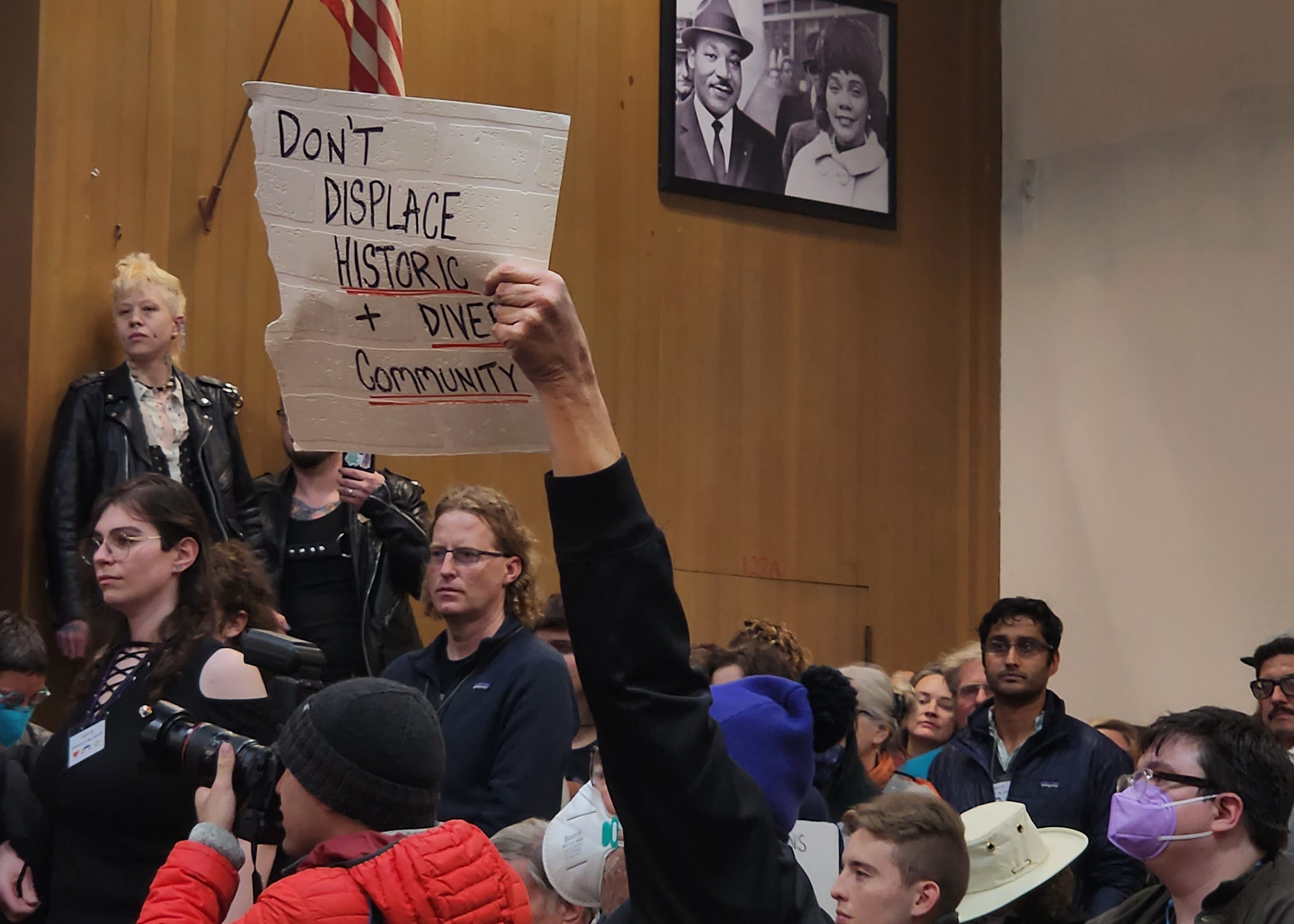
Just days before trial begins in the lawsuit that could end nude use at Denny Blaine Park, Friends of Denny Blaine is asking Seattle’s City Council to do something the state of Washington has already done: formally recognize the beach as a site of LGBTQ+ historic significance. The proposed resolution, transmitted to the Council through the Mayor’s Office in February, calls for collaborative efforts to document and interpret the park’s queer history, and encourages the installation of a Pride flag or interpretive signage within the park. It would add city-level recognition to the Washington State historic designation the park already holds. The Council has not scheduled a vote.
The resolution is less about a flag or a plaque than about something FoDB has been building methodically since the beginning: an official, documented, legally legible record of the park’s identity as both a nude beach and a queer cultural space. That record now runs through the Washington Heritage Register, a 23-page trial brief filed by one of the region’s largest law firms, and thousands of petition signatures and personal testimonies. The Council resolution, if passed, would be another layer in that foundation.
For most of their history, nude beaches have been defended on familiar grounds: that nudity harms no one, that personal freedom deserves protection, that the state has no business regulating the unclothed body. These arguments have their place, and FoDB makes versions of them. The trial brief argues that nude expression is constitutionally protected, that the park’s clothing-optional character is historically documented, and that the social benefits of body-positive space are real and measurable. Those are nudity arguments, straightforwardly made.
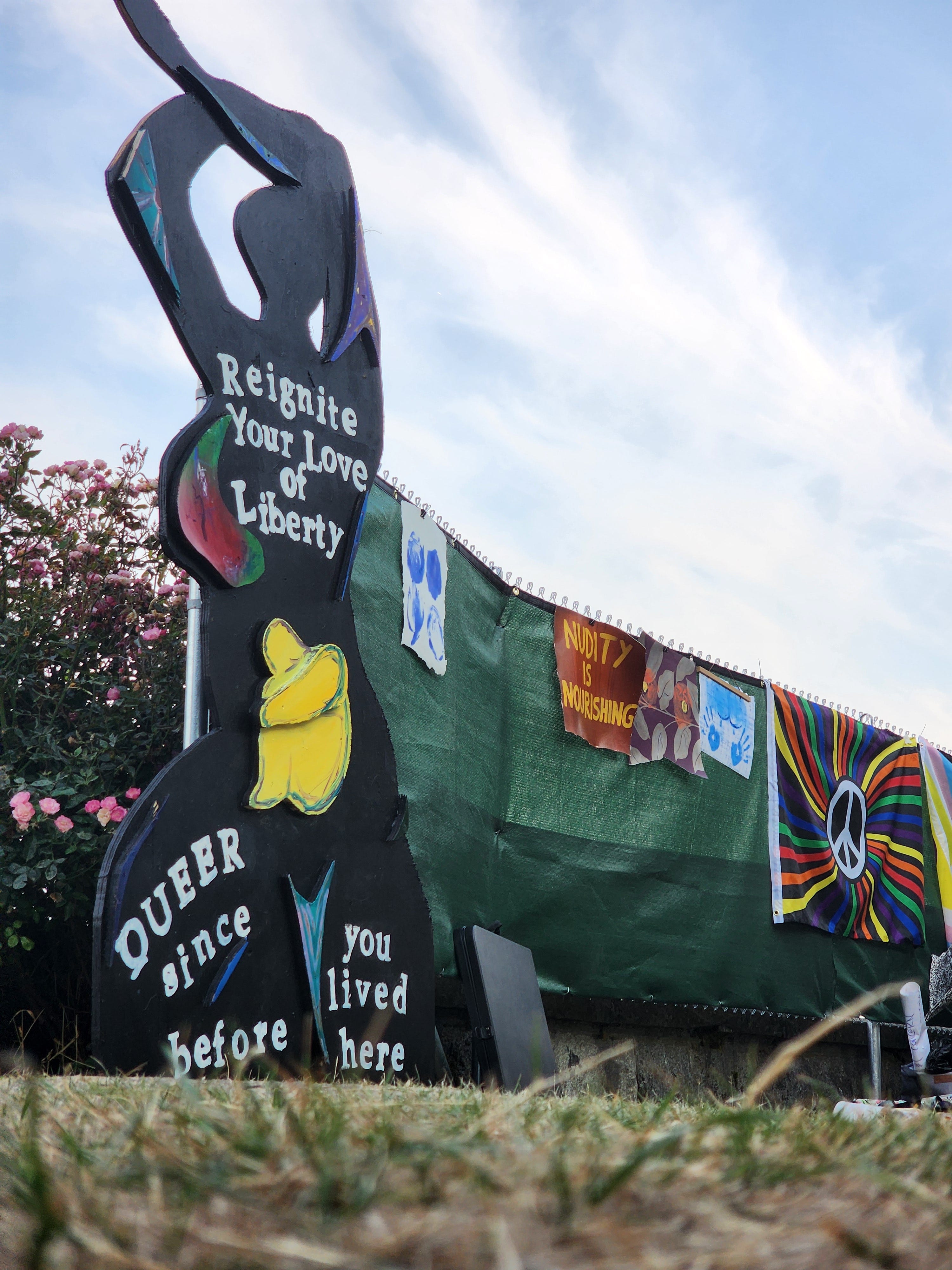
What’s different here is that they don’t stand alone. They’re made through and alongside a parallel claim: that Denny Blaine’s nude culture and its queer identity are not separate things that happen to coexist at the same beach, but a single, braided inheritance—one that has shaped the same community, in the same place, for the same decades. The Heritage Register listing, the trial brief’s testimony about psychological safety for trans and non-binary users, the Council resolution’s call to formally document that history—all of it is building toward the same argument. You cannot protect one without protecting the other, and you cannot erase one without erasing the other.
That fusion is what makes this approach harder to incrementally erode than older, more abstract liberty arguments. A beach defended on grounds of personal freedom can be regulated into irrelevance one restriction at a time. A beach defended as a historically documented cultural space—where the nudity is part of the history, not incidental to it—becomes something else: a site whose character is officially recognized, publicly recorded, and legally meaningful. Each restriction becomes an act of erasure rather than merely a management decision.
That distinction will look familiar to anyone who followed the fight for Hanlan’s Point in Toronto. In 2023, when city planners proposed building a concert and festival venue adjacent to one of Canada’s only official clothing-optional beaches—a beach that had also hosted Canada’s first Pride gathering in 1971—a queer-led coalition called Hands Off Hanlan’s responded by doing something similar to what FoDB has done at Denny Blaine: they documented the beach’s history before anyone asked them to. They produced a 72-page report establishing Hanlan’s as the oldest surviving queer space in Canada, its ecological significance, and its probable status as the world’s first legally designated nude beach—a designation dating to 1894, recovered from city archives by gay naturist activists in the late 1990s. Toronto City Council passed a motion recognizing Hanlan’s as a historically queer space. The concert venue was killed. The clothing-optional zone was expanded to encompass the entire beach. Last year, Canada Post put it on a stamp.
The fights are not identical, and the legal contexts differ—Canadian and Washington State law are not the same, and Hanlan’s was never subject to a nuisance lawsuit of the kind Denny Blaine now faces. But both have proceeded through similar logic: that the nudity and the queer identity of the space are not separate things to be defended separately, but a single cultural inheritance worth protecting as such. And in both cases, that argument was built from the ground up by the communities who use the space—not handed down from established naturist organizations, but assembled through research, testimony, legal strategy, and the kind of sustained public documentation that turns informal use into official history.
Denny Blaine’s outcome is not yet written. Hanlan’s took years of organizing before it became a stamp. What FoDB has built—in the Heritage Register, in the courtroom, and now before the City Council—is the same kind of record: one that makes the beach’s character legible to institutions that might otherwise look away. Whether that record holds is what May 27 will begin to answer.
The Council has not scheduled a vote on the resolution. Trial begins May 27. 🪐


