

The case for Denny Blaine
As trial approaches, the legal defense of Seattle’s nude beach becomes an argument about constitutional expression

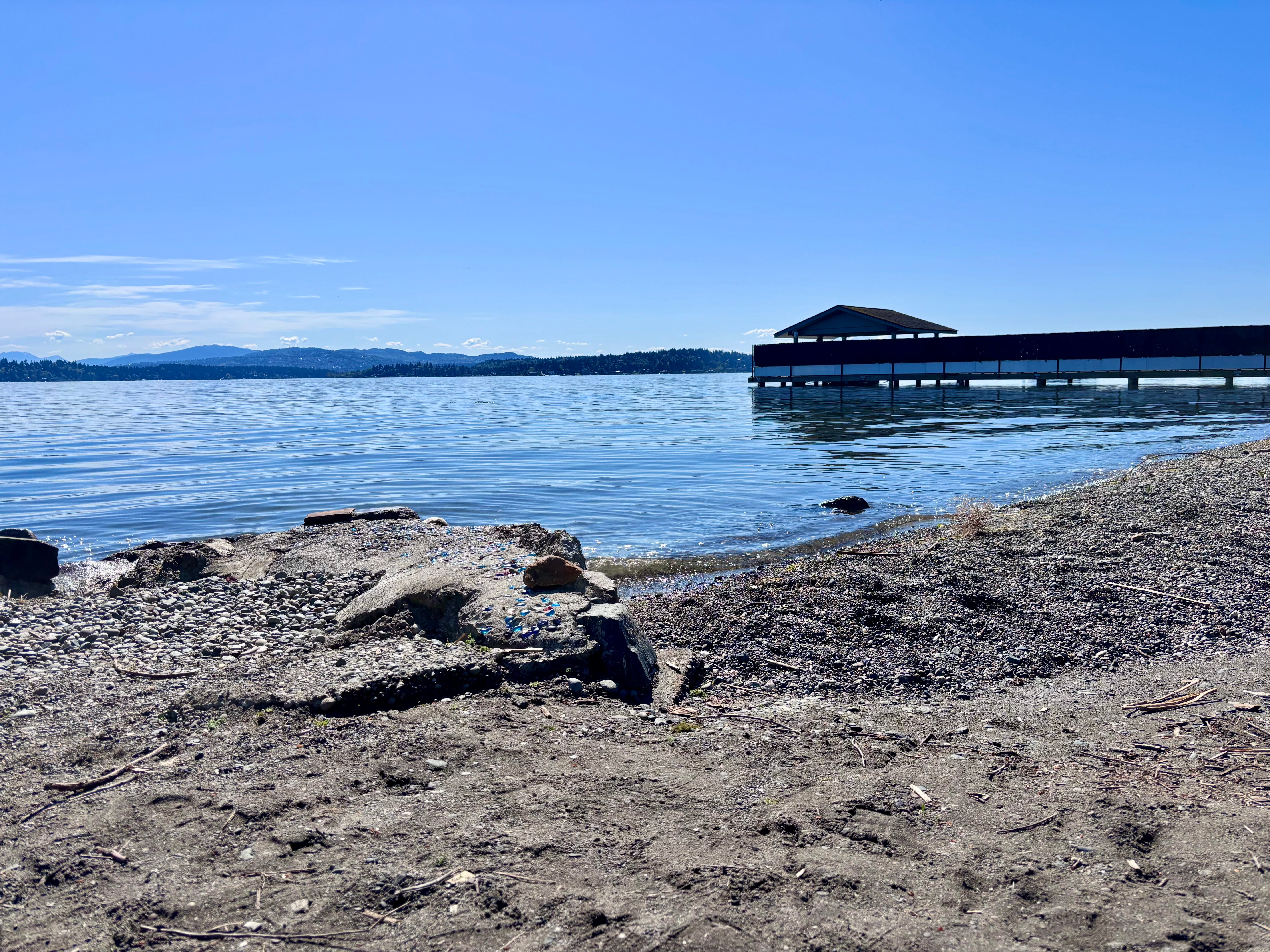
The water at Denny Blaine still looks calm. The chain-link fencing and green privacy tarps do not. What was once an informal nude beach known mostly to Seattle locals has become one of the most closely watched public nudity disputes in the United States—and on May 27, it goes to trial.
When neighbors first began pressuring Seattle to do something about Denny Blaine Park, the argument was simple: the beach had become disorderly, and nearby property owners deserved relief. Three years later, that argument is about to be tested in court—and the defense that has assembled against it is unlike anything the American nudist movement has seen in a long time.
Friends of Denny Blaine filed its trial brief on May 13, two weeks before the case goes before King County Superior Court Judge Samuel S. Chung. The document, prepared by the group’s pro-bono legal team at Perkins Coie, runs 23 pages. It is methodical where it needs to be and sharp where it can be. What it is not is defensive. The filing does not ask the court to tolerate nudity at Denny Blaine. It argues that nudity there is lawful, historically documented, constitutionally protected, and—for a significant portion of the people who rely on it—central to their sense of safety and belonging in public space.
That is a different scale of argument than this beach has been given before. And it arrives at a different moment.
The story of Denny Blaine has moved in stages that Planet Nude readers have followed closely. In 2023, the fight was about preserving what existed. In 2024, it became about documenting that what existed had a real cultural history—one serious enough to earn placement on the Washington Heritage Register. In 2025, the legal and enforcement pressure intensified: nudity itself was declared a public nuisance by a judge, police briefly escalated enforcement before walking it back, and a fence divided the beach into zones. Now, in 2026, the defense is arguing something that goes further still—that nude public culture may itself carry constitutional protection, and that stripping it from this beach would erase documented history.
The brief’s constitutional core rests on a February 2026 Washington Supreme Court ruling, Matter of Recall of Lauser, which reaffirmed that both state and federal constitutions protect nude expression. The case involved a transgender city councilmember who stood topless at a Transgender Day of Visibility rally with “MY BODY IS NOT A SIN” written across her chest—and won. FoDB will argue at trial that at least some of the nudity at Denny Blaine is similarly expressive—artistic, political, communal—and that a blanket ban would therefore constitute an unconstitutional prior restraint. The section header the attorneys chose for this portion of the brief is blunt: “Nude is not lewd.”
Washington law supports the distinction. Under RCW 9A.88.010, indecent exposure requires a lascivious or sexual element. Simple nudity does not meet that standard. Plaintiff Denny Blaine Park for All has itself conceded in its complaint that nudity which does not constitute indecent exposure is not a crime. FoDB’s filing holds that concession up and asks the court to follow it to its logical conclusion.
The brief also previews expert testimony that will be significant to anyone who follows naturism research. Dr. Neil Malamuth, a UCLA professor of psychology whose work focuses on sexual aggression and media effects, is expected to testify that the scientific literature—including decades of naturism studies—does not support any causal link between public nudity and sexual misconduct, and in fact associates naturist exposure with neutral or positive outcomes. A second expert, SPD criminologist Dr. Loren Atherley, will argue that the spike in incident reporting reflects what he characterizes as moral panic bias on the part of the plaintiffs, not an actual increase in underlying behavior.
That behavioral portrait of the plaintiffs is where the brief gets most pointed. According to the filing, Stuart Sloan directed a private security service to photograph all nude parkgoers, had trees removed or trimmed to improve sightlines into the park, and installed cameras that now extend over park property. The infrastructure, the brief suggests, increasingly resembles controlled territory. Other witnesses named in the filing are described as monitoring camera feeds remotely in the evenings, then reporting harm to their mental health from conduct they have actively sought out. As the filing puts it: “Plaintiff’s members have installed cameras to see what they otherwise could not, simply to capture more of the very conduct they claim alarms them.”
The property value argument fares no better. The brief details neighbors who petitioned for downward tax valuations on park-adjacent homes while simultaneously claiming the park had damaged their property values—then sold those same properties at substantial profit. One home changed hands for more than double its purchase price. The buyer, the filing notes, had previously co-signed a petition complaining about the park.
All of this sits inside a larger philosophical argument that the brief makes clearly, if not always explicitly. The plaintiffs’ theory of public space is that it should minimize discomfort for adjacent property owners. FoDB’s theory is that public space belongs to the public—including people whose bodies, identities, or forms of expression might make others uncomfortable. Denny Blaine, the filing argues, has been exactly that kind of space for decades: a place where transgender and non-binary people, queer communities, and nudists have been able to exist comfortably in their own bodies, in public, without apology.
There is an irony worth sitting with as this case heads into court. A beach long valued precisely because it existed outside rigid social structures is now being defended through the machinery of institutions—court rooms, historians, constitutional lawyers, expert witnesses, and legal precedent. Whether that machinery will work to protect either public or private interests is the ultimate question. 🪐
The trial is expected to stretch over multiple weeks and begins May 27. The full trial brief, filed May 13 in King County Superior Court, is available below. Planet Nude will have continuing coverage as the trial proceeds.


Thank you for linking the brief.