

San Gregorio nude beach to close for construction, reopen under State Parks
A summer 2026 opening is confirmed—but the beach's clothing-optional future may hinge on what happens next

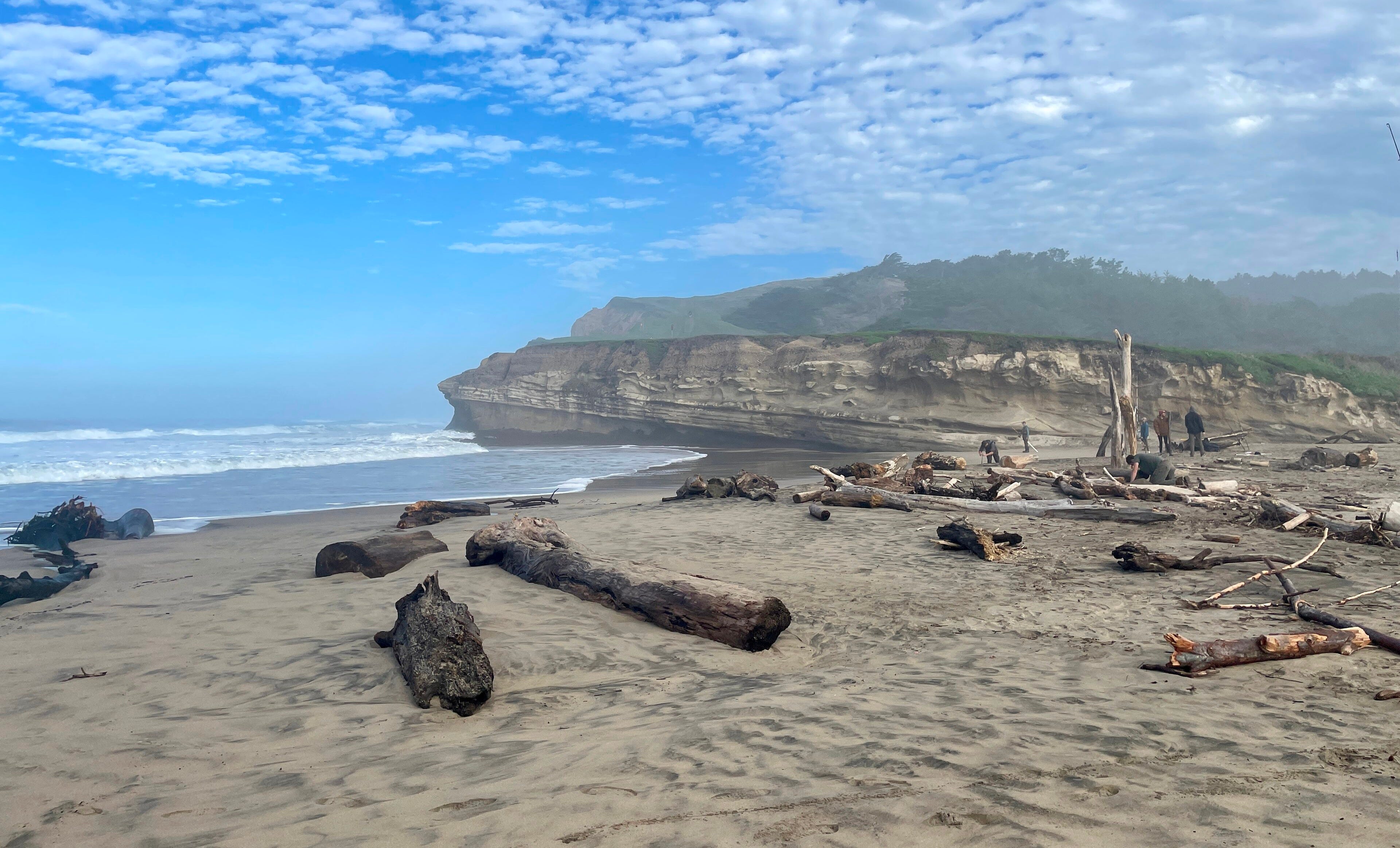
Last April, Planet Nude reported on a landmark conservation deal that put one of California’s oldest clothing-optional beaches in new hands. Now, more than a year later, the story has moved forward in concrete ways—and for regulars planning a visit this summer, there are some important logistics to know.
To recap: in April 2025, the Peninsula Open Space Trust (POST) announced a $10 million agreement to acquire San Gregorio Ranch, the 195-acre coastal property that has served as the informal gateway to San Gregorio’s clothing-optional beach since at least the 1960s. The deal was celebrated by conservationists as a safeguard against development—and watched cautiously by naturists wondering what new stewardship might mean for the beach’s longstanding nude tradition.
In March 2026, the California Coastal Commission approved a permit waiver allowing POST to convert the existing private beach access road into a formal public accessway. The improvements are modest but meaningful: restored gravel road and parking area, a new entrance gate, improved pedestrian path to the beach, portable toilets, picnic tables, and better signage. A deteriorated mobile home and its septic tank will also be removed. During construction, estimated at 8 to 12 weeks, the site will be closed to visitors. Once work is complete and the land is formally transferred to POST, the beach is expected to reopen to the public in Summer 2026. Going forward, at least initially, hours and fees will mirror those at the adjacent San Gregorio State Beach lot: open from 8am to sunset, with an $8 per vehicle parking fee.
The most significant long-term development buried in the permit documents is this: POST intends to transfer operation and eventually ownership of the property to California State Parks or another public agency, with that handoff currently targeted for Spring/Summer 2027. That’s a notable shift from the more open-ended language POST used in 2025, when the organization spoke broadly about finding “a long-term steward.” State Parks is now named explicitly.
For the naturist community, this matters
State Parks manages the adjacent San Gregorio State Beach, where nude use is not formally permitted. Whether the agency would extend the same tolerance—or lack of enforcement—to the newly acquired parcel is an open question, and arguably the most important one facing the beach’s future.
When Planet Nude asked POST directly about clothing-optional use last year, the organization acknowledged the beach's history while stopping short of any guarantees. Marti Tedesco, POST's Senior Manager of Media & Communications, told us the organization is “committed to a future where public parking and access to this property and its beach remain available”—notably sidestepping any mention of nude use specifically. That posture hasn't visibly changed. POST has described its goals for the property in terms of “safe public access” and “low-key recreational use”—language that feels deliberately broad.
The nudist tradition at San Gregorio is old and resilient. The beach has been documented as clothing-optional since 1966, survived multiple ownership transitions, and outlasted most of California’s naturist clubs and many of its peer nude beaches. That durability counts for something. But the formalization of public access—new infrastructure, set hours, an $8 parking fee—does represent a shift from the freewheeling, caretaker-managed arrangement that has characterized the beach for decades. More visibility and more structure don’t always spell trouble for nude use, but they do tend to invite more scrutiny.
The transfer to State Parks, if it happens as planned, will be the real inflection point. A public planning process is expected before then, and that’s where naturist voices could matter most. As we noted last year, no formal advocacy group currently exists to represent nude beachgoers in those discussions—something that remains a gap worth filling. For now, the most practical advice is this: if you’re planning to visit San Gregorio this summer, watch for news of the construction closure and anticipated reopening date. And if you care about the beach’s future beyond this season, pay attention to what happens when State Parks enters the picture. 🪐


The State of California has other parks in which they have posted signs at trailheads that hikers may encounter skinny-dippers as the area is designated traditional nude use. It would be wonderful if similar signs were posted for San Gregorio beach as well. There has not been an "official" State nude beach since XB-58 (Experimental Beach 1958) near Davenport and that only lasted on weekend and was coordinated with the American Sunbathing Association - now the American Association of Nude Recreation.
I haven't been to beautiful San Gregorio in decades, but I have fond memories of this beach. I sincerely hope it retains its clothing optional status. If it does, I'll make a point of revisiting it.