

Friends of Denny Blaine intervenes in lawsuit seeking park closure
New legal step aims to ensure queer and clothing-optional beachgoers are represented in court

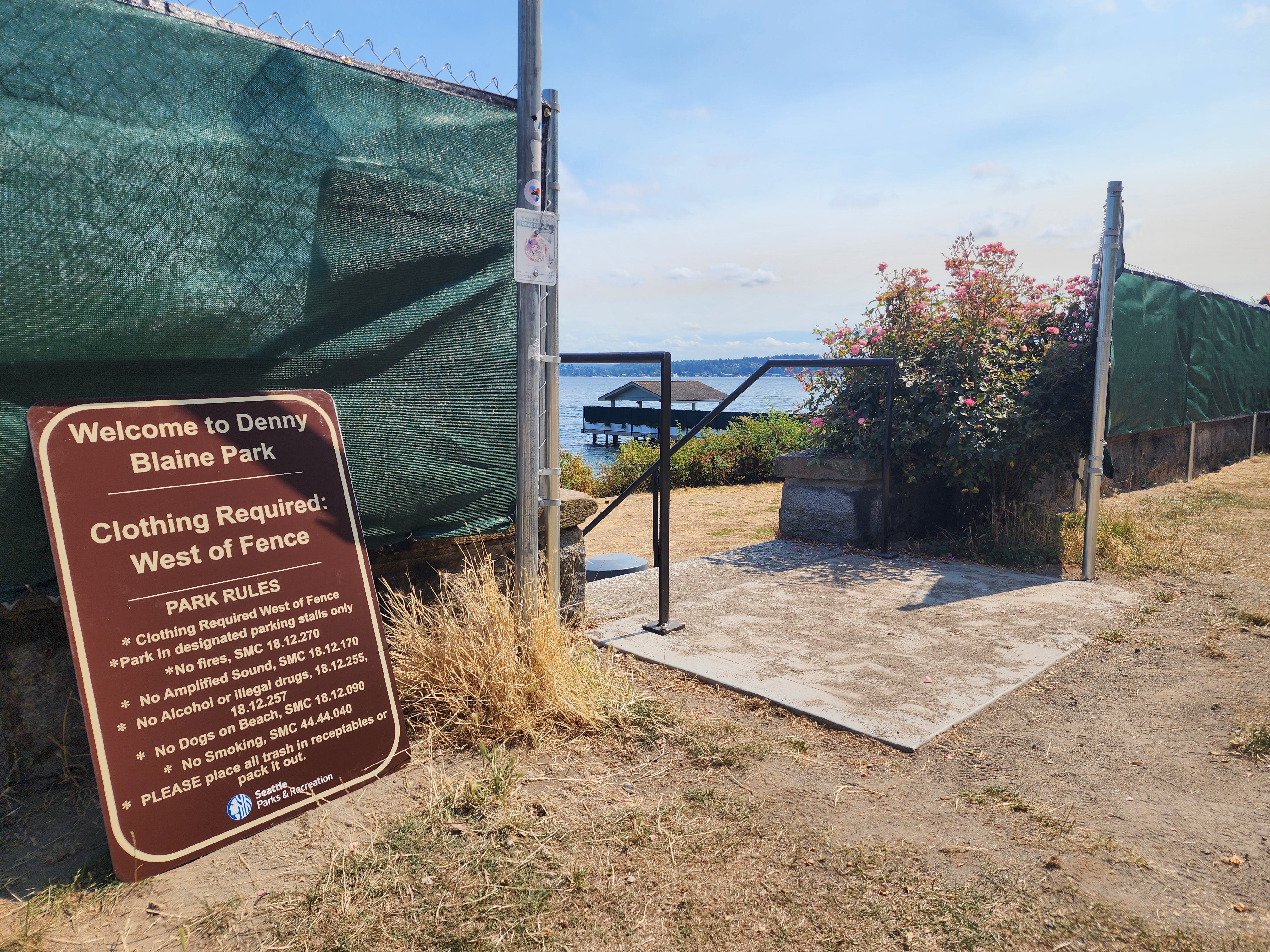
Friends of Denny Blaine, the queer-led stewardship group that has defended Seattle’s oldest clothing-optional beach through years of political and legal pressure, has taken a major new step in the ongoing fight over the park’s future. In a press release issued this week, the group announced that it has incorporated as a nonprofit in Washington state and filed to intervene in the lawsuit that seeks to shut the beach down entirely.
The move would make Friends of Denny Blaine a formal party to the case, allowing the group to directly advocate in court for the interests of LGBTQ+ and clothing-optional park users and, if necessary, appeal future rulings.
The lawsuit, filed last year by a coalition of nearby homeowners calling itself Denny Blaine Park for All, targets the City of Seattle. It alleges that the city has failed to sufficiently address alleged nuisance behavior at Denny Blaine Park and argues that closure of the park is the appropriate remedy. While the city remains the named defendant, Friends of Denny Blaine says the voices most affected by the outcome of the case have not been adequately represented.
“For more than half a century, this park has functioned as a queer, clothing-optional space,” the group said in a statement. “The public deserves a voice in a lawsuit that would eliminate access to a culturally significant public place.”
A legal fight years in the making
Planet Nude has reported on Denny Blaine for repeatedly over the last three years, documenting a steady escalation that began with neighborhood opposition to nude use and culminated in the current court battle. Though never formally designated clothing-optional, the terraced lakeside park has long been used that way, and Washington law does not prohibit nonsexual public nudity.
Over decades, Denny Blaine became a rare refuge for Seattle’s LGBTQ+ community. It was known as a lesbian gathering spot, a place of relative safety during the AIDS crisis, and a public space where trans and gender-nonconforming people could exist without constant scrutiny. That informal status endured largely through custom and restraint, rather than regulation.
Tensions intensified in 2023, when a wealthy neighbor attempted to fund a children’s playground at the beach in what advocates saw as an effort to discourage nude use. Public outcry, sustained reporting, and mass protests forced the city to abandon the plan, and Friends of Denny Blaine emerged soon after as a grassroots stewardship group focused on preservation, accessibility, and care for the park.
Opposition coalesced in response. Denny Blaine Park for All formed, hired a communications firm, and in 2025 filed suit against the city. The case triggered increased police presence at the park, including enforcement actions later acknowledged by city officials as mistakes after officers targeted lawful nude sunbathing.
Court rulings and a fragile status quo
In July 2025, King County Superior Court Judge Samuel Chung ruled that nudity at the park “as currently constituted” contributed to a nuisance, ordering the city to submit an abatement plan. The city responded by installing fencing, signage, and physically dividing the park into clothed and clothing-optional areas.
By October, Chung declined to close the park outright, concluding that the city had made “reasonable efforts in abatement.” The ruling allowed Denny Blaine to remain open while the broader lawsuit continues into 2026.
At the same time, the park achieved a symbolic milestone. Washington state added Denny Blaine to its Heritage Register, recognizing it as both a nude beach and an LGBTQ+ cultural site. While the designation offers no direct legal protection, it undercut claims that queer and clothing-optional use of the park is a recent phenomenon.
By intervening, Friends of Denny Blaine would gain procedural tools not available to nonparties, including the ability to present arguments centered on queer history and lawful nudity, participate fully in hearings, and appeal future rulings. The group is being represented pro bono by Perkins Coie, one of the region’s largest law firms.
Friends of Denny Blaine has emphasized that its goal is not confrontation for its own sake. The group says it intends to continue working with the city, neighbors, and other stakeholders while ensuring that any outcome reflects the park’s long-standing public use.
Still, the decision to intervene marks a shift. Until now, the legal battle has largely unfolded between affluent homeowners and the city itself, with the community most affected watching from the sidelines.
Whether the court will grant intervention remains to be seen. What is clear is that the fight over Denny Blaine has entered a new phase, one in which the people who have sustained the beach’s culture for generations are seeking a direct seat at the table. 🪐
Update: Friends of Denny Blaine announced Tuesday afternoon that the court has granted its motion to intervene in the lawsuit over Denny Blaine Park, formally adding the group as a party to the case. The summary judgment hearing has been rescheduled for February 13th.


