


Organizers of the London World Naked Bike Ride are navigating heightened scrutiny and rising operational pressures following a wave of backlash triggered by a violent assault on a nude cyclist in August—an escalation that demonstrates how quickly public nudity is becoming a flashpoint rather than a protected form of protest. That backlash does not reflect how most Londoners experience the ride, which organizers say has long been met with curiosity, humor, and broad public tolerance, but rather how easily a single incident can be weaponized once media and political attention fixates on it.
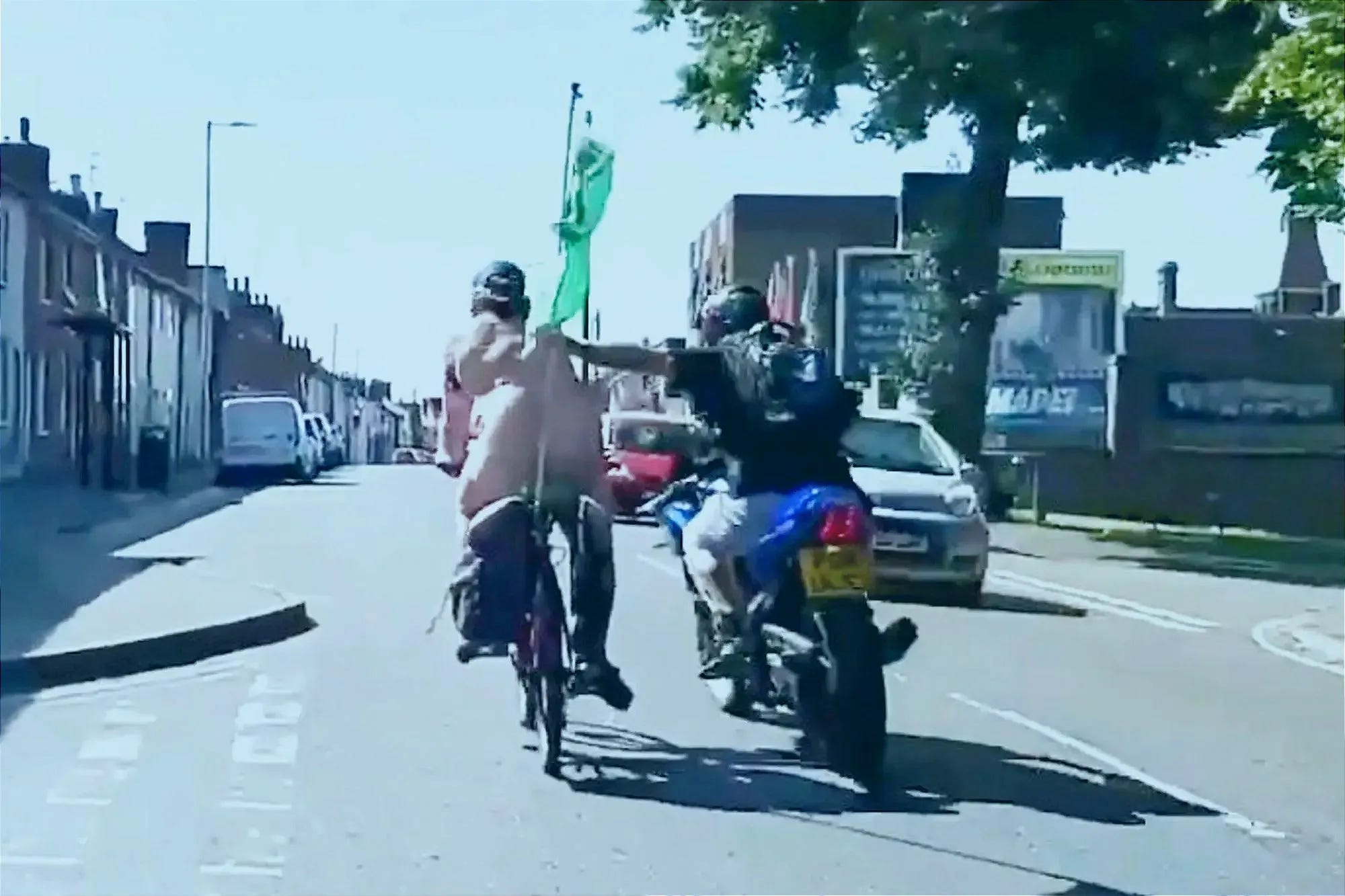
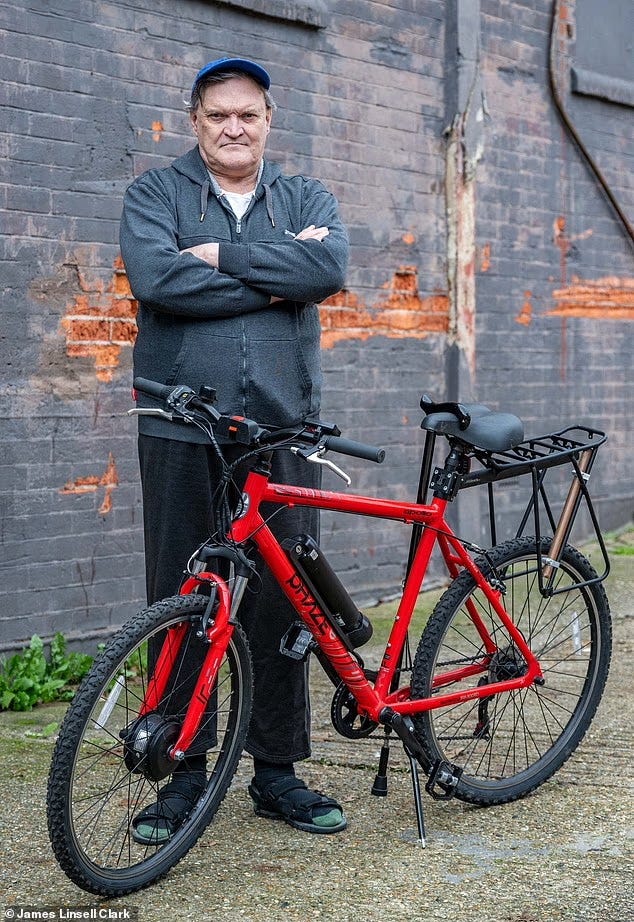
The changes come after Robert Brown, 59, a participant in the Colchester World Naked Bike Ride, was punched off his bike by a passing motorcyclist, a local sanitation worker who later said he mistook the rider for a “pervert.”1 The cyclist suffered lasting injuries. The attacker received a suspended prison sentence.
What followed was not a renewed focus on vigilante violence as the victim might have hoped for, but a reframing of the incident itself. In the weeks after the assault, tabloid coverage, talk radio segments, and online campaigns began treating naked bike rides as the underlying problem, and putting the victim of the initial crime in a position to have to publicly defend himself accusations that he is a “pervert.”2 A petition calling for the London ride to be banned circulated online, framed around “safeguarding” and child protection—even though no laws were broken and no children were involved in the incident whatsoever.
This is the story Planet Nude readers will likely recognize: a real incident, a moral panic layered on top of it, and a familiar conclusion. Restrict the bodies that are easiest to police while ignoring the real problem.
The UK’s nudity literacy problem
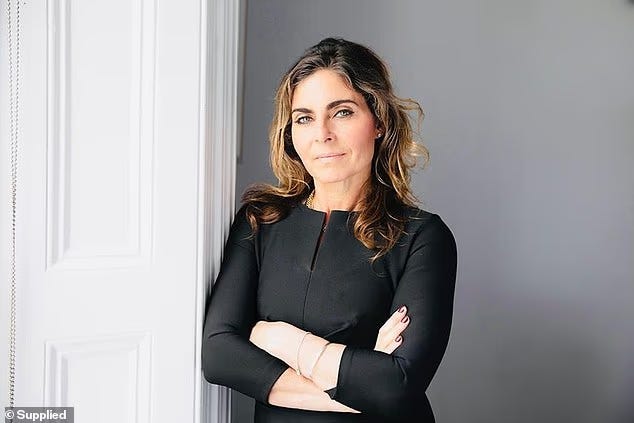
Initial reporting focused, understandably, on the violence. Footage released by prosecutors showed the moment of the punch, and coverage emphasized the shock of seeing a nude cyclist attacked in broad daylight. But as the clip circulated, the frame subtly changed; the cyclist’s nudity became the headline hook, the assault itself merely a backdrop. Campaigners opposing the rides argued that events like the World Naked Bike Ride blur legal boundaries, normalize indecency, and place children at risk. Emma-Jane Taylor, a child safety campaigner who launched a petition to ban the London ride, described the events as unsafe and inappropriate. Several politicians echoed the sentiment, referring to riders as “flashers on bikes” and characterizing the rides as a failure to maintain public order.3
What went largely unexamined was the legal reality. The rides are lawful, coordinated with police, marshalled by volunteers, and governed by strict codes of conduct. Nor did much coverage linger on the uncomfortable implication of the proposed solution: that when someone reacts violently to a lawful protest, the protest—not the violence—should be curtailed.
Part of what allows this inversion to take hold is a persistent lack of public understanding about the law around nudity in England and Wales. Public nudity is not, in itself, a sexual offense. Under the Sexual Offences Act 2003, context and intent are decisive in cases involving nudity, which becomes criminal only when it is lewd, sexual, or intended to cause harassment, alarm, or distress—not when it is part of a peaceful protest or everyday activity.
British Naturism (BN), which has spent decades engaging with police forces, councils, and public authorities, says this misunderstanding is widespread. “Many people assume that being naked in public must be illegal,” Mark Bass of British Naturism told Planet Nude. “This belief often arises not from the law itself, but from unfamiliarity. When something is rarely encountered, it’s easy to conclude there must be something inherently wrong with it.”
Addressing that unfamiliarity has become a central focus of BN’s public-facing work. In recent years, the organization has increasingly turned to direct public education efforts, including its The Naked Truth campaign, which aims to clearly explain what UK law does—and does not—say about non-sexual public nudity. The campaign distills complex legal guidance into accessible language, countering the assumption that nudity is automatically indecent or unlawful.
BN’s engagement has also shaped how the law is applied in practice. According to Bass, guidance from the Crown Prosecution Service and the College of Policing on how officers should respond to reports of public nudity has directly benefitted from BN’s input. “This has never been about seeking special exemptions for naturists,” he said. “It’s about helping authorities avoid unintended consequences and ensuring laws are applied fairly and sensibly.”
That distinction matters. British Naturism does not organize World Naked Bike Rides, which are protest actions rather than club naturism. But the principle that lawful nudity should not be treated as inherently suspicious is a shared concern.
Bass also cautions that the backlash may say less about nudity itself than about a broader shift in social behavior. “Ten years ago, people who disapproved might have tutted, rolled their eyes, or complained to friends,” he said. “Today, reactions to things people dislike have become more extreme. Opposition increasingly turns aggressive.” In that climate, ambiguity becomes dangerous. When the public is unclear about what the law permits, and media coverage leans into outrage rather than explanation, escalation becomes easier to justify.
“Think of the children,” again
Perhaps the most predictable element of the backlash is the invocation of children. Opponents of the rides consistently frame their objections around safeguarding, even when children are not directly involved. In the Colchester case, no minors were present. No allegations of harm were made. Still, campaigners quickly shifted the focus away from the assault itself and toward speculative risk.
The logic is familiar: not that something did happen, but that something could happen. That possibility, once raised, is treated as sufficient justification for bans, restrictions, or heightened control. The burden of proof quietly reverses. Organizers and participants are asked to demonstrate that harm will never occur, rather than critics being asked to show that it has.
Planet Nude readers have seen this pattern before. In Wisconsin, a nearly identical strategy was deployed against World Naked Bike Rides in 2023.4 There, outrage centered on the presence of a single minor participant at the Madison ride—accompanied by a parent, at a clothing-optional, city-sanctioned protest. Conservative media coverage framed the child’s participation as inherently exploitative. Republican lawmakers seized on the controversy to introduce bills that would have criminalized public nudity outright and prohibited minors from attending events where adults might be nude. Law enforcement had investigated and found no violations of state or local law. The child involved reported no harm and expressed enthusiasm about the experience. None of that slowed the political response. The bills advanced anyway, driven less by evidence than by the optics of “protecting children” from a perceived moral threat.5
What’s notable is how little these debates hinge on facts once the safeguarding frame is activated. In both London and Wisconsin, child protection functioned as a rhetorical trump card—an argument that effectively shuts down discussion by casting disagreement as indifference to child harm. It is a powerful move because it bypasses proportionality and triggers deep emotions. If children are invoked, nuance becomes suspect. Legal context becomes secondary. Intent no longer matters.
The remedies proposed under this framing are rarely narrow or surgical. They are sweeping and punitive, aimed not at specific conduct but at entire categories of expression. In Wisconsin, lawmakers sought to rewrite indecent exposure law altogether. In the UK, campaigners have called for outright bans on naked bike rides, despite their legality and long history of peaceful operation.
In both cases, the underlying assumption is the same: that nudity itself is the danger. Once that premise is accepted, violence against nude bodies can be rationalized as provocation, and restrictions on lawful protest can be framed as prevention. That is not safeguarding. It is moral panic, dressed in the language of concern.
The pressure reshapes the protest
As of this writing, the consequences of the moral panic have become visible. Last week, organizers of the London World Naked Bike Ride have reportedly hired additional security for next year’s ride, and adjusted route plans to reduce friction.6
Bass argues that the response to this moment will shape what comes next. “Naturism is rooted in respect, empathy, and kindness,” he said. “Calm, measured responses aren’t always easy when emotions are running high, but striking back only deepens division. If we want to reduce hostility rather than amplify it, respectful engagement is essential.”
Stripped of tabloid story-framing, the question isn’t whether everyone likes naked bike rides, or even whether nudity is inherently lewd or not. It’s whether lawful protest can survive a climate where discomfort is treated as danger, and danger is treated as license. The cyclist in Colchester did nothing illegal. He was assaulted for being visible. How Britain responds to that fact will say far more about the state of public freedom than any petition ever could. 🪐
Updated 12/31 at 11:00 a.m. PST: This article was updated to clarify the use of “panic” along with factual details around the petition, event planning decisions, and the distinction between media backlash and on-the-ground public response.
More reading:


Daily Mail. “Naked cycling campaigners hire security as public rebel against sight of grown adults pedalling through British cities clothes-free.” December 27, 2025. https://www.dailymail.co.uk/news/article-15415751/Naked-cycling-campaigners-security-public-rebel-grown-adults-pedalling-British-cities-clothes-free.html
Daily Mail. “Naturist punched off his bike on charity ride says he was mistaken for a ‘pervert’.” November 30, 2025. https://www.dailymail.co.uk/news/article-15339221/Naturist-punched-bike-charity-ride-cycling-nude.html
Daily Mail. “Calls to ban naked bike riding in Britain after nude cyclist is attacked by vigilante binman at ‘charity’ event.” November 20, 2025. https://www.dailymail.co.uk/news/article-15309293/Calls-ban-naked-bike-riding-Britain-nude-cyclist-attacked-vigilante-binman-charity-event-campaigners-warn-happen-again.html
Planet Nude. “Double standards in dairyland.” October 4, 2023. https://www.planetnude.co/p/double-standards-in-dairyland
Planet Nude. “More trouble in Madison: Wisconsin anti-nude bills advance to State Assembly.” October 19, 2023. https://www.planetnude.co/p/more-trouble-in-madison-wisconsin
Planet Nude. “Full steam ahead for Wisconsin WNBRs.” May 27, 2024. https://www.planetnude.co/p/full-steam-ahead-for-wisconsin-wnbrs
Metro. “Call to ban naked bike rides after nude cyclist attacked by vigilante binman.” November 21, 2025. https://metro.co.uk/2025/11/21/call-ban-naked-bike-rides-nude-cyclist-attacked-vigilante-binman-24767980/
The Times. “Naked cycling campaigners hire security as hostility from public grows.” December 2025. https://www.thetimes.com/uk/transport/article/naked-cycling-campaigners-fear-growing-risk-from-prudish-public-vzjq6lq6g
Oh dear. As they say, a lie gets around the world while truth is getting its boots on. The headline is deeply misleading. There has been no "panic" in London, the upsurge in objections is vastly overstated, and the petition has had remarkably little engagement: only 500 or so signatures in 6 months.
You refer to tabloid framing in your article, but you are unfortunately spreading that framing.
I'm close to the organising collective for the London ride. Over twenty years there have been a few incidents of aggression towards riders, but they have been few and far between and I see no evidence they are increasing. Mostly the crowded streets of London are amused and welcoming. The ride has engaged security personnel for several years, principally to tackle intrusive photographers, who represent an ongoing challenge to an enjoyable ride, especially for women participants. There is no planned increase in security as a result of the Colchester incident.
Neither is the change of planned date the result of any perceived increase in hostility. London is a busy city on Saturdays. Not only high motor traffic levels, but increasingly a plethora of other protests, especially since the outbreak of war in Gaza. The organisers took an early decision to switch to a Sunday for 2026, for a more manageable environment, long before any of the events described in various articles.
The UK is generally a tolerant country, and while there have always been a few lone voices calling for the rides to be banned, they have never gained any mainstream attention. It's unfortunate that the articles you have linked and helped to proliferate, help these noisy minorities to gain attention and action.
At the very least I'd like you to change that headline, since "panic" in London is wholly inaccurate.