

Smart glasses present a new challenge for nudists
New wearable cameras and facial recognition technology raise growing privacy concerns at beaches and resorts

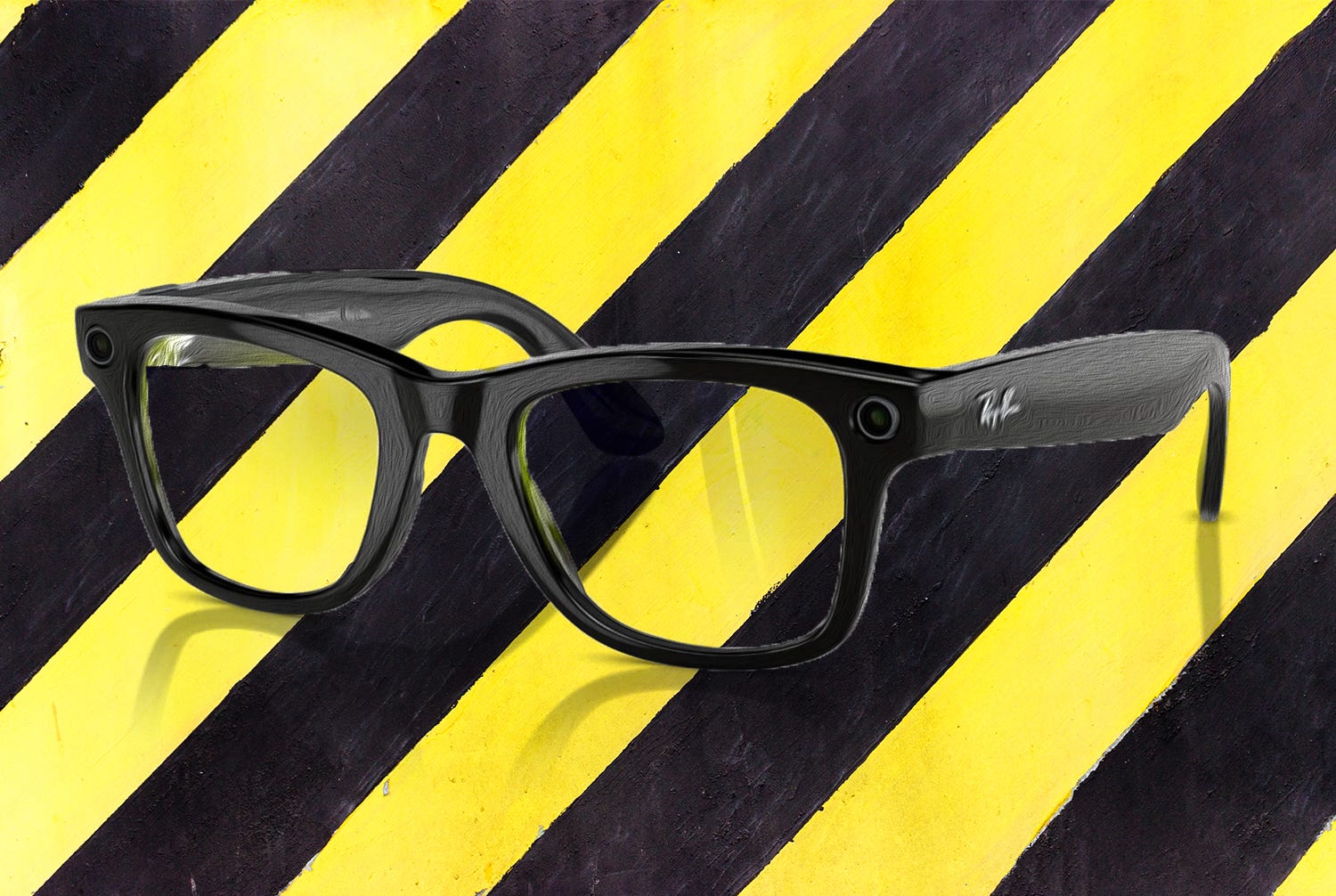
Nudists expect a certain level of privacy at their favorite beaches or resorts. However, the nature of their lifestyle has long attracted unwanted onlookers. Beachgoers have, for decades, contended with individuals in the bushes and behind the dunes using binoculars or cameras. In recent times, individuals have also begun taking covert photos with their smartphones at resorts and events. Unfortunately, rapidly advancing technology presents new challenges, and nudists concerned about privacy must remain alert to these developments.
On September 20, 2020, at the annual Facebook Connect conference, Meta CEO Mark Zuckerberg announced a partnership with EssilorLuxottica, the parent company of Ray-Ban, to produce a line of smart eyeglasses with integrated audio and photography capabilities. A year later, the first of these glasses, dubbed the Ray-Ban Stories, was released. Equipped with a built-in 5MP camera capable of taking up to 500 photos and 30 short videos, the device sold roughly 300,000 units during its initial release.
In 2023, the first-generation Meta smart glasses became available, featuring 12MP cameras, 3K video technology, and improved audio recording. By 2025, the company had partnered with eyewear company Oakley (also a subsidiary of EssilorLuxottica) to produce a second generation of smart glasses and added AI capabilities to its Meta Ray-Ban Display line of products, including a data screen built into the right lens, as well as a feature that allows the user to control the eyewear’s various functions through subtle wrist motions. The Display line can also access Facebook, Instagram, WhatsApp, and video conferencing tools, including a screen-sharing application.
By the end of 2025, Meta smart eyeglasses had sold over 7 million units.
Growing privacy concerns
While the Meta eyewear products include certain privacy features, most notably a small light near the temple that activates when recording, serious concerns have emerged regarding the effectiveness of such features, particularly in sunny conditions or in situations where a user might purposely conceal the light in order to make clandestine audio and video recordings of others.
More alarmingly, the devices have sometimes been paired with online facial recognition programs that can link a recorded individual’s face to their name, phone number, and home address, raising fears about personal safety and security.
A recent investigation by the Swedish newspapers Svenska Dagbladet and Göteborgs-Posten revealed that an AI center in Nairobi, Kenya, had exposed highly sensitive information to a team of Meta contractors whose jobs are to help “train” the device’s AI to better identify and label various objects and situations. Among the images the contractors reported seeing were sensitive financial statements, whatever a user was looking at on computer monitors or television screens, nudity, and even sexual encounters.
As troubling as privacy issues with smart glasses are currently, the situation is set to worsen in the near future. On February 13, 2026, a New York Times report revealed that Meta planned to embed facial recognition technology into its smart glasses. If implemented, these glasses could identify anyone in their field of view in real time, raising serious privacy concerns.
A new problem for nudists
The privacy and surveillance issues surrounding the growing presence of smart glasses should concern all individuals. Private conversations in public spaces may no longer be so private. A nearby stranger may well be recording an individual’s credit card data, medical records, or other sensitive information with their eyewear.
All nudists should be aware that this emerging technology can not only illicitly photograph or record them while nude at resorts, beaches, or events but also instantly broadcast such images worldwide. If facial recognition is integrated, strangers could instantly access their name, phone number, home address, employer, and contacts. The person ogling others at the beach may leave with much more than just a mental image.
Meta’s partnership with EssilorLuxottica means the company now conceivably has access to over 80% of the world’s eyewear brands and retail optical chains. It is safe to assume that as the popularity of these devices grows, privacy may erode quickly.
The Electronic Privacy Information Center has sent letters to the Federal Trade Commission, asking regulators to “act now to prevent this planned feature from being deployed in every bathroom, clinic, classroom, and house of worship” in the country, arguing that facial recognition technology poses a “grave risk to privacy, safety, and civil liberties and would cause widespread harm to the public.”
To confront this threat, apps are being developed that can potentially identify nearby smart glasses. One such app, Nearby Glasses, works by scanning the area for the device’s unique Bluetooth signals.
It is uncertain how effective these and similar apps might be, given the constantly evolving nature of technology and the growing popularity of smart glasses. However, they are one tool that individuals, especially managers of nudist resorts and event organizers, may use to identify those who have these devices on their properties. Policies and signage that prohibit smart glasses may effectively discourage guests with ill intentions at resorts. Unfortunately, privacy or anonymity in public spaces like beaches may now be a thing of the past. 🪐


Thank you for this article. My Pennsylvania Dutch mother used to say "We are so smart about how dumb we are." Our technology has often gotten ahead of our moral or social fabric. At the same time our nudist community has been changing as our behaviors continue to be found to have health benefits; physically, mentally, and internally with enhanced self-esteem. I see three paths. One - develop new technology to counter the newest technology; an on-going and expensive cycle to be endlessly repeated. Two - try to catch up to the newest technology with more public laws that are vertically impossible to enforce and often take place only once the offense has been committed. Three - as David Kramer, wrote we stop hiding and acknowledge that we do participate in a healthy activity of social nakedness for which we are not ashamed. It appears we are all learning that privacy in any public setting is becoming a thing of the past.
I won't judge others who don't share my view on this subject (pun intended), but I have no issues if someone wants to take my picture at a nudist beach or resort. I have nude pictures of me posted and I video chat regularly on nudist social media sites, so that cat is out of the bag. Personally, part of being a nudist (IMO) is the conviction that it's OK to be nude. I feel the same about photos in a resort or on a beach as I do on a city street. It's not going to steal my soul.