

San Gregorio's nude beach era is over
The tradition survived sixty years of private ownership. It won't survive becoming a state park.

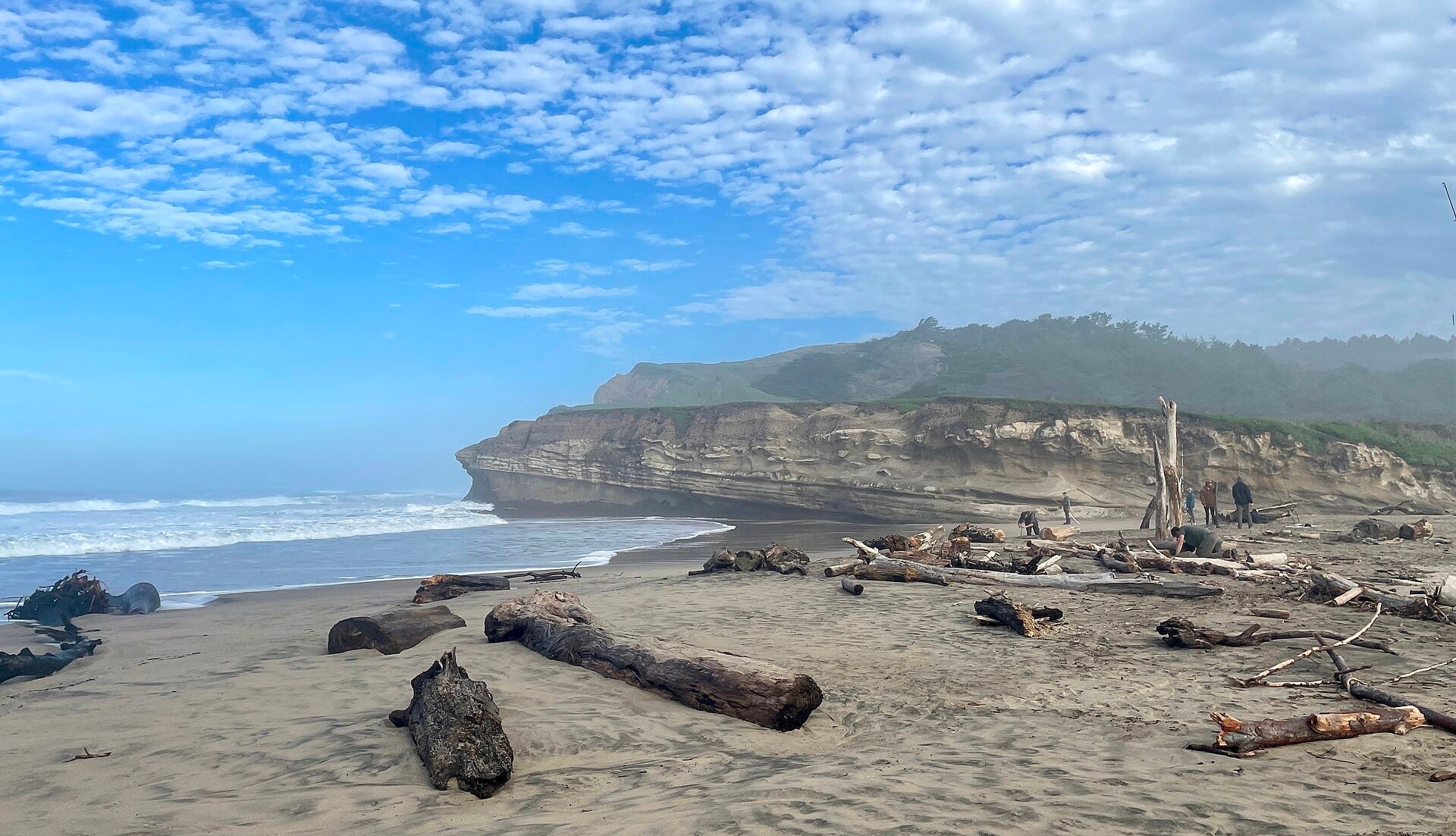
San Gregorio Ranch, the 238-acre San Mateo County property that has served as one of California’s oldest and best-known nude beaches since the 1960s, will open to the public on July 29 as an extension of San Gregorio State Beach, and clothing will be required.
State Parks confirmed this week that the Peninsula Open Space Trust, which purchased the property for $10 million in April, plans to donate it to California State Parks later this year. The ranch opens July 29 under a new agreement between POST, State Parks, and Friends of Santa Cruz State Parks, which will handle day-to-day operations. A State Parks spokesperson told Coastside News that “regulations for state beaches are intended to provide safe and inclusive recreation opportunities for all visitors and do not include clothing-optional recreation.” KQED confirmed that Friends of Santa Cruz State Parks executive director Bonny Hawley said the parks system will “educate the public about the rule change.”
That language is unequivocal. What San Gregorio has been for sixty years, it will no longer be. Rangers retain enforcement discretion, and what actually happens on the sand remains to be seen. But the structural condition that made the tradition possible (private land, tolerant owners, no state oversight) is gone.
To understand what that means, it helps to know what San Gregorio actually was, not just as a nude beach, but as a place in the history of American body freedom. The beach’s clothing-optional use dates to at least the mid-1960s, when San Francisco activist Jeff Poland began practicing nude sunbathing there as an act of civil disobedience, defying California’s indecent exposure laws. The beach gained wider notoriety when Darrell Tarver, a 28-year-old Air Force veteran and student at San Francisco State College, formed the Committee for Free Beaches and circularized campuses across San Francisco and Berkeley. According to a Time magazine account from the era, more than 500 nudists were making their way to San Gregorio each Sunday. Poland was later arrested at the beach. His case reached the California Supreme Court, which ruled in 1972 that nudity alone is not illegal unless accompanied by lewdness, a decision that quietly undergirded the legal tolerance naturists enjoyed there for the next half-century. The beach became one of the most consistently attended nude beaches in the state and developed particular significance for Bay Area LGBTQ+ residents, especially in the 1970s and ’80s, when other public spaces felt less welcoming. As Jesse Monteagudo wrote in Out South Florida, “San Gregorio Beach is America’s oldest nude beach… It is also the gayest, especially the northern end.”
What made San Gregorio work was its precarious arrangement: the beach itself was always public, but access ran through private land, and the landowners tolerated nude use. That arrangement held for decades, through multiple ownership transitions, through the decline of most of California’s naturist clubs, through the formalization of almost every other comparable space. It survived by flying under the radar, which is precisely the quality that state park status eliminates.
Planet Nude has covered this story since April 2025, when POST first announced the acquisition agreement. When we asked POST directly about clothing-optional use, Senior Manager of Media & Communications Marti Tedesco told us the organization is “committed to a future where public parking and access to this property and its beach remain available,” notably sidestepping nude use entirely. That careful language now looks like what it probably was: a preview of this outcome. “I’m not happy about it,” longtime naturist activist Bob Morton, from the American Association for Nude Recreation’s Government Affairs Team, told the Los Angeles Times. “The state park system has decided that all their parks are going to be clothed because God intended you to wear swimming trunks at the beach? It seems counterintuitive. You go there to be one with nature.”
The Press Democrat and others have framed this week’s news as a conservation win: more public access, more coastline protected from development, a milestone in Newsom’s park expansion goals. All of that is true. The price of that conservation, for naturists, is the end of a sixty-year tradition that helped define California’s role in the American body freedom movement.
A public planning process for the property’s long-term management is still ahead. State Parks is required to conduct community outreach before establishing formal policies, and those comment periods are where organized voices can have real impact. No formal advocacy group exists to represent nude beachgoers at San Gregorio. That gap has never cost more than it costs right now. 🪐


Well, the answer to begin fighting for what is being lost is in the originating history outlined in your article.
Lawyer up. Gather 500 nudists again each and every Sunday, have a spokesperson arrested and be prepared to remind the court of the precedent on nudity set by the Supreme Court.
Access must be allowed to continue as the law states, nudity alone is not illegal unless accompanied by lewdness.
Be the bee in their bonnet.
1960's Redux.
Civil Disobedience is back on the menu.
Somebody in the community must know people with money and sympathies to preserve what is being taken away.
Every military service person in America should be appalled at this sort of goings on. They fight for freedoms that are being stolen by bureaucrats and evangelists that have never read the Bible. If God turned up without clothes he wouldn't be accepted in the US of A!