

News of the Nude, Jul. 2026
Volume 43: Banned swims, painted bodies and the fight for public space

Welcome to another News of the Nude.
This month public nudity repeatedly became a test of institutional tolerance. A new leisure-center operator ended a 44-year naturist swim. Threats canceled a naked bike ride in Buffalo, while riders in Los Angeles were attacked with a BB gun. Around the same time, naturists defended longtime gathering places, filled a Florida beach for charity and appeared in the news as artists, protesters and advocates.
Before we dive in, many of you have probably already seen that we launched the 2026 Naturism Survey this week. Last year’s survey produced some of the most valuable reporting we’ve ever published, and this year we’re hoping to make it much bigger by reaching well beyond Planet Nude’s readership. If you haven’t already, please take 15 to 20 minutes to participate, then consider sharing it with your club, beach group or naturist friends. The broader the participation, the clearer the picture we’ll have of naturism today. Survey closes on August 18th.
Let’s get started. 🚀
News of the Nude, Vol. 43 🪐
Naturists banned from swimming naked after 44 years at Northampton leisure centre following swimwear row
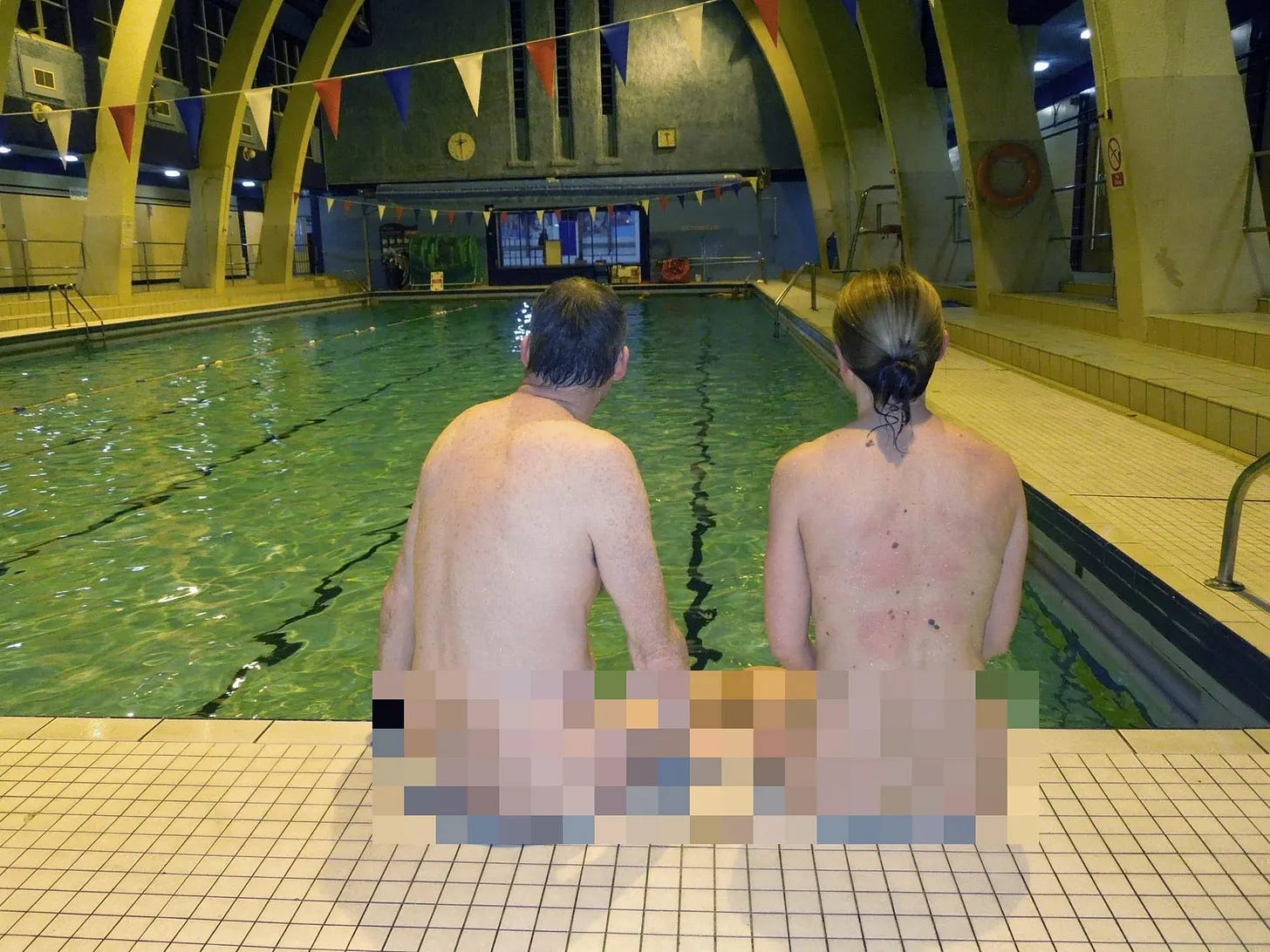
Northampton Sun Club lost its monthly swimming and sauna sessions after Everyone Active took over management of Mounts Baths and canceled the group’s future bookings. The private sessions had operated since 1982, serving approximately 200 members between the ages of 26 and 82. Everyone Active cited its swimwear policy and said it could not secure sufficient staff willing to work during the two-and-a-half-hour naturist bookings.
The local report quickly became the month’s largest naturist media story. The Telegraph amplified the club’s allegation of discrimination, while the Daily Mirror later reported that members were considering legal action. Club treasurer David Farnsworth argued that the group had completed every required safeguarding and risk-assessment procedure and had used the facility without incident for more than four decades.
One thing stood out in the coverage: reporters actually spent time describing what these swims were like. Members talked about friendship, exercise and routine instead of constantly having to deny stereotypes. That's still surprisingly uncommon. Forty-four years built a tradition, but one management change was enough to drain the pool. 🚀
Read our report:

World Naked Bike Ride canceled in Buffalo after death threats
Organizers canceled Buffalo’s World Naked Bike Ride, scheduled for August 1, after receiving death threats and what they described as overwhelming disapproval from community members. The annual ride was intended to protest oil dependency, car culture and greenhouse-gas emissions while drawing attention to cyclists’ vulnerability on public roads.
The organizers said the event’s message had been lost amid the oversexualization of nudity and harmful claims about participants. That explanation gets closer to the real story than the familiar “naked cyclists cause controversy” frame. Nobody argued the ride out of existence. They threatened it out of existence. That's a different kind of story, and a much more troubling one. 🚀
Read our full coverage:

Spencer Tunick Returns to Collective Nude Art With Gran Canaria Project Backing LGTBIQA+ Rights
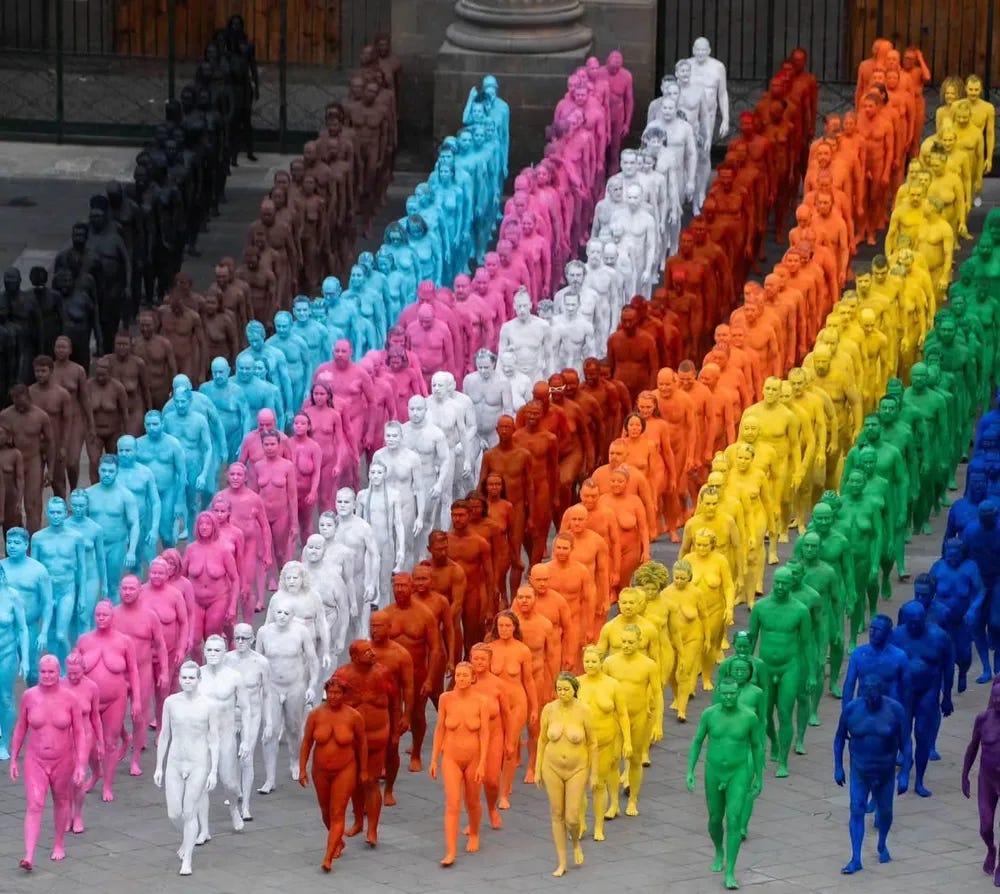
Photographer Spencer Tunick returned to Spain with Gran Spectrum, a collective nude installation staged July 26 as part of Culture & Business Pride in Gran Canaria. Hundreds of volunteers formed compositions inspired by the colors of the Pride flag, linking Tunick’s large-scale public artwork with support for LGTBIQA+ rights.
Tunick’s work transforms individual vulnerability into collective form. The bodies remain recognizable, but conventional markers of rank, wealth and identity fall away as the crowd becomes landscape and pattern. His installations are not naturist events, yet they demonstrate something naturists understand well: shared nudity can reduce self-consciousness rather than intensify it, particularly when the surrounding context is clear and consensual. 🚀
2 people shot during naked bike ride through downtown Los Angeles
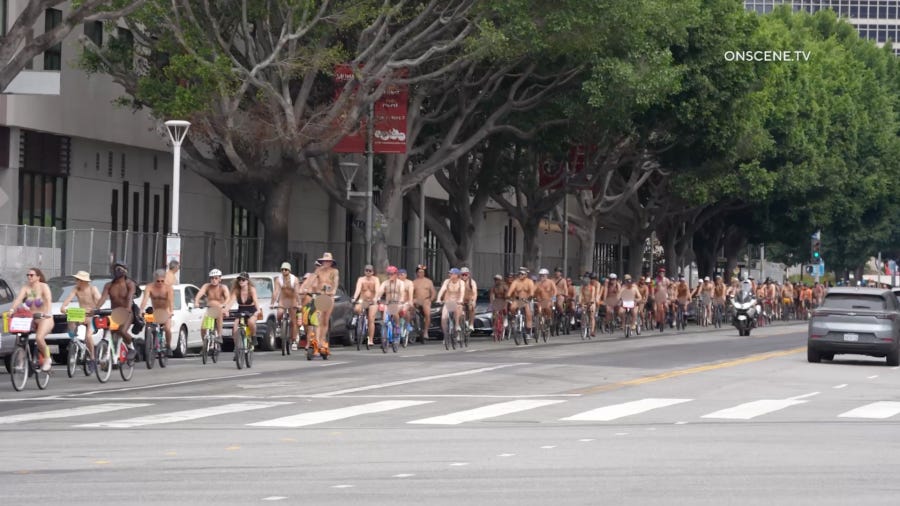
Two people suffered lacerations after a man dressed in black and riding a scooter allegedly fired a BB gun near participants in Los Angeles’ World Naked Bike Ride. Police later detained a suspect, while the victims were treated at the scene. The incident occurred as cyclists traveled through downtown during the international protest against oil dependency and unsafe conditions for riders.
KTLA’s headline reported that two people had been “shot” without identifying the weapon as a BB gun until the article itself. The attack was serious, but withholding that detail inflated the initial impression and fused two dependable attention magnets: gunfire and public nudity. Combined with the later threats in Buffalo, the incident also raises a more sobering question about whether naked riders are increasingly being treated as available targets. 🚀
Lake Geneva nudists fight for their lake section
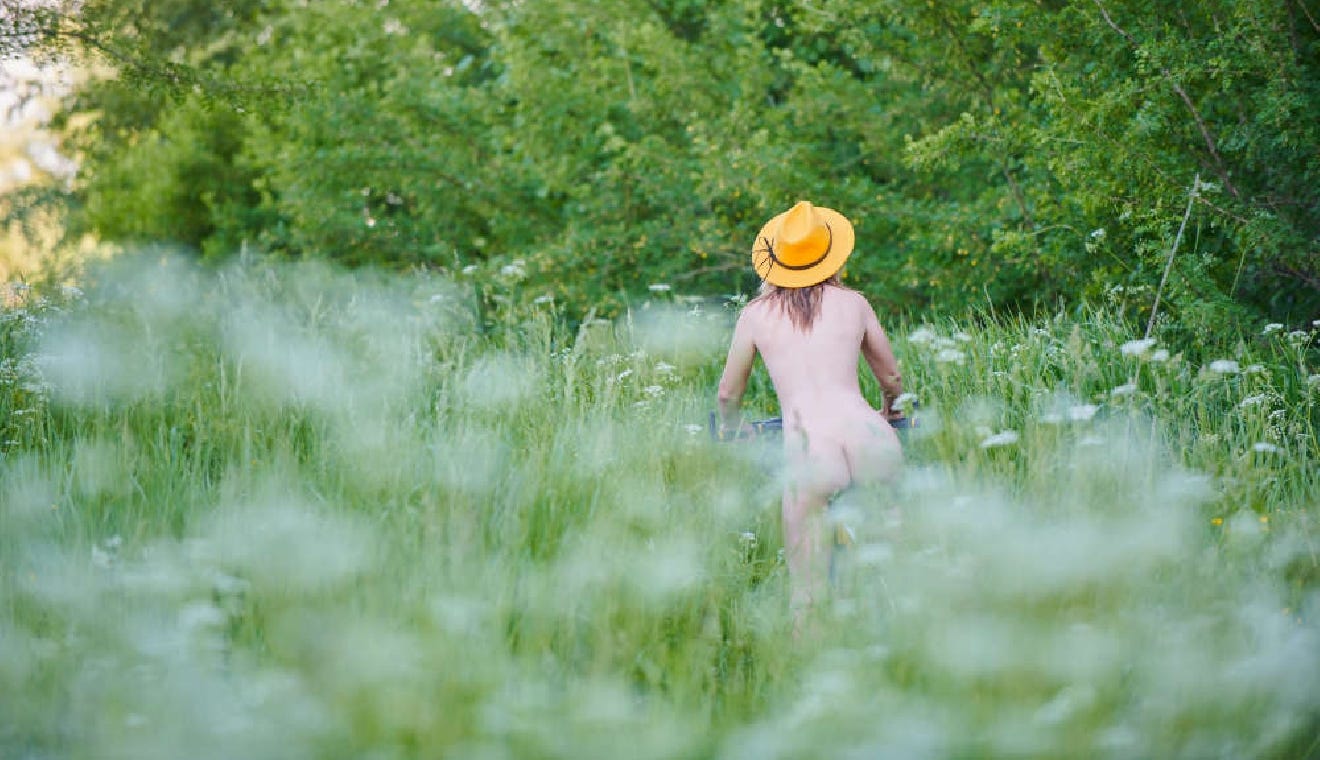
Naturists have gathered for roughly 30 years along a secluded section of Lake Geneva, where regular visitors clean the shoreline and maintain an informal, respectful community. Recently, however, complaints, police visits and fines reportedly reaching 300 Swiss francs have increased. Longtime users also worry that greater publicity is attracting people who do not respect the area’s established customs.
Like many unofficial nude beaches, the site has survived through custom rather than formal recognition. That arrangement works until complaints draw institutional attention, at which point decades of accepted use may carry little legal weight. The report does a useful job of distinguishing the naturists who maintain the area from sexual or disruptive conduct, rather than treating everything occurring near a nude beach as one undifferentiated problem. 🚀
This News of the Nude is sponsored by
Naturist Education Foundation (NEF)

Supporting naturist initiatives and preserving naturist history.
Naturists skinny dip at Blind Creek Florida beach
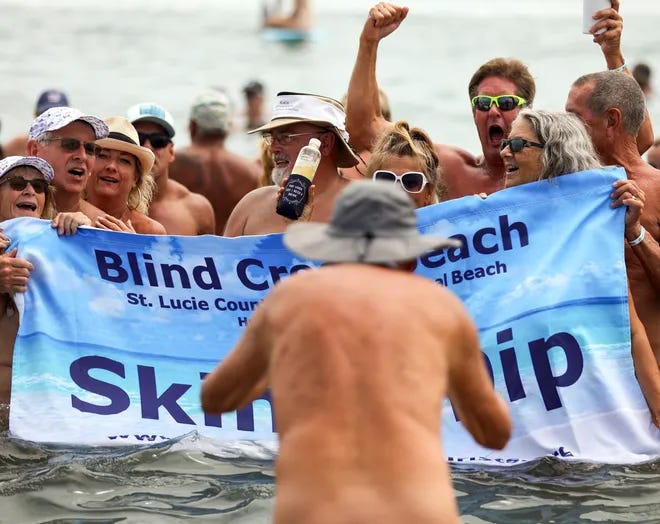
Five hundred seventy-one people entered the Atlantic together at Blind Creek Beach in St. Lucie County, Florida, during International Skinny Dip Day. Hosted by Treasure Coast Naturists, the annual celebration regularly draws some of the largest reported skinny-dip crowds in the country, reinforcing Blind Creek’s status as one of the most active clothing-optional beaches in the United States.
Unfortunately, the Blind Creek event does not participate in the SkinnyDipDay.org fundraiser for the Fistula Foundation, which feels like a missed opportunity given the size and visibility of its gathering. Elsewhere, thirty-two teams raised more than $18,000 this year to fund corrective surgeries for women living with obstetric fistula. Team Planet Nude hosted its own dip in Boulder City, Nevada, and raised $3,495, enough to fund five surgeries and begin a sixth.
TCPalm covered Blind Creek primarily through a substantial photo gallery, allowing the beach and its community to appear without the coy cropping or pixelation often imposed on naturist events. The result is refreshingly straightforward local journalism: hundreds of people gathered at a legally recognized clothing-optional beach and enjoyed the water together. Sometimes the most radical media framing is simply showing what happened. 🚀
Read our full coverage:

Nude protest in Portland against the National Guard and ICE
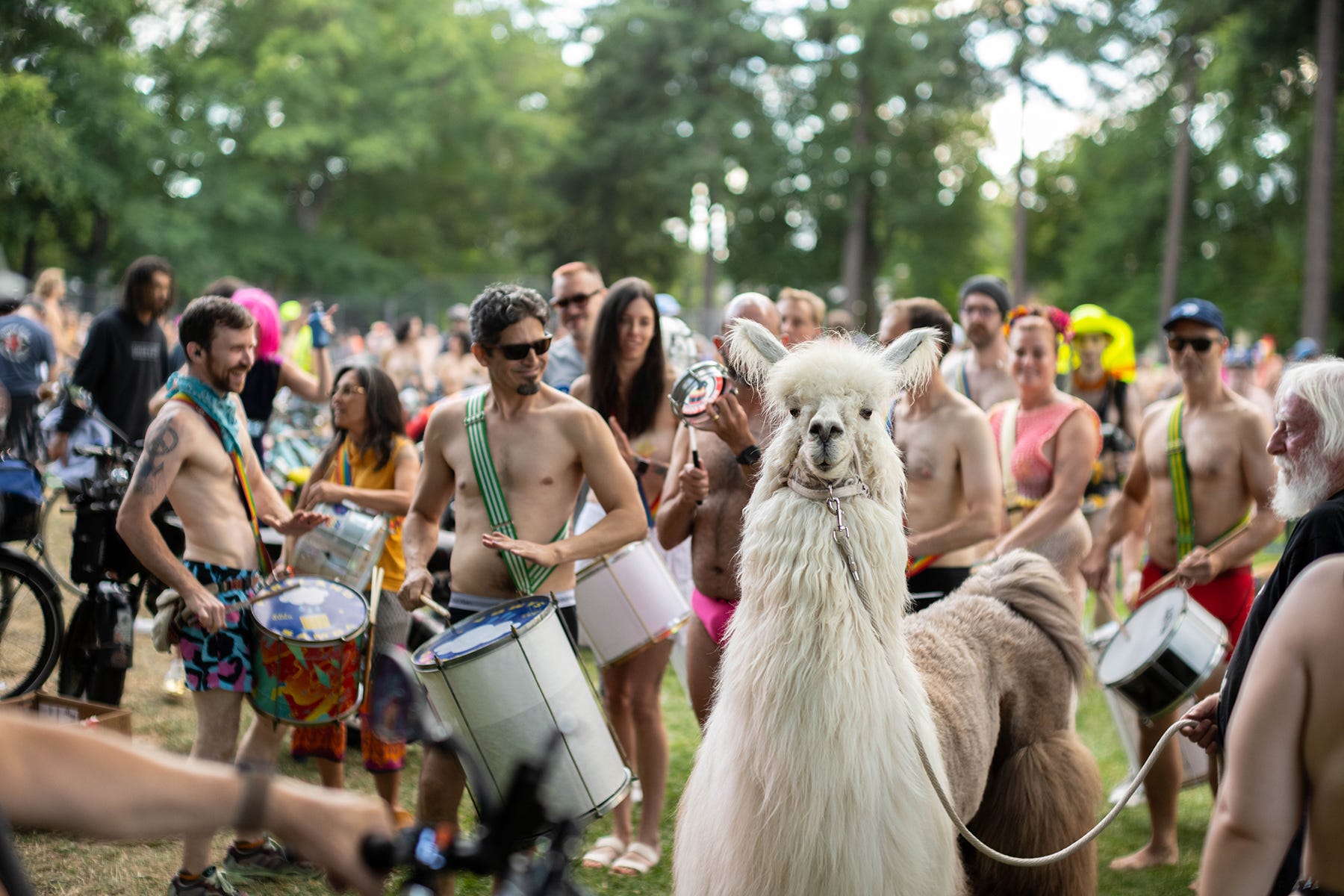
Nude and partially nude demonstrators gathered in Portland as part of protests opposing immigration enforcement and the presence of the National Guard. The action drew on the city’s long history of using public nudity as political expression, where the exposed body becomes a symbol of vulnerability, resistance and refusal to participate in ordinary civic decorum.
International coverage predictably emphasized the visual novelty, but the nudity was the protest’s language rather than an incidental spectacle. Public nakedness can interrupt the familiar stream of signs, chants and speeches by making the demonstrator’s physical vulnerability impossible to ignore. Whether viewers found it persuasive or distracting, the action again demonstrated nudity’s unusual ability to seize attention before a word is read. 🚀
Vintage photos show Moonstone Beach in South Kingstown, RI
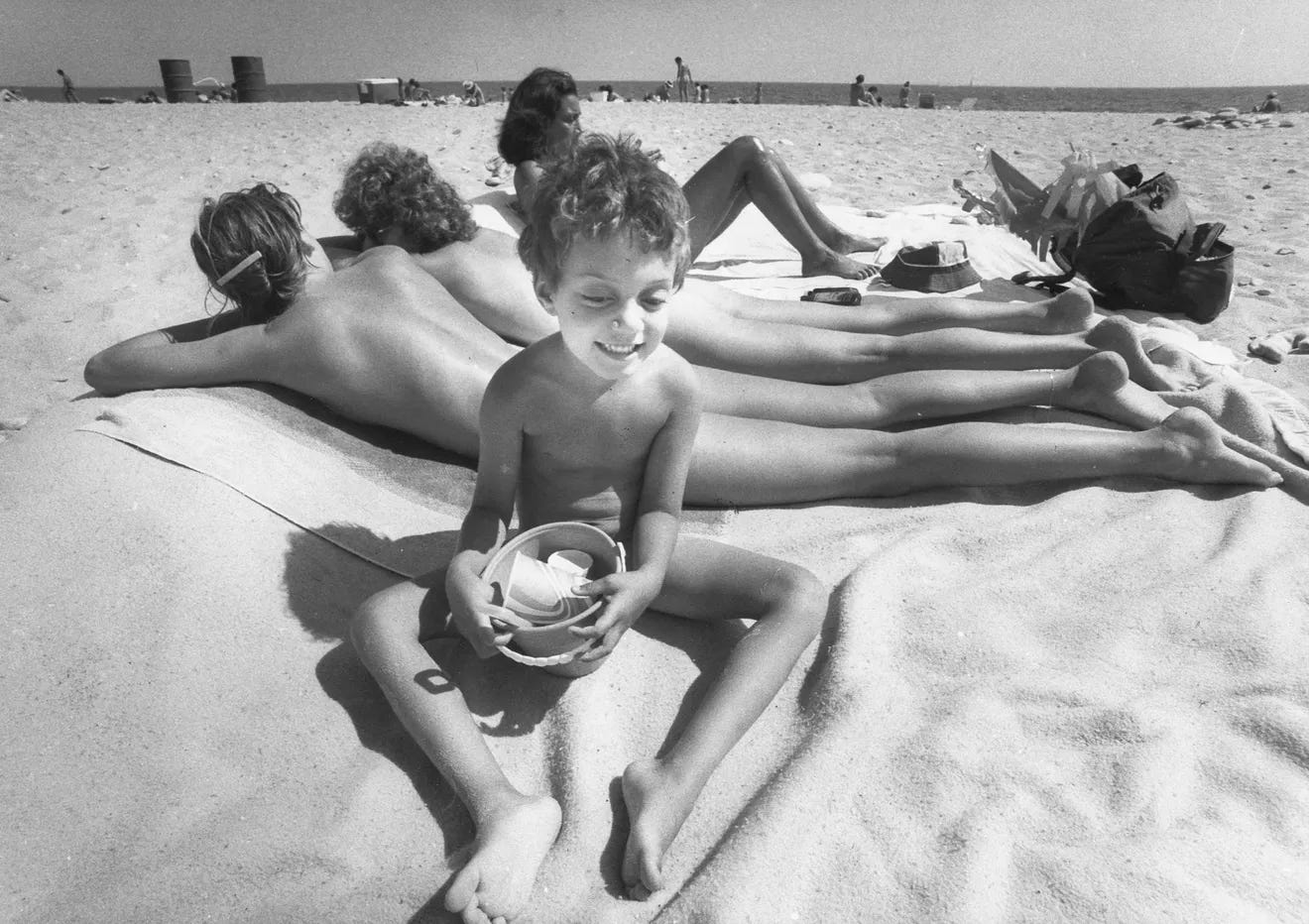
The Providence Journal opened its archives for a photographic look at Moonstone Beach, the Rhode Island shoreline remembered for its natural beauty, environmental significance and decades of nude recreation. The gallery revisited a period when naturists were a familiar part of the beach’s identity before state restrictions and changing management brought that era to an end.
Historical photo galleries can easily reduce nude beaches to local eccentricity, but these images preserve evidence of a real community and customary use. They also complicate the idea that public naturism was always marginal or hidden. At Moonstone, nudity was visible enough to enter the newspaper archive and ordinary enough to become part of the region’s collective memory. The beach may have changed, but the photographs refuse to let that history evaporate with the tide. 🚀
Nudists, peaceniks and freeloading travellers: the people keeping the Esperanto dream alive
The Guardian’s long read examined the surprisingly active community surrounding Esperanto, the constructed international language created in the late 19th century. Among the idealists, travelers, activists and unconventional subcultures keeping it alive are naturists, whose presence reflects a long overlap between movements seeking international understanding and those questioning social conventions around the body.
The headline uses “nudists” as one of several colorful hooks, but the connection is more than decorative. Naturism and Esperanto both offer voluntary systems for imagining society differently, one through the body and the other through language. Each has repeatedly been declared obsolete, yet continues through committed communities that find practical value in an ideal others consider quaint. 🚀
Naturism in Germany, a long tradition fighting to survive
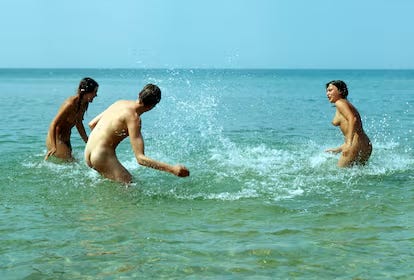
Germany’s Freikörperkultur, or FKK, helped make social nudity an ordinary part of life at beaches, parks, lakes and saunas, particularly in the former East Germany. El País examined whether that tradition is weakening as younger generations participate less often, established clubs struggle to recruit new members and historically nude spaces become increasingly mixed.
The article frames German naturism as both a living practice and endangered cultural heritage. That diagnosis may be too tidy. Formal clubs and inherited customs can decline while the underlying appetite for body freedom moves into festivals, wellness spaces, informal gatherings and less organized forms of recreation. After a month of bans, protests, celebrations and contested access, Germany provides a useful wider view: naturism may be fighting to survive, but survival does not necessarily mean remaining unchanged. 🚀

Join us on Discord
Daily updates, extra content, real community. Link your Planet Nude paid subscription to unlock exclusive channels and more inside the Discord.

That’s it for Vol. 43.
That’s it for this month’s News of the Nude. Thank you for joining us as we followed the places where nudity became recreation, protest, history and public debate.
We’ll see you next month. Until then, stay curious, stay open and keep making room for every body. 🪐