

Court expands protection for naturism at Brazil’s Praia do Pinho
January ruling blocks arrests and allows nude recreation to resume

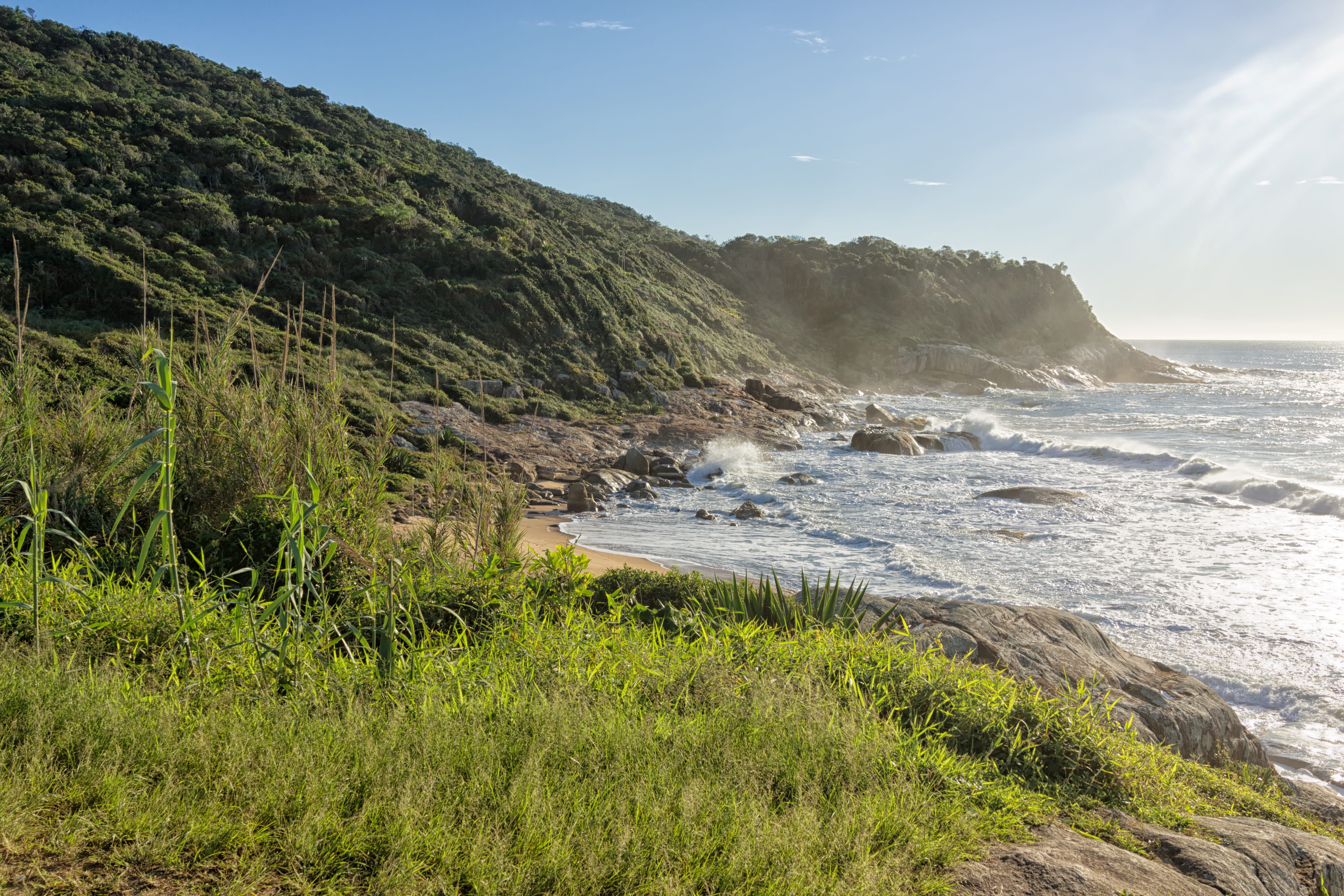
A Santa Catarina judge has issued a new ruling further limiting police action against naturists at Praia do Pinho, Brazil’s first officially recognized naturist beach, reinforcing earlier judicial protections secured through legal action by theFederação Brasileira de Naturismo (FBrN).
The decision, issued January 16th by the Santa Catarina Court of Justice, grants a salvo-conduto coletivo—a collective safe-conduct order—preventing arrests or detention of individuals solely for nonsexual nudity on the sand and in the sea at Praia do Pinho while the broader case remains under review. The order follows weeks of legal uncertainty after Balneário Camboriú adopted a new municipal master plan and decree removing naturism from its coastal policy.
The latest ruling stems directly from a petition filed by FBrN, which has led the legal response since the city’s December crackdown. In late December, the federation successfully obtained a preliminary injunction blocking criminal charges for “obscene acts” based on nudity alone. The January order expands that protection by explicitly shielding beachgoers from police enforcement actions tied to public nudity in the traditionally naturist area, after a naturist was arrested at the beach last month.
FBrN president Paula Silveira has emphasized that the federation’s actions were prompted by a sudden shift from long-standing tolerance to aggressive enforcement, including the arrest of a nude individual in a campground adjacent to the beach. According to Silveira, the organization moved quickly to prevent what it viewed as unlawful criminalization of a culturally established practice.
Importantly, the injunction has not overturned Balneário Camboriú’s municipal ban on naturism, but it has now repeatedly drawn a legal boundary between administrative regulation and criminal law. Judges have affirmed that nonsexual nudity at Praia do Pinho, given its decades-long history and recognized codes of conduct, cannot automatically be treated as a criminal offense under Brazil’s Penal Code.
City officials have indicated they may continue to pursue administrative measures and have signaled intent to challenge the rulings. For now, however, the court’s orders mean police cannot arrest or detain individuals simply for being nude within the defined area of the beach.
For active naturists in Brazil, the past few weeks have made one thing clear. The protections now in place exist because FBrN acted quickly, challenged the arrests in court, and forced judges to confront how long-established naturist spaces are being policed. 🪐


Um triunfo fenomenal!