

The freedom of being seen
Looking beyond the "body positive" trend to create a more inclusive and sustainable naturist culture

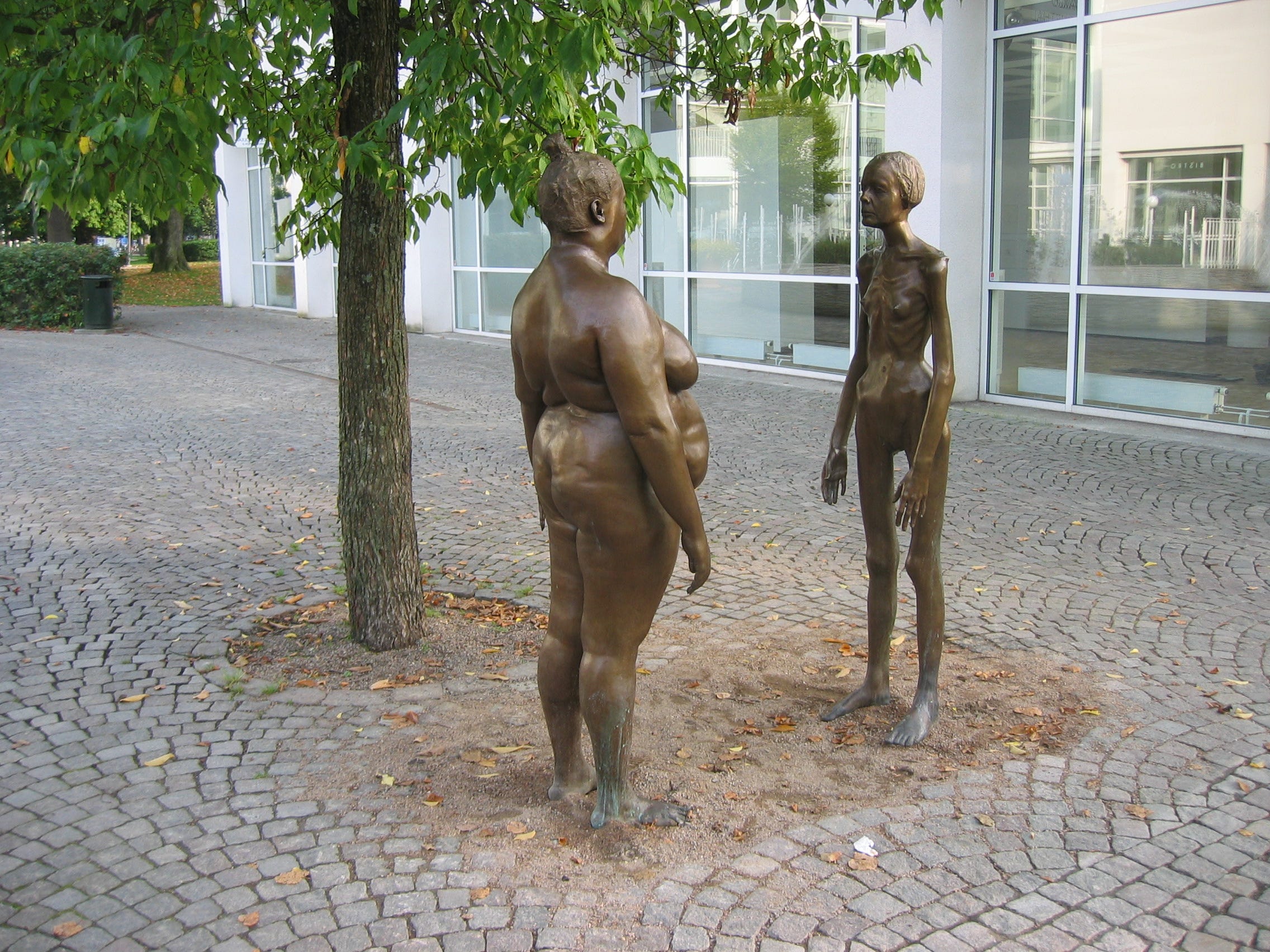
The first time someone enters a naturist space, there is usually a moment of profound realization. It is not necessarily the thrill of the breeze or the sun on skin that hits first. Rather, it is the visual evidence that the airbrushed images we see on billboards are a lie. In a true naturist environment, you see surgical scars, stretch marks, uneven tans, folds of flesh.
For a movement that prides itself on being the ultimate expression of body acceptance, you would think that diversity would be its greatest strength. Yet, as much as naturism claims to be a refuge from the judgments of the clothed world, it is not immune to the pervasive reach of fat-shaming.
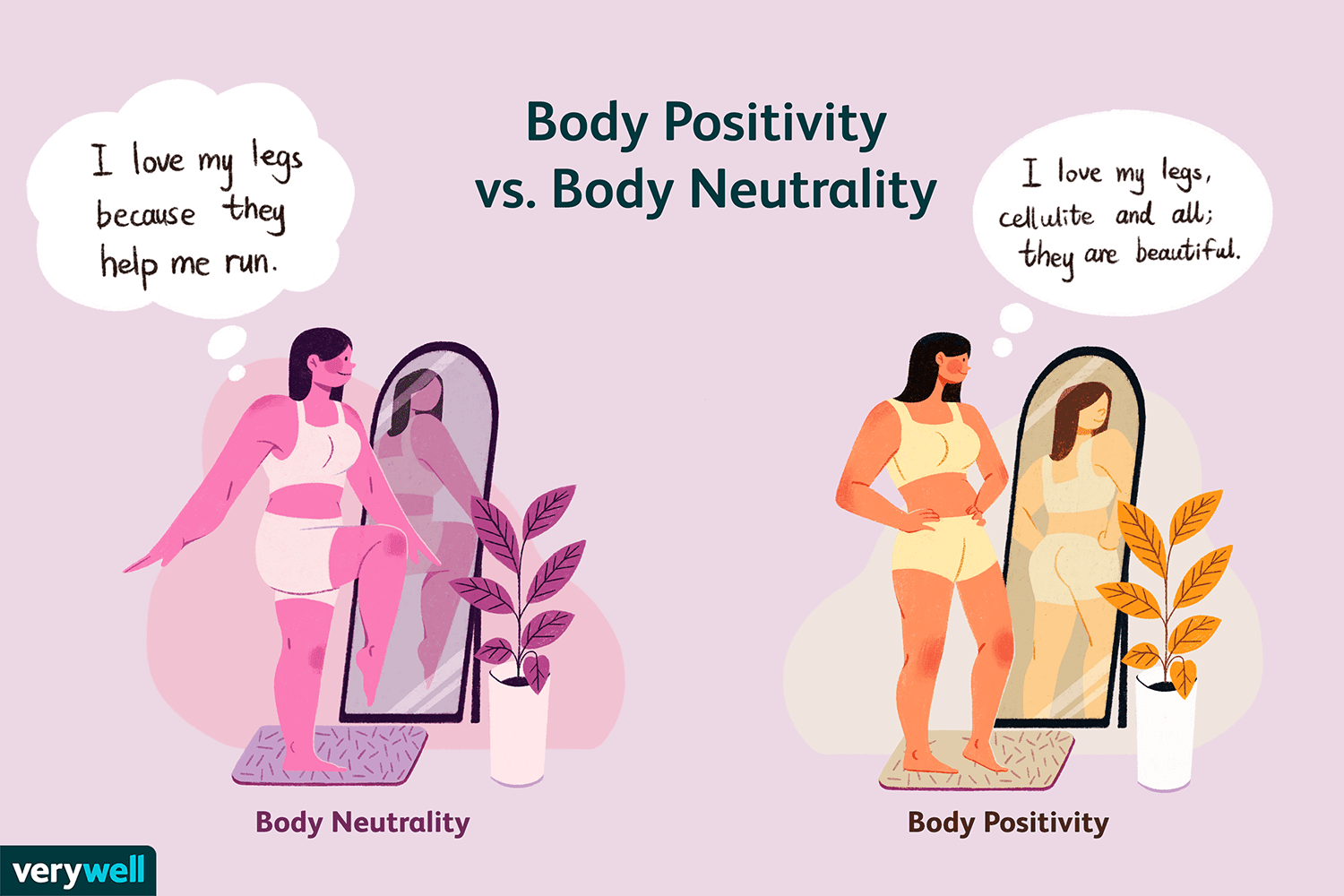
When we bring our biases into these spaces, we don’t just hurt individuals who are obese, we undermine the very foundation of what it means to be a naturist. For a movement that purports to help people find body acceptance, it sometimes adopts a toxic view of body positivity. To make our way of life accessible and inclusive to a broader coalition, we need to shift our focus from an ethos of body positivity to something more grounded and sustainable: body neutrality.
For years, the mainstream conversation around body image has been dominated by body positivity, and the reasons are understandable. Who doesn’t love positivity? It is a well-intentioned movement that encourages everyone to love their reflection and see themselves as beautiful. While this has helped many, it also places a heavy burden on the individual. It suggests that if you do not feel beautiful every time you look in the mirror, you are failing.
Body neutrality offers a different path. It is the radical idea that you do not have to love your body to respect it. It is about acknowledging that your body is a vessel, a tool that allows you to experience the world, rather than an aesthetic object to be constantly appraised. As Anne Poirier, author and body image expert has noted, “Body neutrality is the bridge between body loathing and body love.”1 It allows us to exist in our skin without the pressure of performing confidence.
“Body neutrality is the bridge between body loathing and body love.” —Anne Poirier
In a naturist context, body neutrality is incredibly powerful. It takes the focus off the visual and places it on the experiential. When we stop worrying about whether our bodies are “good enough” to be seen, we can finally focus on the actual benefits of social nudity: the sense of equality, the connection to nature, and the removal of the social markers that clothes provide. The freedom we all love. And importantly, true body acceptance.
Fat-shaming in naturist spaces represents a structural failure. When fat-shaming enters the naturist movement, it creates a hierarchy in a space that is supposed to be egalitarian. Naturism is built on the idea that without clothes, we are all just human. We lose our status, our wealth, and our social class. However, when thinness becomes the new “uniform” of acceptability, we are simply replacing one set of restrictive social markers with another.
Fat-shaming in these spaces is often subtle—especially for people who have never been obese—but the more you keep an eye out for it, the more you see it. It shows up in the lack of representative imagery in club brochures, in accessibility of grounds or lodging, in inclusivity in sports and programming, or in just in the way energy shifts in certain social encounters. Often it is more overt, disguised as “concern for health,” a common tactic used to justify exclusion. This behavior is toxic because it reinforces the idea that some bodies are more worthy of being seen than others, and pushes against people’s autonomy over their own bodies and health.
If a person feels they must lose weight before they are “ready” to visit a nudist resort, then that resort has failed its mission. Naturism should be the cure for body shame, not a place where it is amplified. By allowing fat-shaming to persist, the movement alienates a significant segment of the population, and one that could benefit most from the freedom of social nudity. It turns a philosophy of liberation into a gated community for the aesthetically privileged.
The myth of the visual diagnosis
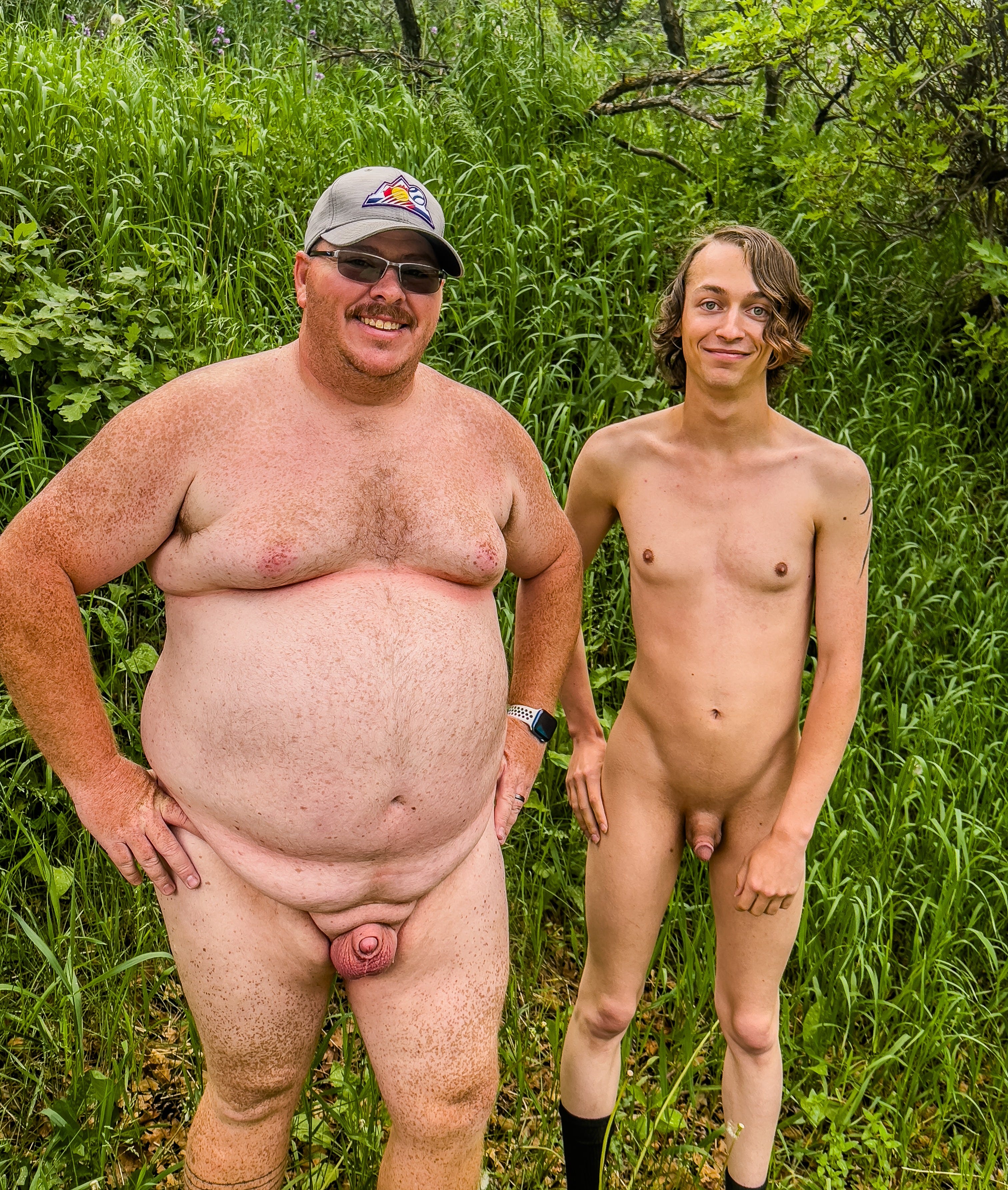
One of the most persistent barriers to true body neutrality is the urge to equate a person’s appearance with their medical records. In many social circles, including naturist ones, fat-shaming is often rebranded as a “concern for health.” This allows the critic to maintain a sense of moral superiority while masking their bias. But the reality is that health is a complex, multi-dimensional state that cannot be determined by looking at a person across a pool or on a hiking trail.
The idea that thinness is a universal synonym for health is a medical oversimplification that has been thoroughly debunked by modern medicine. Metabolic health, cardiovascular fitness, and mental well-being exist across a vast spectrum of body types. Many larger individuals lead active lives and possess excellent clinical markers, while many thin individuals may struggle with chronic illness, poor nutrition, or sedentary habits. When we judge a body based on its size, we are relying on a visual shorthand that is frequently wrong.
Weight is not a behavior, and it is not a direct proxy for health. By moving away from weight-centric thinking, we recognize that health is about what a body can do and how it feels, rather than how much space it occupies.
The tendency for people—however well-meaning—to visually diagnose others is particularly damaging in the context of a naturist environment. It creates a culture of scrutiny that is the exact opposite of the relaxation and acceptance that the movement promises. If we are busy assessing the “health” of those around us, we are failing to practice the core tenet of naturism: acceptance of the human form as it is. This tenet inherently cannot come with conditions.
True body neutrality accepts that some people are healthy, some are not, and most are somewhere in between, but none of those states should determine a person’s right to exist comfortably and without judgment in a communal space.
The weight of fat shame
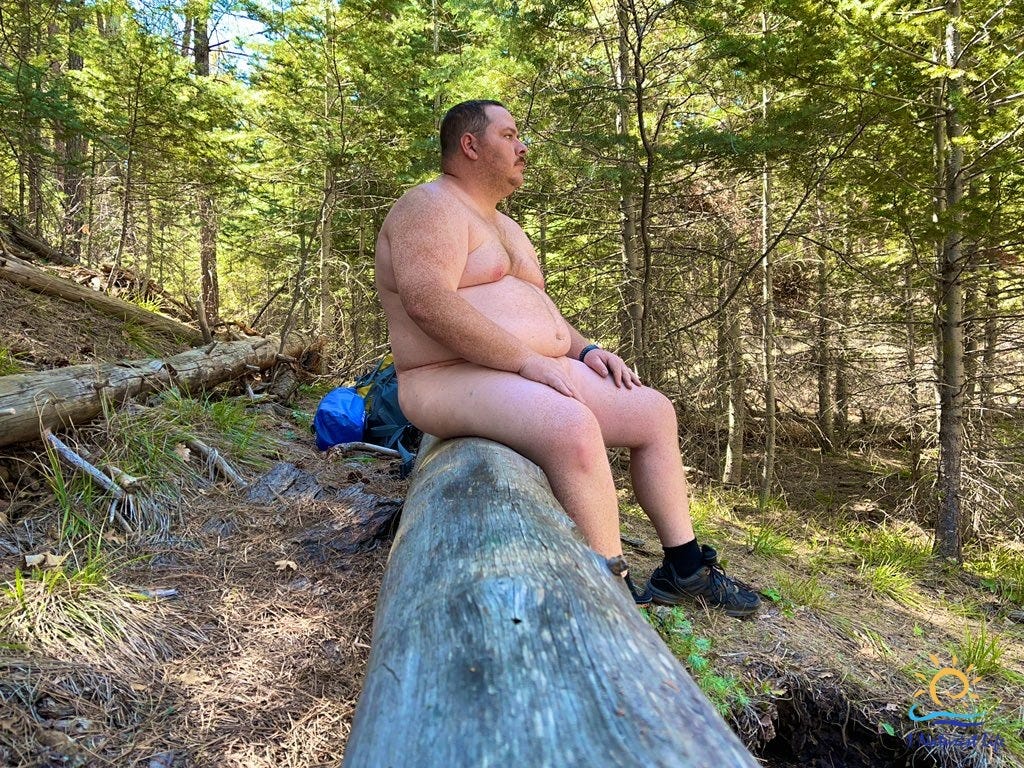
As a gay man who is considered overweight by “textbook” standards, I have felt the sting of silent judgment more times than I can count. In the queer community, there is often an intense devotion to a specific kind of lean, muscular aesthetic that can make anyone outside that narrow window feel like an outsider. Even with the security of a loving marriage, I am not immune to the way strangers project a narrative of poor health onto me simply because of my size.
The irony of this judgment is particularly sharp when I look at my own medical reality. If you were to examine my chart, you would see a man in excellent physical standing. My blood pressure is textbook, and my bloodwork labs come back near perfect every single time I have a checkup. These are the objective facts of my health, yet they are entirely invisible to a person looking at me across a pool or a sauna.
This disconnect between my actual health and how I am perceived is where the true damage occurs. While my physical body is thriving, the constant pressure of being shamed for my weight takes a significant toll on my mental health. It is exhausting to feel as though I must constantly defend my right to exist in a body that others have deemed a problem. When I enter a naturist space, I am looking for a reprieve from that exhaustion. I am seeking a sanctuary where the social hierarchies of the clothed world are supposed to vanish. When fat shaming follows me into the one place where I am meant to feel free, it erodes the sense of safety that is essential for true relaxation.
Building a more neutral future
The survival of the naturist movement depends on its ability to attract younger, more diverse crowds. For many people in their twenties and thirties, body inclusivity is not a luxury; it is a requirement. This generation has grown up with a heightened awareness of how harmful traditional beauty standards can be. If they walk into a naturist club and sense a culture of judgment or “fat-talk,” they will not return.
Furthermore, fat-shaming hurts everyone, even those who fit the current beauty standard. It creates an atmosphere of surveillance. When we judge others for their size, we are implicitly acknowledging that we are also being judged. This keeps everyone on edge, constantly checking their posture or wondering if they look okay from a certain angle. It robs us of the relaxation that is the entire point of being clothes-free. It denies us the basic respect that is the currency of naturism. Without it, the movement is just a collection of people without clothes on. With it, it becomes a transformative and radical social practice of rejecting the pervasive stigmas of the outside world.
To move forward, organized naturism, naturist advocates and individuals must actively work to dismantle the “body beautiful” myth. This starts with representation. If your website and social media posts only shows young, fit, athletic couples, you are sending a clear message about who is welcome. We need to see bodies of all ages, sizes, and abilities reflected in the movement’s public face.
On an individual level, it means practicing the art of not commenting on bodies, even in a complimentary way. In a body-neutral space, we talk about the temperature of the water, the quality of the hiking trail, or the book we are reading. We move away from the “look at you!” culture and toward a “glad you’re here” culture.
The naturist community has the potential to be lead the way in the body neutrality movement. It is the only space where the reality of the human form is consistently and honestly on display. By rejecting fat-shaming and embracing the idea that every body is a neutral fact of life, we can create a culture that is truly liberating. We can finally stop looking at each other and start seeing each other. 🪐
Poirier, Anne. The Body Joyful: My Journey from Self-loathing to Self-acceptance. Woodhall Press, 2021.
I love all of your essays Dustin, but this is among your best. Just politically speaking, you're not going to be making any friends fat-shaming nearly half of the population. I think we all want our lifestyle to become more accepted and more popular. As Dustin pointed out, we should be reaching out to those who would want to try it but have body-shame issues, to show them we are more alike when we are naked and that they have nothing to be ashamed of. All naked bodies are beautiful.
Dustin, this is easily the best essay on body positivity, fat shaming, and body neutrality I've ever read. Practically every paragraph has a line that I want to set aside to quote. Truly an epic piece - thank you so much for writing it!