


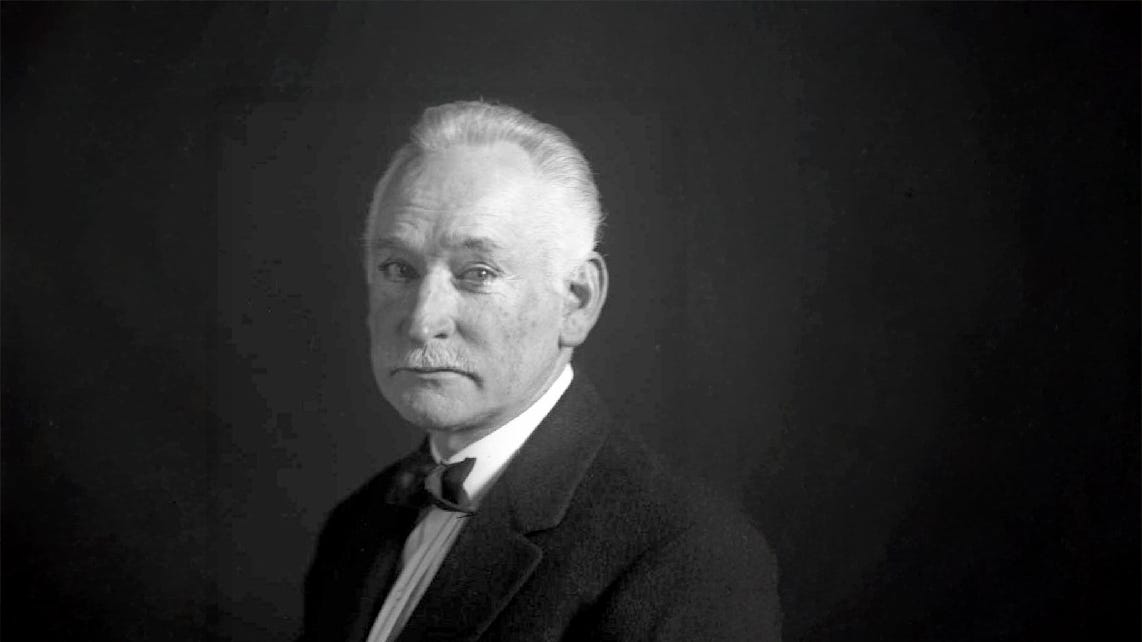
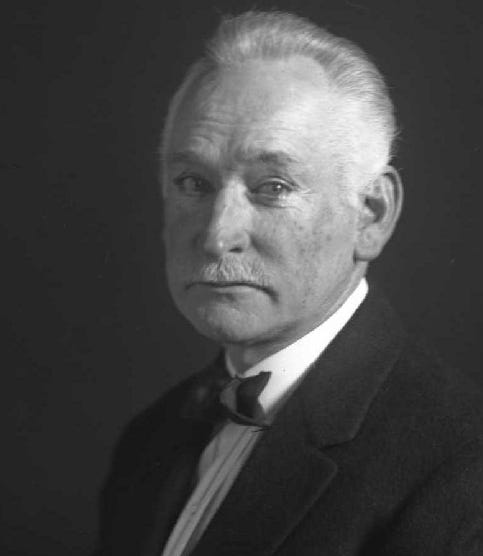
In the mid-1800s China was seeking ways to build steel steam ships. During that process a marine architect and shipbuilder, Miers Coryell, who was from the USA, went to China and took along his young adult son, John Russell. Along the way, in 1869, that young man visited Japan and had an eye-opening, mind-altering experience – social nakedness.
Social bathing was still taking place in Japan at the time, and he was able to witness it first-hand during its waning days of common practice. That young man was John Russell Coryell, who soon would become a prolific and influential author back in the USA.
Born in 1851, in 1869 as a young man, John Russell Coryell visited Japan with friend Horace Fletcher, who would become a future natural health advocate. Coryell experienced social nakedness through mixed-sex bathing and common observance, then brought the idea home with him.
In the 1890s he wrote:
I went there in 1869. I had never until then seen a naked woman in my life. When, on my way there, I was told that in Japan I would see nude women to my heart’s content, I did not believe it. I mean that I did not believe I would ever be contented with so delectable a sight. Woman was the one mystery to me. I had been educated to long to know the one thing I must not know. Nature bade me learn and our system said, “it is shamefulness, it is lust, it is sin, vice - oh everything but natural.”
Will not any one say I was primed to plunge headlong and eagerly into the bottomless pit that yawned and waited for me? What happened? I saw hundreds, perhaps thousands, of naked women. For a little while I tried to look at each one, then nudity became commonplace, and I no longer looked for that, but, in growing delight, sought for beauty.
Ah! as long as I live, I shall not forget one dewy morning in the summer, walking the streets of Nagasaki. The city is built upon the sides of chains of hills, so that one street looks down upon the house-tops of the street below, as well as into the back gardens. I stopped again and again to drink in with my eyes the beauty of the landscape which is without a superior. Then I saw a sight that drove landscape quite out of my mind.
In a spacious back garden was a stone-curbed well; by its side stood a girl, about eighteen years old, quite nude, and holding above her a wooden pail from which the clear sparkling water was pouring upon her firm breasts. She caught sight of me as I looked, laughed gayly and called up to me a cheery good morning. I asked her if the water was not cold, and she answered joyously, “Yes, but so good.” I watched her draw up and pour two more pails of water over her glistening body. Then, with a pleasant, bright “syonara” she ran into the house.
I had never seen her before and I never saw her again. She did not scream with terror and shame at having me see her lovely body, and no vile or shameful thought entered my brain at the sight of her. She was as frank and modest and innocent as our baby girls, who have not yet been told that their persons are shameful. I dare to say the question of sex was not present in my mind when I looked at her, and I know that the remembrance of her pure unconcern under my eyes has gone far toward effacing the impurities forced into my young brain by the systems of education that I, with my fellows, was subjected to.
Coryell lived in China 1870–1875, where his father was building ships. John Russell served as a magistrate, U.S. Vice-consul in the Shanghai and Canton civil courts. He returned to San Francisco, California and worked as a newspaper journalist. He then worked at the Santa Barbara Press newspaper until 1882, after which he moved to Brooklyn, New York. He later lived in Orange County, New York and had a summer home in Readfield, Maine, where he and his family and friends engaged in social nakedness.
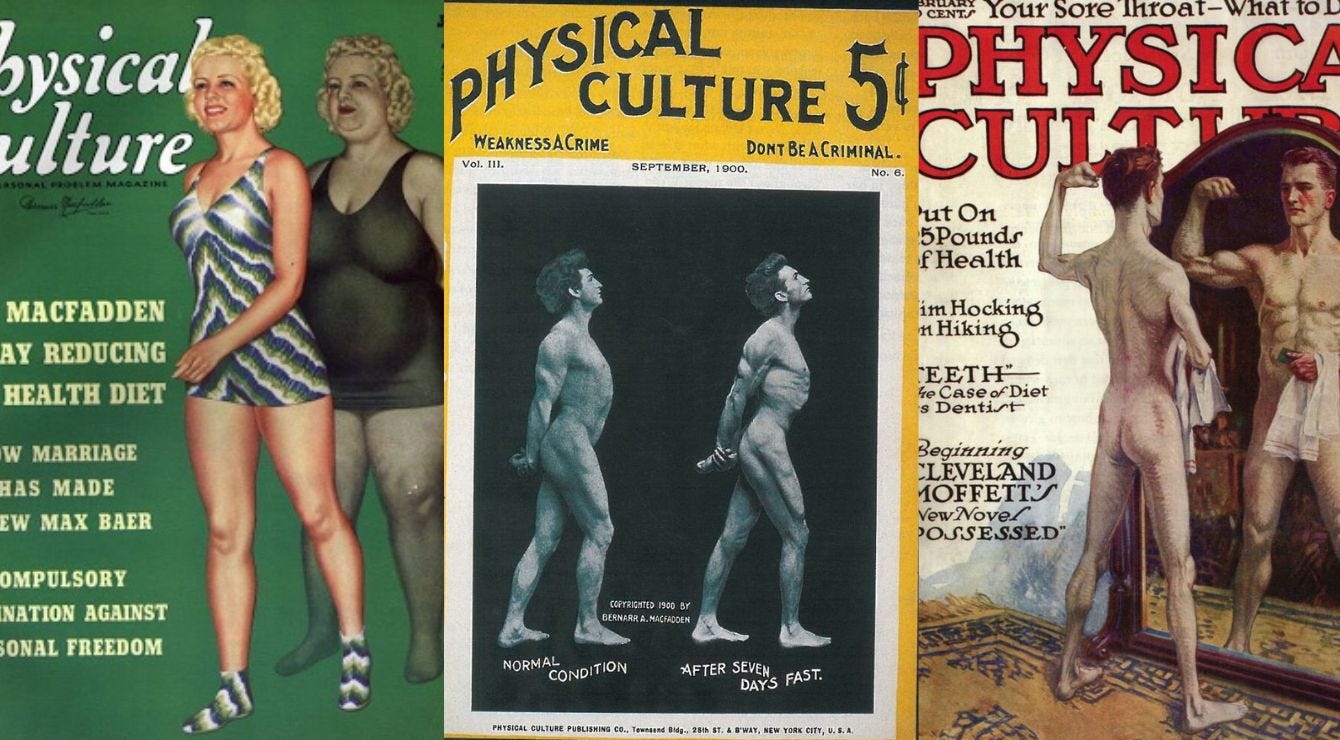
John Russell Coryell was called by later advocates the first American nudist. He wrote articles and books starting in the 1890s and then between 1899 and 1924 for Bernarr Macfadden’s rapidly growing and successful magazine Physical Culture and thus was able to get his message out to a very large audience through that publication as well as other Macfadden publishing house books and magazines.
In his 1893 boys’ adventure novel Diccon the Bold – A Story of the Days of Columbus, Coryell writes about the first impressions of the just discovered land in the Indies dubbed San Salvador.
The Spaniards, on their part, found everything beautiful and alluring – the mild and balmy air, the luxuriant and graceful foliage, the transparent waters teeming with strange forms of animal life, and the primitive innocence of the inhabitants, who knew nothing of the trammels of clothing, and who feared the very looks of their visitors.
The short phrase “the trammels of clothing” speaks volumes for what he will write on the topic of social nakedness over the next 30 years. His various books often make use of moral or social misidentifications due to what is being worn, and how opposite the character’s personality such assumptions turn out to be.
In April 1900, a little after the first anniversary of the production of Physical Culture magazine, an editorial likely written by John Russell Coryell was the reply salvo to a reader and those of like mind who were asking that nudes not be used in the publication.
In the reply to the letter from the Physical Director of the Y.M.C.A. (Young Men’s Christian Association) in Easton, Pennsylvania, which included 92 signatures and called for Physical Culture to stop publishing nude photos, the elegant two-page response was a very clear “no.”
The editor most sincerely appreciates the spirit which has prompted this criticism. He believes that it is made solely in the interest of the future welfare of PHYSICAL CULTURE. But, dear friends, with all due respect to you and your opinions, the writer believes most emphatically that no magazine which is designed to grow big and broad, and to be of mighty influence, dares to follow narrow policies. One of the principal causes of physical weakness and ugliness at the present time is lack of respect for the human body – is the idea that it is something vulgar to be hid and despised. Why should we be ashamed of our bodies? Are we so much inferior to other animals that we must hide every part of our own physical proportions?
The writer ventures the assertion that not a single one of our friendly critics would acknowledge that the nude to them, if beautifully proportioned, is a vulgar display. Their principal complaint is that it excites the baser passions of others. If this be the case, then is it not evidence of the necessity for reformation in those thus affected, and not of the necessity for despising, degrading and vulgarizing the human form divine?
If a corrupted, immoral mind, festered with sores of vice and sin, sees in a beautiful, wholesome human body that which excites the lasciviousness and vulgarity of his nature, is that the slightest excuse for branding this beautiful figure with the words, “Vulgar display?” If some continually gormandize and thus deprave their bodies, is that an excuse for depriving all of food? Would it not be far better to raise the standard of the human mind until it can appreciate the nude – until there is developed at least the same respect and admiration for a beautiful human body as is extended to dogs, horses and other animals when beautifully formed?
The letter goes on, but the message is clear. If your mind perceives the human form as vile, then you need to be educated about how a fine healthy specimen looks and behaves. Physical Culture had as its mission to educate the public not only about the fine qualities of the human form, but how each person could take action to achieve such a healthy form and be mentally strong.
This reply is not unlike Michelangelo’s response to Pope Julius III’s comment about the nudes painted in The Last Judgment within the Sistine Chapel. The Pope requested that Michelangelo make the art more “suitable.” The reported reply from the artist was: “Tell the Pope this is a small matter and can easily be made suitable; let him make the world a suitable place and painting will follow suit.”
The objection to nudity is in the mind of the beholder. It is not the nudes themselves, but how the public chooses to perceive them. All the Pope had to do was change people’s attitudes about nudes. It is no wonder that Michelangelo had his nose severely broken as a young man when he made such cutting commentary to others who questioned his art. His reply was similar, even if it was the Pope who was paying for and questioning his art.
In June 1900, Coryell wrote “Nudity and Purity” for Physical Culture. His September 1902 “Purulent Prudes” for the magazine focused on the foibles of wearing clothing and restricting practical education about the body.
In February 1903 the Physical Culture editorial was of the same tone. While Macfadden has often been cited as promoting a healthy physical body and doing exercises with minimal clothing and sleeping in the nude, it was Coryell who was writing the articles defending healthy nudity for children, advocating sex education, and promoting social nakedness.
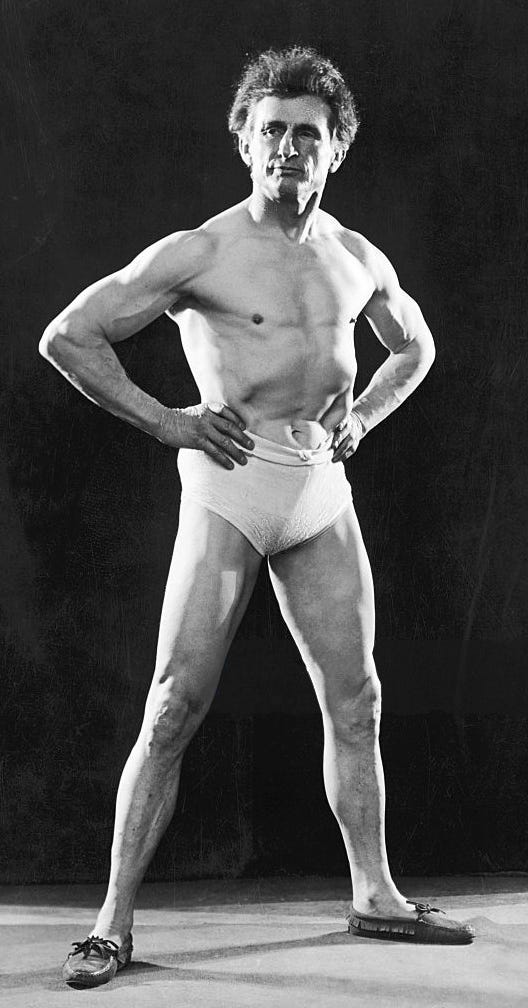
In 1904, Marguerite Macfadden and her husband Bernarr Macfadden wrote the book Physical Culture for Babies. Chapter XX is “Air Baths and Sun Baths.” In it there is a discussion about the joy a baby has when allowed to be without any coverings in the sun. There are recommendations that daily air and sun baths should be offered from infancy through childhood. It is recommended that this should become a lifelong habit and that grown people should do it too.
While this is all very body positive and health promoting, the practice is only mentioned as being supervised by the mother at first, and it is hinted that later the child could take the bath by herself or himself, or with a dog for good exercise. However, there is no mention of sharing such baths with other children or in family groups.
Also in 1904, Macfadden as “Author and Editor” produced Building of Vital Power: Deep Breathing and a Complete System for Strengthening the Heart, Lungs, Stomach and All the Great Vital Organs. Early in the text he clearly states that everything written in this book as advice to the individual is equally true for men and women. As Editor he selected materials from Physical Culture, some of which were likely written by Coryell.
Chapter XVII is “Sun and Air Baths Vitalize Body.” It includes a very important statement, which it appears from its style that Coryell may have written:
Take off every article of clothing. Don’t retain the smallest kind of garment, for if you do, you are getting but a partial air bath. Partial air baths give but partial benefits.
If the temperature is mild enough, and you don’t care to take some active exercise, sit down and read. If there is any task about the room that you would like to perform, do it. The bath will go on while you are attending to other things. Two enthusiastic friends can even play cards, checkers, chess, or some similar game, and all the while the body is benefiting greatly and grandly by the bath.
This was truly expressing social nakedness in 1904. While doing non-sexual activities, one could be naked and socialize for purposes that were not based on religious practice, physical exercise, or for the purpose of cleansing the body or hygiene.
This was modern social nudity or nudism defined in 1904 and had been developed by Coryell from his experiences with social bathing in Japan in 1869. It was an activity that was a conscious decision to remove all clothing, inhibitions, and shame, to foster body acceptance and self-awareness, building self-confidence.
This definition is quite different from what was and would be promoted in Europe. The Europeans appeared to be focused on justifying going naked as the body needed full exposure to the sun to be healthy. Such nudity required rigorous physical exercise and the absence of tobacco, alcohol, and meat.
The idea of social nakedness indoors was an anathema to the Europeans and rightly so – there was no direct sunshine inside or even clean air if gas or oil lamps were in use, as well as a wood or coal stove.
However, Coryell, and subsequent Americans and later others as well, appeared to be focused on self-esteem and understanding the human form. This attitude is much more prevalent in 2025 than the European idea of the primary importance of exposure to full sun.
The research of the early 21st century and therapeutic practices of the late 20th century provide support for Coryell’s ideas and practices that can and do promote well-being through social nakedness.
The other aspect of Coryell’s ideas that were vehemently opposed was that if social nakedness were allowed indoors, what would keep it from being just a sexual romp?
The Europeans appeared to feel that being out of doors and being active in exercise was the only way of keeping those sexual energies from flooding the body and overwhelming any possible innocent intentions. However, Coryell’s indoor activities were not to be a distraction from appreciating one’s body, but an opportunity to engage with others without the constraints of clothing or excessive physical practices.
Body acceptance is a mental process of deciding to be socially naked.
The 1904 Macfadden publication also wrote of encouraging nude recreation or living in a state of nakedness as a daily practice as well as advancing the idea of free beaches:
Take one [an air bath] as often as you can; two or three every day will do you no harm. In addition to the bath in the morning, it is a first-class plan to acquire the habit of taking one whenever you are reading, or moving about the room.
Those of my readers who are camping in lonely spots, or who are living on farms where it is possible to roam about without clothing, can experience a new sense of delight and increased health….
From Chapter XXIII, “Importance of Frequent Bathing”:
Surf bathing is both a remedial agent and a tonic…. A great advantage in bathing of this kind is the fact that one gets the added benefit of sun and air.
These 1904 comments set the stage for the 20th century practices of nude camping, bare hiking, and free beach activities that became popular in the last quarter.
Coryell had taken the accepted practice of nude social bathing from Japan and combined it with his own ideas on health education as well as fostering self-esteem and body-acceptance for overall well-being. He wrote that removing one’s clothing with others offered the opportunity for healthy self-improvement. 🪐


Leonard, Thank you for the kind words. Do you have the full name of Judy Hodges' widow? I have been in contact with the family and so could confirm if a relative was involved with the Rosenberg cause. Much appreciated. Stay well naturally,
A lovely article, to be shared by my wife Helene with her Hunter College High School classmate, Judy Hodges, the widow of a man (I met years ago, briefly) surnamed Coryell, who was active in the French Committee to Save the Rosenbergs, most likely a descendant of your subject here!