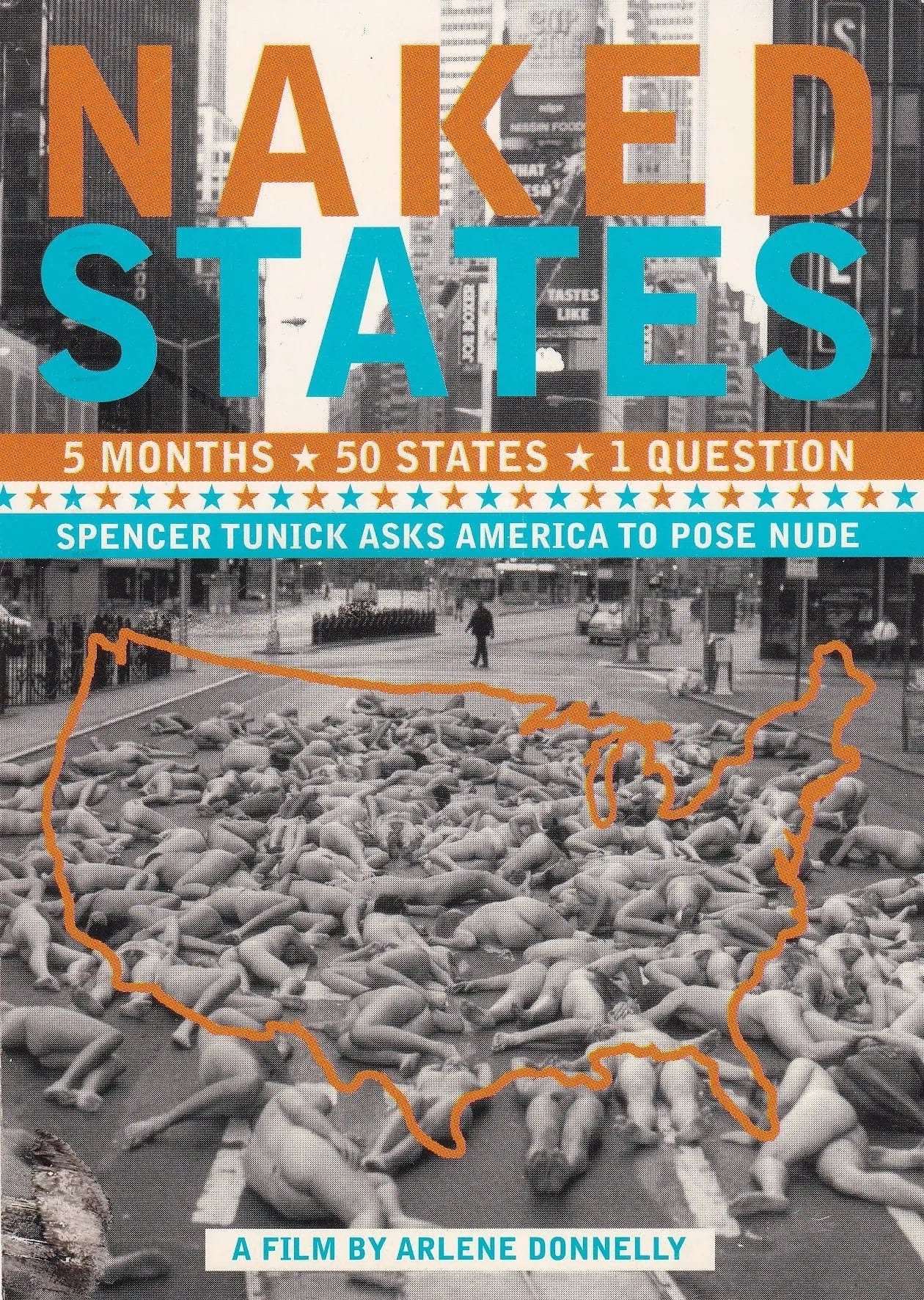
Naked States and the early work of Spencer Tunick
Review of the 2000 HBO documentary following a young Tunick during his Naked States project

I feel like I don’t really need to explain who Spencer Tunick is, or his photography. He should be familiar to most Planet Nude readers, but just in case:
Since 1992, Tunick has been photographing nude figures in public spaces, typically in large masses known as human installations, indicating a move into installation and performance art on top of his photographic documentation. His work has a humanistic and environmental focus, emphasizing the clash between nature and culture as his website states. He’s also a co-founding curator of the Don’t Delete Art campaign which fights against censorship on social media. The 2000 documentary Naked States, directed by Arlene Donnelly, focuses specifically on Tunick as a younger man traveling the country on a mission to take a nude photo in all fifty United States, a project which takes five months on the road.
Here in the documentary, we see Tunick young, ambitious, hungry, and eager to prove himself as a serious artist. It opens with him shooting in New York City and getting arrested, apparently for the fifth time since he started shooting nudes. The legal case regarding this arrest looms over him during much of the documentary. Throughout the trip, we see his confidence swing like a pendulum.
Tunick is frequently bold, just walking up to strangers and asking them to pose after rolling into town, something I know I wouldn’t have the guts to do. I struggle asking my own friends who model for me regularly if they could do new nude poses for figure drawing!
The only conflict we see resulting from his brazen approach is at the South Dakota bike rally, a section of the documentary where everyone but Tunick himself is convinced that walking into this setting was a bad idea. One man gets incredibly angry over Tunick asking his daughter to model.
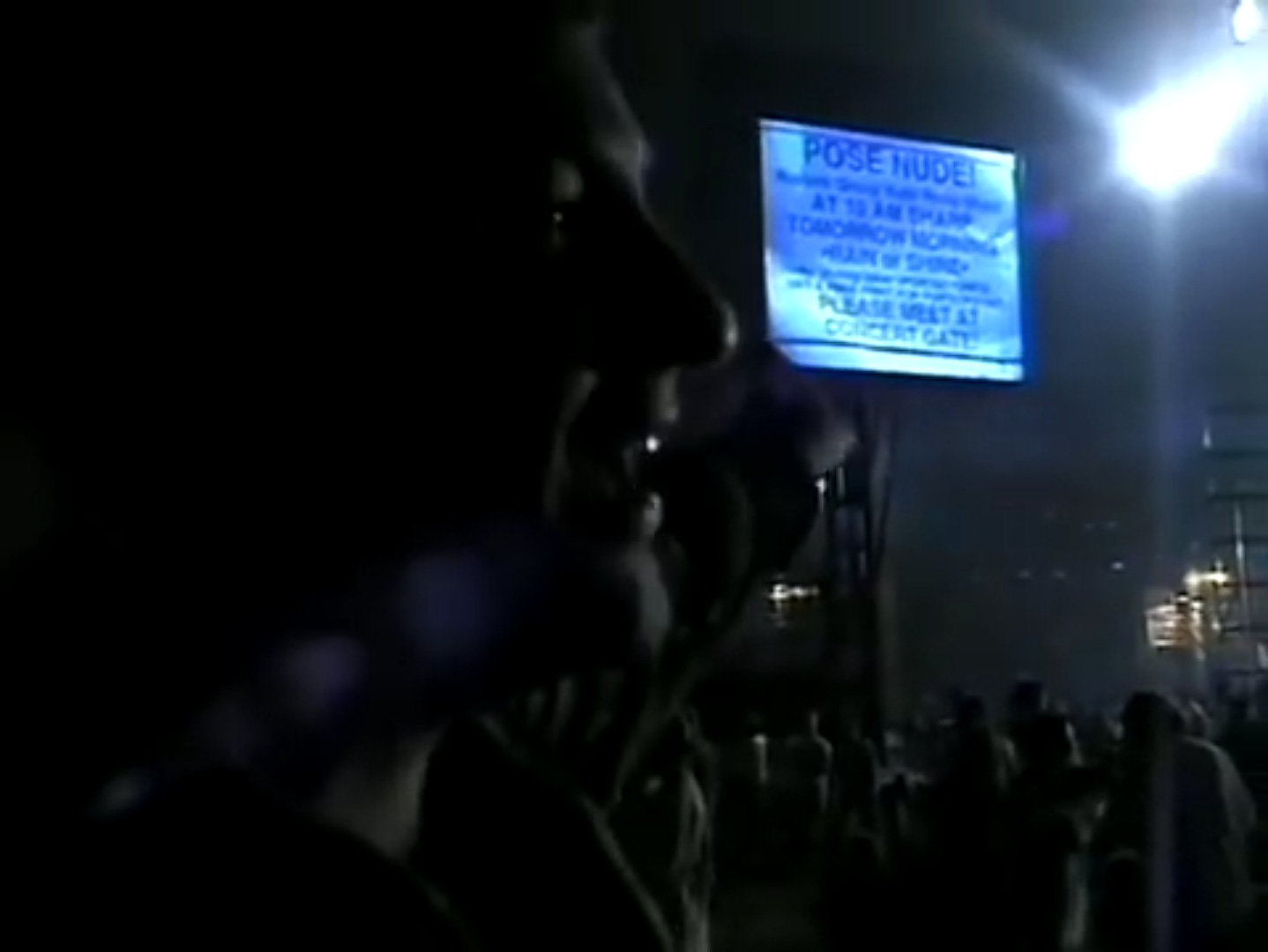
We also see Tunick constantly doubt himself, often questioning whether the models he spoke to will even show up, if the weather will be right, if what he’s doing is even worth all the effort. This side of him hits close to home, and I think any artist will recognize themselves in these moments, as it’s practically a part of the creative process.
I’ve seen some reviewers complain about how Tunick comes off here, but to me he’s just like so many of my friends and peers going through college and trying to make some kind of living off of the art they make. Art makes you weird, I guess.
In one scene, we see him talking on the phone with a journalist from a news magazine that he determines is a tabloid he doesn’t want to work with. This is followed immediately by him waking up his partner Kristin Bowler, excited that the very same magazine did an article about him. She’s confused and frustrated over this contradictory excitement, and so was I, but when you’re really hungry for publicity, you’ll take it wherever you can.
As an aside, it’s stated early in the documentary that Bowler is working on watercolors during the project, but we never see any of her work at all, and I can’t help but feel a little disappointed by that. Tunick is the subject here, but seeing how long she’s been with him, I was hoping for more about her and her work as well.
It’s also incredible how there’s generally no real plan for the shoots themselves: he picks a spot he wants to shoot at, finds the models, and then figures out what to actually shoot from there. It’s so off the cuff for such a huge project, especially given the constant possibility of him getting arrested again.
This isn’t the case for the group shots though, especially the thousand people gathered to shoot at the giant Phish concert. If you’re looking to find out what his real process was back then, you’re unfortunately not going to get much of that here.
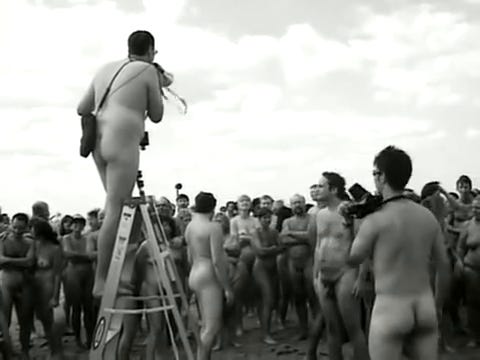
The work also really differs from what we know from Tunick, with only a few shoots (particularly Burning Man and the Phish concert) involving large groups of people. There’s also a scene at Gunnison Beach at Sandy Hook, a shoot which then-president of Tri-State Metro Naturists, Dan Speers, helped facilitate. As an aside, the next episode of Naked Age will be all about Speers, including going into detail about this very shoot!
Surprisingly, Tunick has a hard time here: we see him rant about never wanting to become a nudist after the shoot, despite undressing on the beach. I find this hilarious considering just how big a part of his audience is made up of nudists, and I’ve seen so many nudists discuss participating in his shoots as a mark of pride.
It does come as a surprise, though, how the people on the beach hardly listen to Tunick or his directing. It all comes off to them as a game, much to his frustration, and I wonder what led to that difference compared to how other folks respond to posing for him.
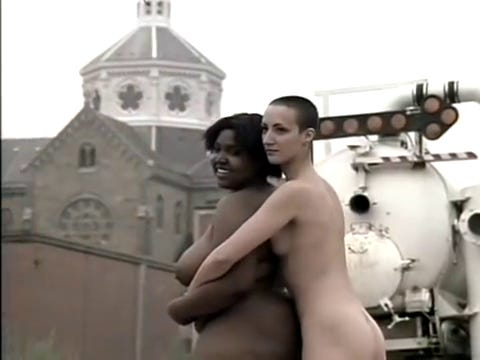
The best parts of the documentary come from the models themselves. One model comments on how watching Tunick shoot reminded him of a line from a Leonard Cohen song about how the light shines through cracks in the world. Another softly expresses how therapeutic it was after someone had jumped and raped her six months prior to the shoot. It leads to a weird contrast, though, because Tunick never discusses it at all, and we don’t really see him interacting much with the models outside of directing them for his shoots. The work is what he seems to care about, and that side effect of the way it affects the models he works with doesn’t seem to concern him at all.
My favorite moment comes from a 65-year-old model named Reg, who had a blast posing and offered a fascinating insight: “People think they’re revealing themselves when they take off their clothes. They’re not, they’re revealing themselves when they put clothes on.” I found that to be such a beautiful statement.
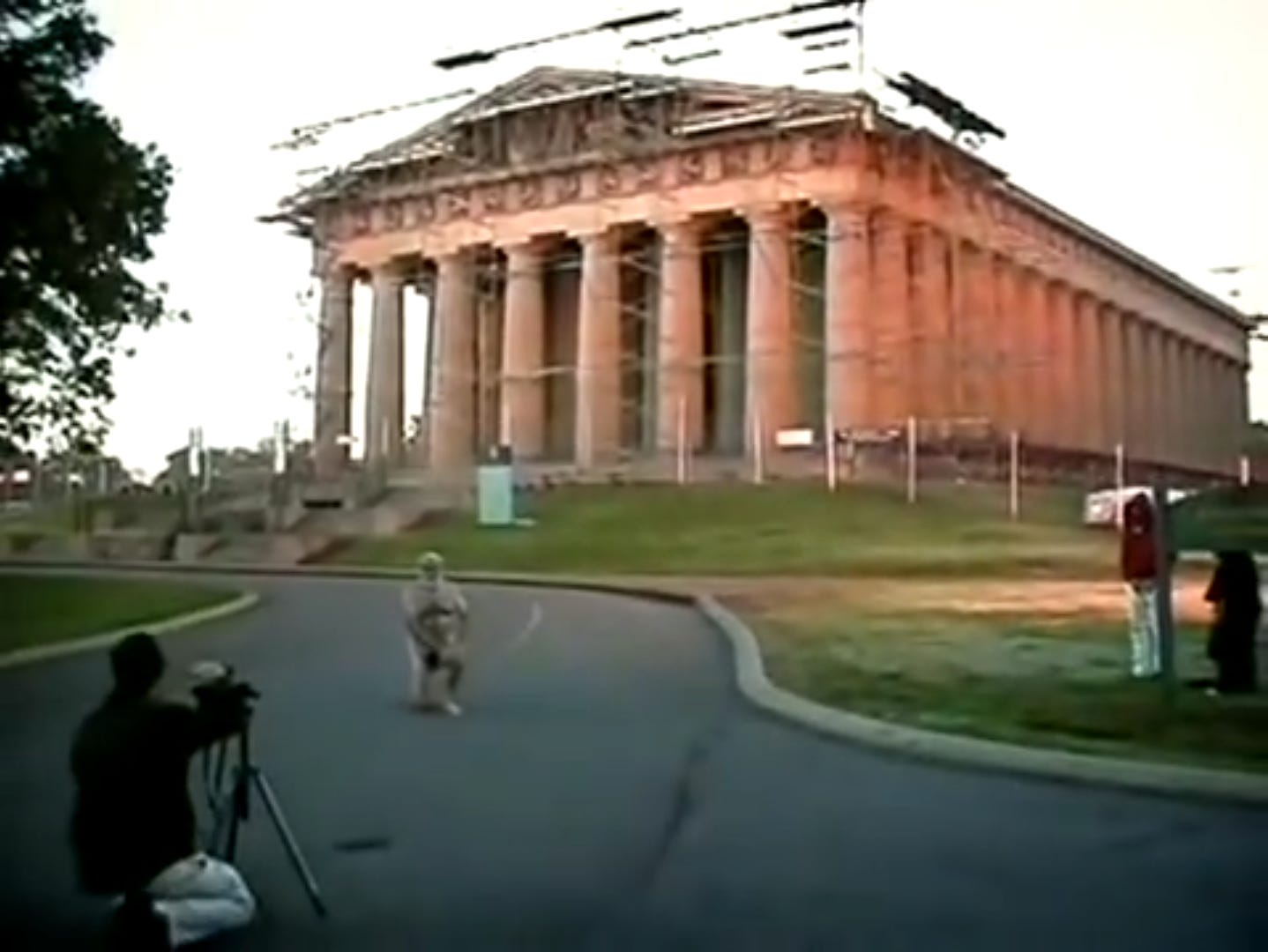
Naked States was followed by two others produced by HBO and directed by Donnelly: 2003’s Naked World and 2005’s Positively Naked, neither of which I’ve seen, but it sounds like watching these together would be great for getting a better sense of how Tunick and his work evolved through those years. The documentary is available on DVD, and I’m honestly surprised it’s not on HBO Max, considering HBO produced it. 🪐