


It was a warm, sunny Saturday morning in Mexico City.
On May 30, 2026, outside the Auditorio Nacional, one of the city’s most recognizable cultural landmarks, participants gradually began arriving from different parts of the country. Some greeted old friends they only see once a year. Others were attending Día al Desnudo for the first time. Cameras, banners, conversations, and nervous smiles filled the steps as the group prepared for the official photograph.
After the photo, the crowd began a peaceful march toward Parque de la Amistad México-Azerbaiyán, where the day’s main public activities would take place. Along the way, passersby reacted with curiosity, surprise, and, in many cases, smiles. The atmosphere was calm and respectful, closer to a civic celebration than a provocation.
Although naturism has a long history in Mexico, including Zipolite, the country’s only officially recognized nude beach, and several established naturist communities, the organized movement known as Día al Desnudo is relatively recent.
It began in Guadalajara, the capital of the western Mexican state of Jalisco, in 2022 as a public initiative promoting body acceptance and the normalization of social nudity. The following year, the movement expanded to Mexico City. Since then, it has continued to develop in both cities through public gatherings and related naturist activities. By 2026, more than 1,000 participants took part across the broader Día al Desnudo program, making it the largest edition so far.
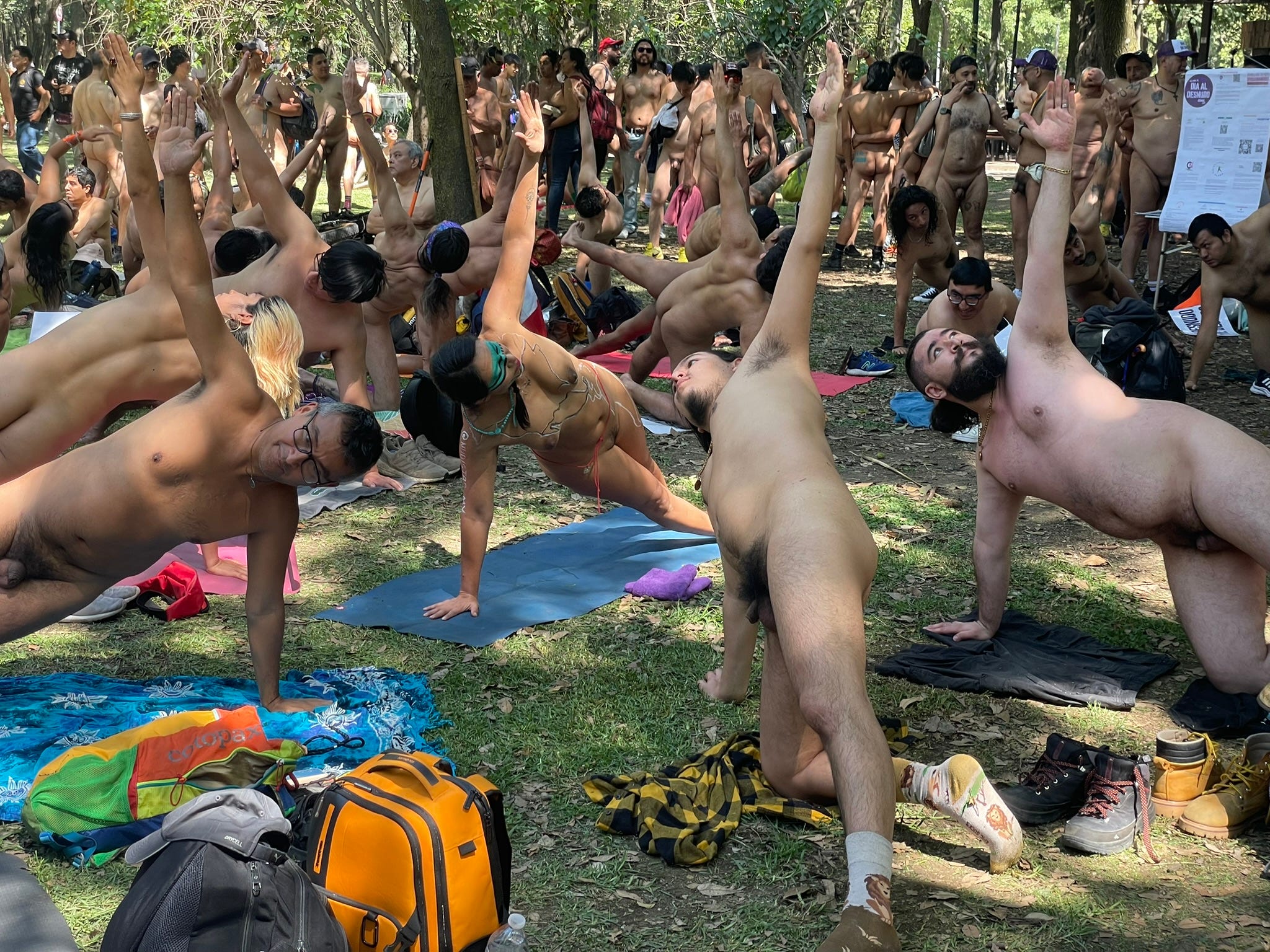
Throughout the program, Día al Desnudo unfolded across different settings, from urban public spaces to dedicated naturist venues such as Desnudo Café in Guadalajara, a nude café and restaurant promoted by its organizers as unique in Mexico. Yoga, wellness sessions, guided breathing exercises, sauna and ice baths, massage therapy, photography, social gatherings, public demonstrations, and other community activities formed part of a program that blended recreation, education, and body acceptance.
Rather than presenting nudity as an end in itself, the event illustrated how naturism in Mexico continues to evolve as a culture of health, inclusion, and community. In doing so, it showed that social nudity is increasingly finding a place not only on beaches or in private clubs, but also within everyday public and social life.
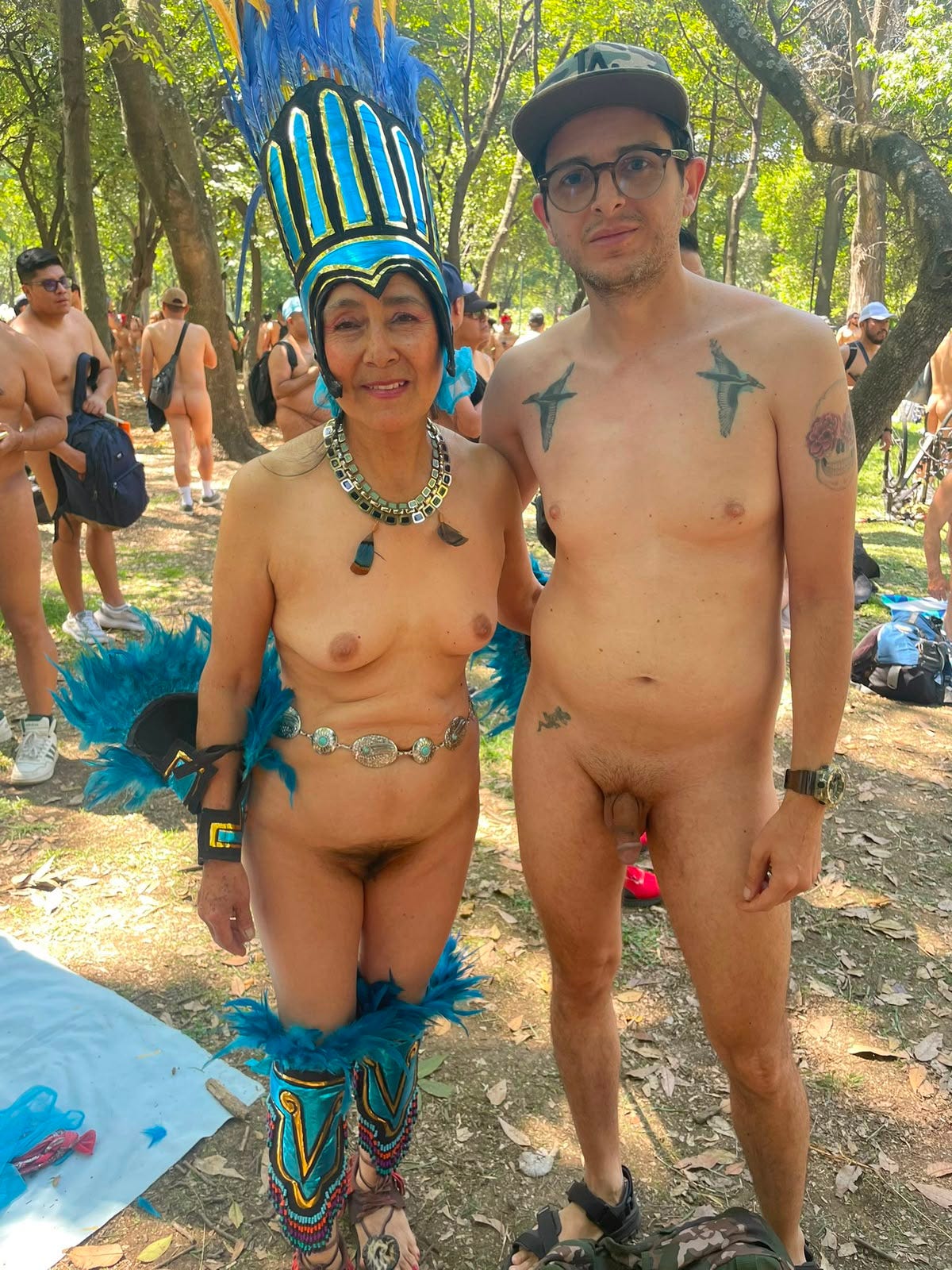
Perhaps most striking was the diversity of those attending. In many ways, the gathering reflected the breadth of Mexico’s contemporary naturist movement.
Experienced naturists mixed naturally with first-time participants. Young adults, older generations, couples, photographers, wellness practitioners, activists, and people simply curious about naturism shared the same spaces. Although many arrived through different communities, the atmosphere quickly became one of a single gathering rather than separate groups.
This collaborative character is perhaps what distinguishes Día al Desnudo most clearly.
Rather than belonging to a single club or organization, Día al Desnudo is the result of a collective effort. Communities such as NudistasMx, NudTopía, Chaknüul, PoliNudismo, Forza High Sports & Nude Wellness, Colores Nudistas, Grupo Alfa, and many others each contribute their own events, perspectives, and volunteers, creating a movement that feels genuinely national.
The event has also been shaped by dedicated organizers, activists, and public voices within Mexican naturism. Figures such as Héctor Martínez, Mon Picazo, Fabiola Silva, and Raúl Ruiz, together with many other organizers, community leaders, and volunteers, have helped give the movement continuity, visibility, and a stronger public presence. Their collective work reflects an important part of Día al Desnudo’s identity: presenting naturism not as spectacle, but as a practice rooted in body acceptance, education, respect, and community.
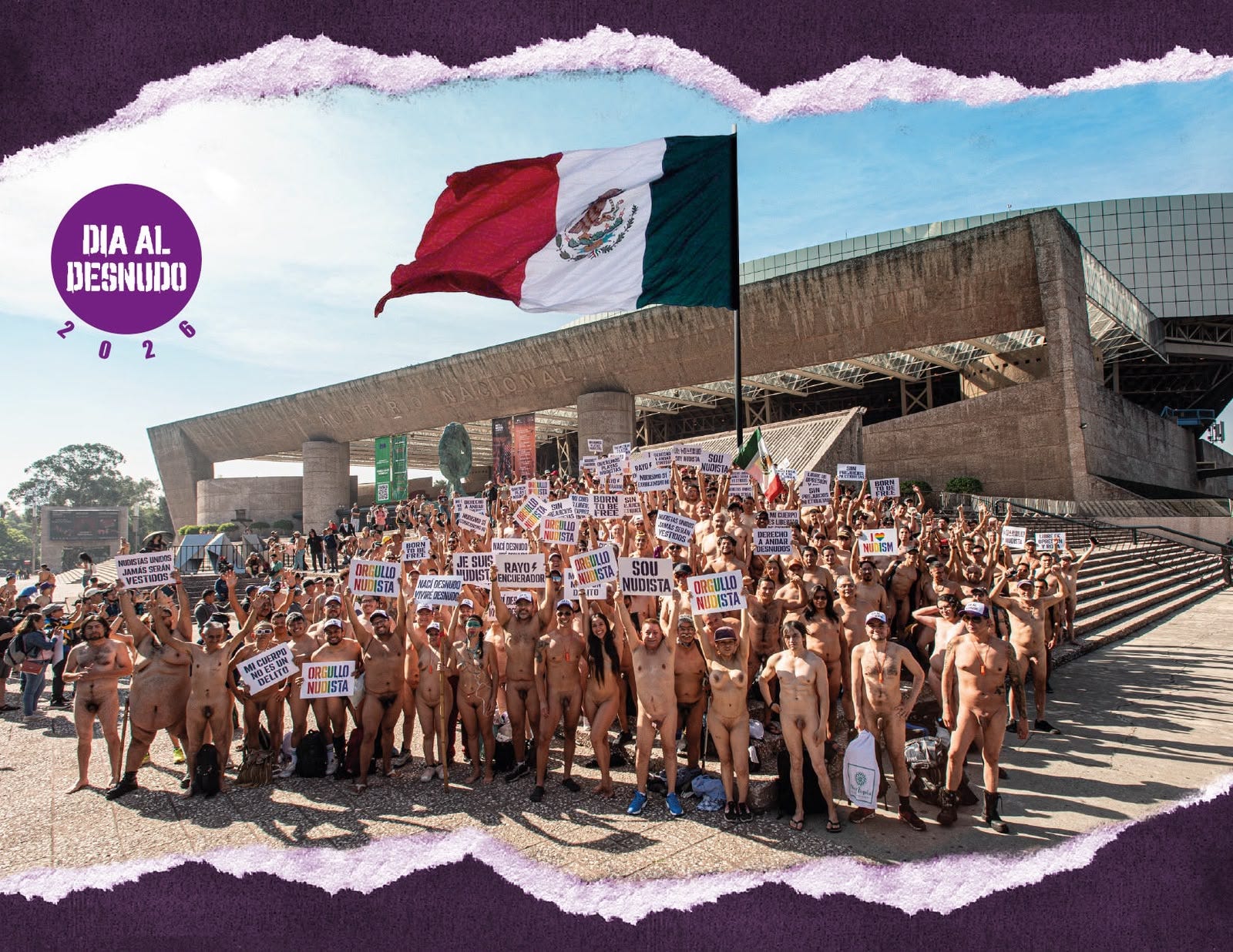
The march from the Auditorio Nacional to Parque de la Amistad México-Azerbaiyán brought together more than 1,000 participants carrying messages in support of body acceptance, personal freedom, and respect for the human body. Conducted peacefully and respectfully, it reflected one of the movement’s defining characteristics: presenting naturism in public not as provocation, but as an expression of confidence, equality, and mutual respect.
Throughout the week’s activities, it became evident that Día al Desnudo is about much more than being nude in public.
It creates opportunities for people to meet, exchange ideas, discover naturism for the first time, reconnect with friends, and participate in activities that encourage confidence, well-being, and community. For many attendees, the experience extends beyond a single week, strengthening relationships between communities that continue collaborating throughout the year.
As the final activities came to an end and participants gradually said their goodbyes, there was a quiet sense that Día al Desnudo represented something larger than any individual event. It reflected a movement that continues to grow while remaining grounded in respect, inclusion, cooperation, and body acceptance, offering a hopeful glimpse of the future of Mexican naturism.
For anyone seeking to understand the current state of naturism in Mexico, Día al Desnudo offers a unique window into a community that continues to grow, diversify, and define its own identity, one shaped by body acceptance, cooperation, and respect. 🪐


Bravo for 🇲🇽 nudism! Does anyone believe something akin to Día al Desnudo might work in an American city?
Though I haven’t had the pleasure of participating in Día al Desnudo, I’ve felt similar freedom and community at events like WNBR in Seattle and SF, as well as SF Pride. Some key characteristics of those events were that they were well organized, welcoming to diverse communities, and located in progressive cities that don’t criminalize simple nudity in public. I believe we need more such events where American nudists come out from behind our locked gates and fences to show others that the human body is not shameful nor sexual by default, but something to be celebrated. I am certainly not the first to express this.
I was also at "Dia del desnudo" with my mother and sisters and we had so much fun. Indeed it is progressive, well organized and diverse, no creeps or perverts, just good old fashioned naked fun, just how it should be. I just wish that there were more similar events like this planned sometime soon.