

Mexico City’s World Naked Bike Ride turns 20
From 450 riders in 2006 to thousands at its peak, the World Naked Bike Ride has made the exposed body a tool of urban protest

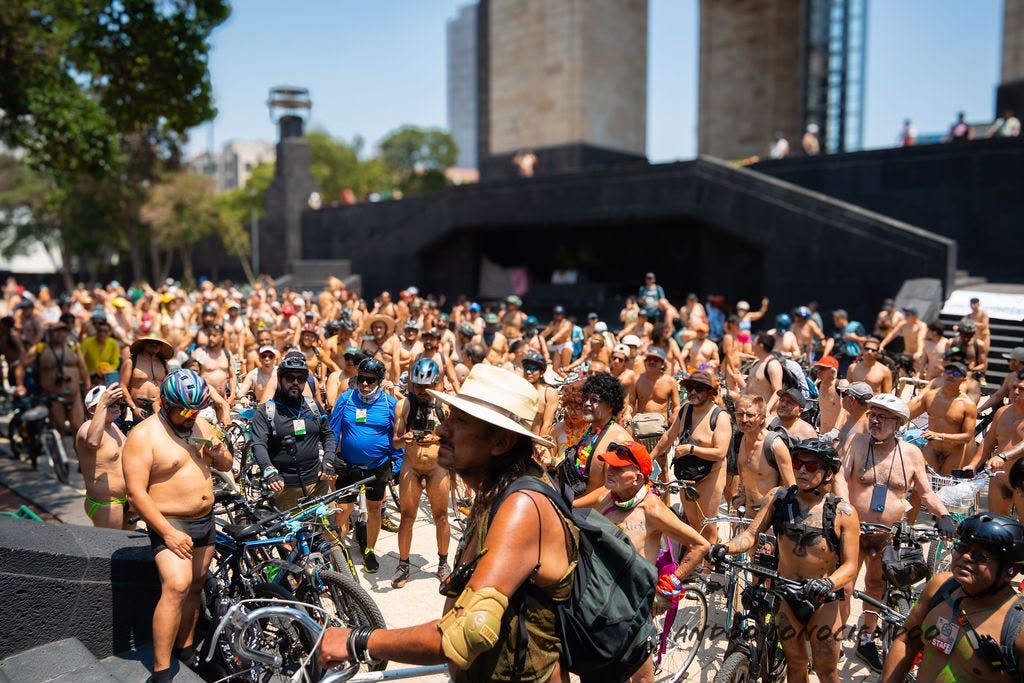
On August 1, naked cyclists returned to the streets of Mexico City for a ride that carried more history than usual. The 2026 World Naked Bike Ride (WNBR) marked twenty years since the Mexican capital first joined the international movement, bringing bicycles, body paint, protest signs, and bare bodies once again into one of the largest urban landscapes in the Americas.
The date itself was unusual. Mexico City’s WNBR has traditionally taken place on the second Saturday of June, but organizers moved this year’s ride because its usual date coincided with the 2026 FIFA World Cup, with Mexico City serving as one of the tournament’s host cities. The demonstration was rescheduled for August 1.

The story began in 2006, only two years after the first coordinated international World Naked Bike Ride. That first Mexico City edition was organized by cycling groups, including Bicitekas, and attracted an estimated 450 participants. The route began at the kilometer-zero point of a cycle path in Polanco, continued toward the historic center, and ended at the Cibeles fountain in Condesa. Organizers encountered resistance from local authorities, while publicity still circulated largely through Yahoo Groups—a reminder of just how different the city’s activist landscape was twenty years ago.
From the beginning, however, nudity was more than a striking feature of the ride. It was a central part of its language of protest.
The central idea behind the WNBR is strikingly literal: without the protection of a metal vehicle around them, cyclists are physically vulnerable in streets dominated by automobiles. The naked body makes that vulnerability impossible to ignore. In Mexico, the slogan “¡Desnudos ante el tráfico!”—naked before traffic—turned the body itself into a protest sign. The movement also challenged dependence on fossil fuels, promoted human-powered transportation, and demanded greater respect for cyclists and pedestrians.
As the ride grew, its message expanded with it. In 2008, organizers commemorated cyclists killed in traffic accidents, with white bicycles appearing along the route and slogans demanding an end to cyclist deaths. Participation reached an estimated 1,000 people, including not only cyclists but skaters, skateboarders, runners, and families. By 2009, organizers estimated around 1,500 participants, while social media and online photography were beginning to replace the Yahoo Groups that had helped spread the word during the first rides.
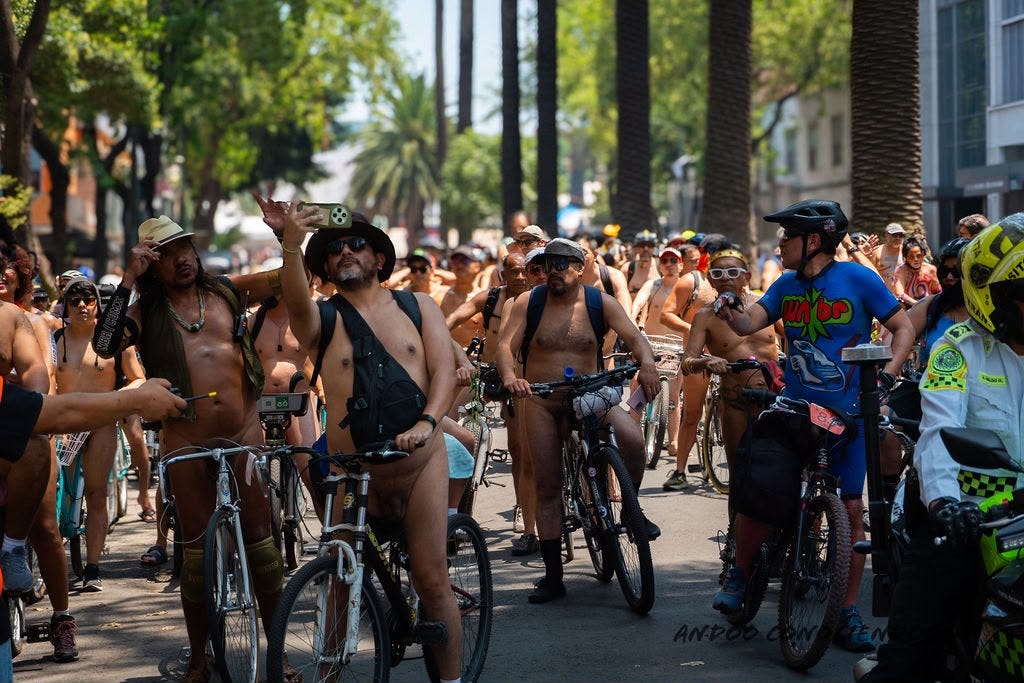
Over the following decade, the WNBR became a familiar part of Mexico City’s activist calendar. Routes changed, body painting became increasingly elaborate, and participation grew dramatically. According to a historical account compiled from early organizers and participants, the 2014 edition at the Monumento a la Revolución drew more than 5,000 people, the largest turnout recorded in that account. The ride continued through 2019 before the COVID-19 pandemic forced a two-year pause in 2020 and 2021. It returned in 2022.
That history also reveals something important about the relationship between nudity and naturism in Mexico. The WNBR is not, strictly speaking, a naturist gathering. Its origins and primary objectives lie in cycling activism, environmental concerns, urban mobility, and road safety. Yet for twenty years it has created something unusual: a temporary public space in which hundreds—and at times thousands—of people can experience collective nudity outside the traditional settings of beaches, clubs, or private naturist events.
That distinction may help explain why the WNBR occupies such an interesting place within Mexico’s contemporary culture of nudity. Participants do not need to identify as nudists or naturists, nor is complete nudity required. For some, the naked body is principally political: it represents vulnerability, environmental protest, or resistance to a city designed around automobiles. For others, the experience may also become an encounter with body acceptance, freedom, or the simple realization that public nudity does not have to be sexual.
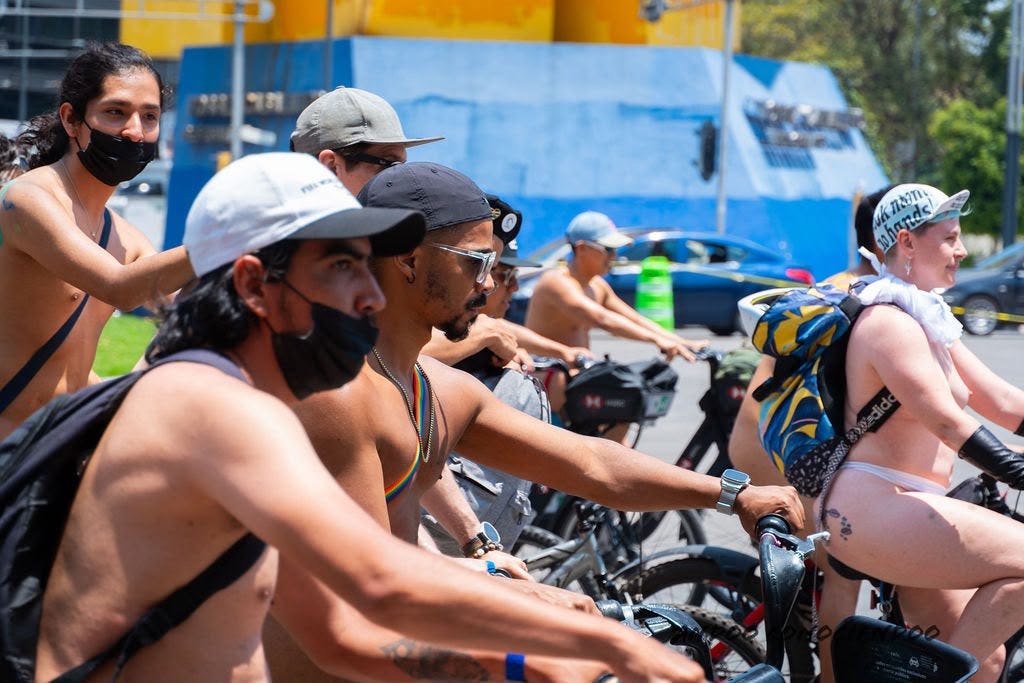
Twenty years after the first WNBR took to the streets of Mexico City, the context surrounding the ride has changed considerably. Cycling has become far more visible in the everyday life of the capital, while sustainable mobility and road safety have gained a more prominent place in public debate. Yet the central image of the WNBR remains remarkably simple and powerful: the exposed human body on a bicycle, vulnerable amid the motorized traffic that surrounds it.
The 2026 anniversary therefore represents more than the survival of an unconventional annual event. It marks two decades of using nudity not as an escape from the city but as a way of confronting it.
The beaches and naturist spaces of Mexico offer one relationship between nudity and freedom. The World Naked Bike Ride offers another: noisy, urban, political, exposed, and intentionally impossible to overlook.
After twenty years, its message remains written directly on the body:
If you did not see the cyclist before, can you see them now? 🪐
More to explore:


 | A guest post by
|