

Kentucky has no legal nude spaces. One group is trying to make one.
What's actually happening at Doe Run Lake

A group called Bluegrass State Naturists has been posting online about what it calls the “Doe Run Lake Nude Recreation Area,” pointing to a trail near the top of the dam at Doe Run Lake Park in Kenton County, Kentucky. Local officials have responded with a clear rejection, warning that anyone found nude in the park faces arrest. The story has since spread across regional news and Facebook, often reported as though a nudist park has simply materialized, which is not quite what's happening.1
The group is now planning to show up. A public event for Memorial Day weekend, May 23-26, has been posted on Facebook, co-hosted by Bluegrass State Naturists and a related account called Friends of Doe Run Lake Nude Area. The event listing includes a disclaimer: “The area has been set aside and nudists hidden from view in wooded areas as state law requires in Kentucky.” In an email to Planet Nude, a spokesperson for Bluegrass State Naturists described the effort as a response to Kentucky's near-total absence of legal naturist spaces. Memorial Day weekend will be the first real test of whether this effort moves from online declaration to physical presence—and how the county responds.
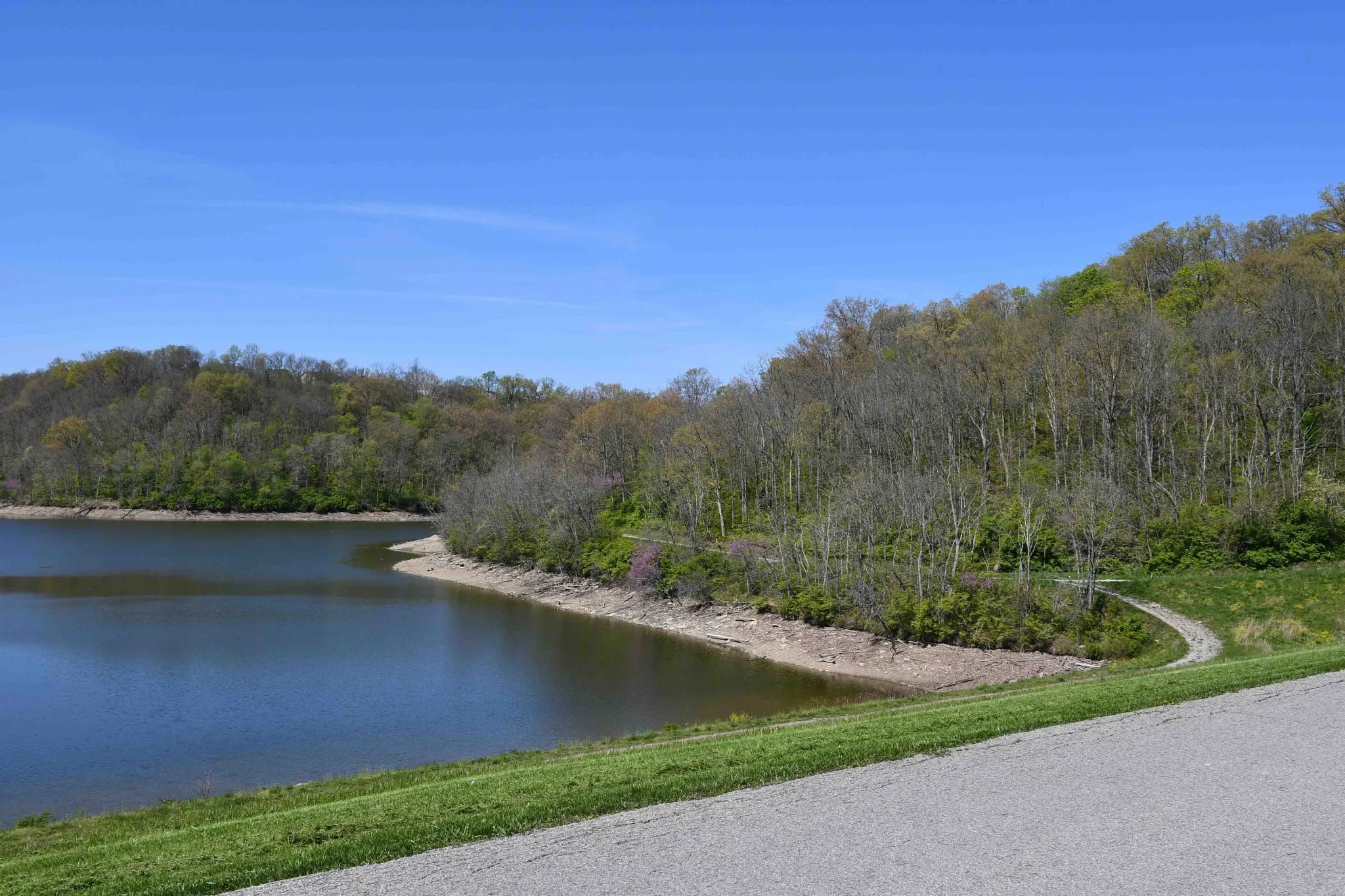
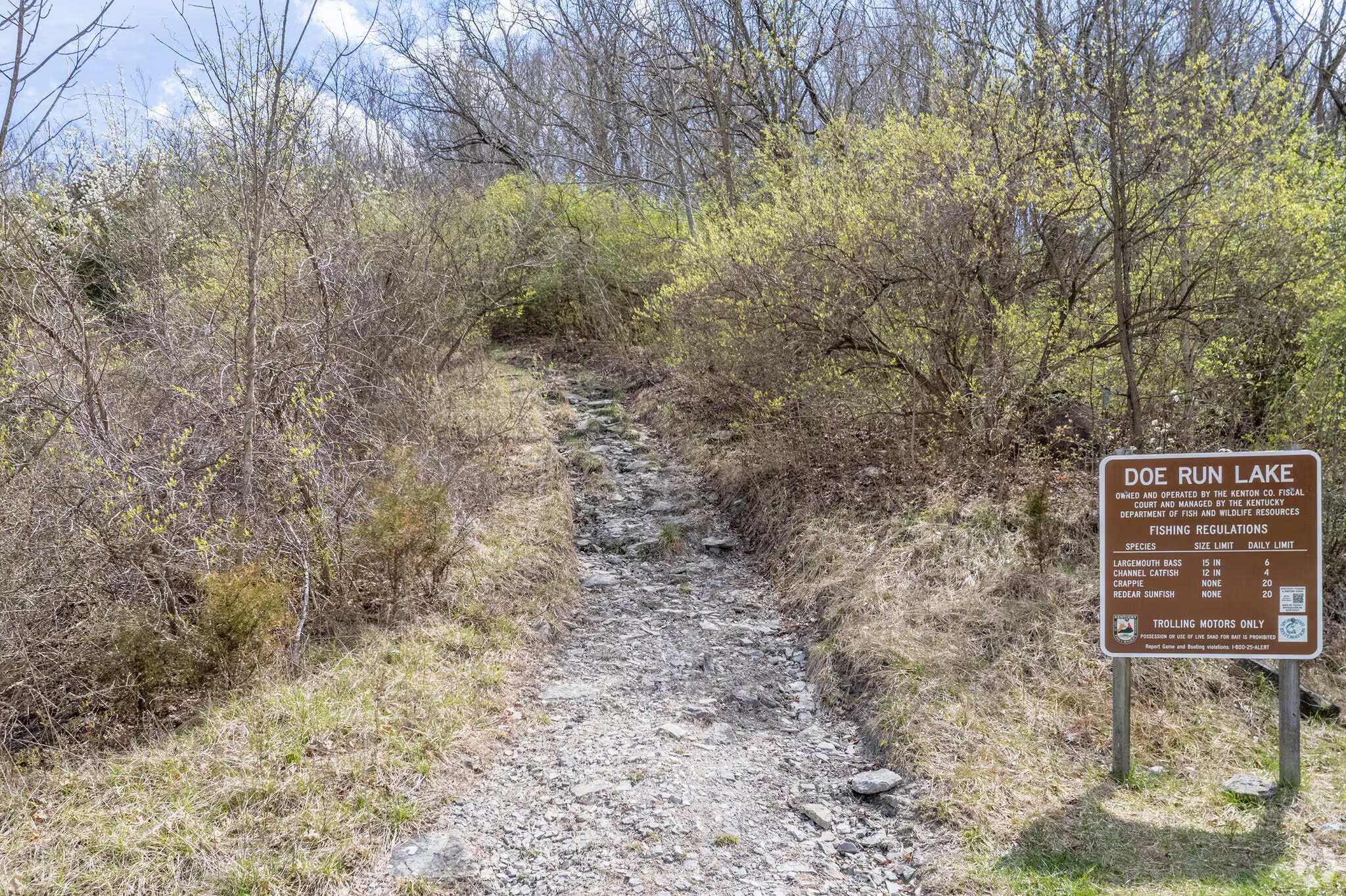
There’s not a lot of public information about the Bluegrass State Naturists. They are notably distinct from Bluegrass Naturists, a separate Kentucky naturist organization with no apparent connection to the Doe Run effort. The group appears to have roots in an encounter at the park itself. A review posted to TripAdvisor for Doe Run Lake Park, apparently by someone involved with Bluegrass State Naturists, describes visiting Doe Run in July 2025 and finding a nude couple already sunbathing at a creek area at the end of old Bullock Pen Road. “We realized this was being used as a nudist area because there isn't one in Kentucky,” the review reads, describing a decision to “recreate our organization” and formally designate the spot. The area in question sits at the far end of a trail, more than a mile from the main road, in a park that spans more than 180 acres surrounding a roughly 30-acre lake. In other words: informal nude use was already happening. The group is attempting to formalize it.
Whether that formalization has any legal standing is a different question. Bluegrass State Naturists has argued that a Kentucky statute from 1942 permits public nudity for naturists and their organizations. That language also appears on the Wikipedia entry for “List of social nudity places in North America,” where Doe Run Lake is listed along with the group’s Instagram handle—and appears to be the basis of the “internationally listed” claim the group has repeated across its posts. Other Wikipedia editors have since added a note that the group has not received permission from Kenton County and that the park is not an official or legal naturist recreation area.2
The actual statute, KRS Chapter 232, tells a more complicated story. It permits nudist societies to operate in Kentucky provided they obtain a county-issued license, maintain a member register available to the sheriff, and locate their activities on private property effectively screened from public view. It is a regulatory framework for private clubs, not an authorization for public nudity. Even navigating that framework is a practical near-impossibility. According to the Naturist Action Committee, licenses require approval from the local county judge/executive, and there are no known cases of such approval ever being granted in Kentucky.
The group interprets the law differently. In their email to Planet Nude, they argued that county officials are “misinterpreting the law from 1942 that permits public nudity for exercise, health or religious purposes and recreational purposes,” and that the surrounding woods naturally satisfy the privacy requirement.
The group has also framed its position in constitutional terms, writing in one post that the county's response “is unconstitutional and affects your constitutional rights of freedom of expression” and encouraging followers to use the space. That argument faces a significant hurdle. Courts in the United States have generally treated public nudity as conduct rather than protected speech, meaning the First Amendment protections that might apply to nude protest or artistic performance don’t automatically extend to recreational nudity. A protest is one thing; arguing that casual nude swimming constitutes expressive activity isn’t impossible, but it would require a specific legal theory and, almost certainly, a very good lawyer—and it won’t necessarily protect you from arrest.
Kenton County has been explicit. In a written statement quoted by NKyTribune, a Kenton County spokesperson said: “Doe Run Lake is a County-owned park, and there is zero tolerance of nudity of any kind. […] Anyone observed or reported engaging in nudity at the park will be subject to law enforcement response and arrest.”
Bluegrass State Naturists says it is moving forward anyway. “We knew that approaching Kenton County would have been a waste of time and they would have denied us,” they told Planet Nude. “Our social media will eventually force them to put up signs saying you may encounter nude sunbathers past this point.”
There is some precedent for the idea that an individual or group can successfully designate a public space for nude recreation. Shirley and Richard Mason did exactly that when they persuaded Miami-Dade County to legalize a clothing-optional section of Haulover Beach in 1991, creating what became one of the most visited nude beaches in the world. But the Masons spent years working with local and state government, building relationships with elected officials and business leaders, and operating through South Florida Free Beaches, an established organization with legal and institutional backing.
The conditions at Doe Run are almost the inverse: a recently-emerged group, a hostile county government, an explicit legal prohibition, and a strategy built around public declaration before coalition-building. By generating significant media attention before establishing any presence on the ground, Bluegrass State Naturists may have made their goal harder to achieve. The county is now on record, on alert, and unlikely to look the other way.
What has actually happened on the ground is less ambiguous than the media cycle has suggested. The group said multiple people have visited and used the area nude since it went public, with no contact from law enforcement, which they attribute to the remote nature of the location. Local reporting has not documented any confirmed incidents or arrests, which appears consistent with that account. The group also says the area has a longer history than the recent attention suggests. “The area has been used by nudists since before it was even a county owned park,” they wrote. “People would park and hike to the lake and swim and sunbathe nude. One guy even went on to say he was naked at the spot when he was younger and others were too and no one cared.”
The community reaction offers some context. Kenton County sits in northern Kentucky's deeply conservative political belt, a region that has trended sharply Republican in recent election cycles. The response online has reflected that. Comments on local news posts have ranged from bemused to hostile, with recurring themes of family safety, public decency, and calls for law enforcement. An Erlanger city councilwoman publicly dismissed the group's posts as a joke circulating on social media. Whether or not nudity is occurring there now, the social environment surrounding the effort is not a forgiving one.
Kentucky has no established naturist clubs or recognized nude spaces with any public visibility, leaving almost no lawful pathway for social nudism outside of private property. The group at Doe Run seems to be responding to exactly that absence—and the area they have chosen is not the center of a busy public park but a secluded creek trail, at the end of a mile-and-a-half walk, that was apparently already attracting nude visitors before anyone made a formal claim about it. That doesn't give them legal standing they don't have. But it suggests this is less a case of naturists picking a fight with county government and more a case of people trying to make legitimate something that was already happening.
As for what success looks like: “Formal recognition,” they wrote, “but informal tolerance would be much more acceptable.”
Memorial Day weekend will be the first real test. The group has a public gathering planned, and whatever happens there may say more about the future of this effort than anything posted online. 🪐
Local coverage includes:
I wish the group well in their endeavor. Time to change the stubborn rules there.
As a Kentuckian who has checked in to the state's anti-nudism law, I've concluded that it is essentially a prohibition. Not only does the county judge-executive, who stands for election every two years, have to sign off on a license annually, the sheriff and county health officials can inspect the property shut down any such park at any time without notice or for much reason. There's no way anyone would want to invest money in something with such a tenuous licensing situation.
The funny thing about this 1950s-era statute is that it defines a nudist as someone may "expose their genitals" to a person of the opposite sex who is not their spouse. As a result, it's totally legal for same-sex nudism to exist in Kentucky! And, in fact, there is an all-male place, called River Ridge Campground at Mount Olivet, Ky. where clothing is optional. Also, for years there was a gay bathhouse just south of downtown Louisville with a clothing-optional pool and indoor spaces. The bathhouse is now closed.
I agree that the Bluegrass State Nudists are going about this effort at Doe Run Lake in a completely counterproductive way. I wish some lawyer who could donate his time would challenge this unconstitutional prohibition of naturist places in Kentucky but rather than wait for that, we typically visit -- and spend money -- in Indiana, Tennessee and Florida where nudism is at least legal.