

Disrobed production diary
A behind-the-scenes look at filming a naturist comedy where filmmaking and nudist culture met on the same set

Editor's note: Filming on Disrobed has wrapped, but the film is not yet finished. This independent project was made possible by strong support from the naturist community, and that support is still needed. We are currently raising finishing funds for editing, sound, and festival delivery. Contributors who give $100 or more will receive a limited early-edition DVD of the completed film (shipping in 2027).
If you’d like to help bring Disrobed to completion, please consider making a donation.
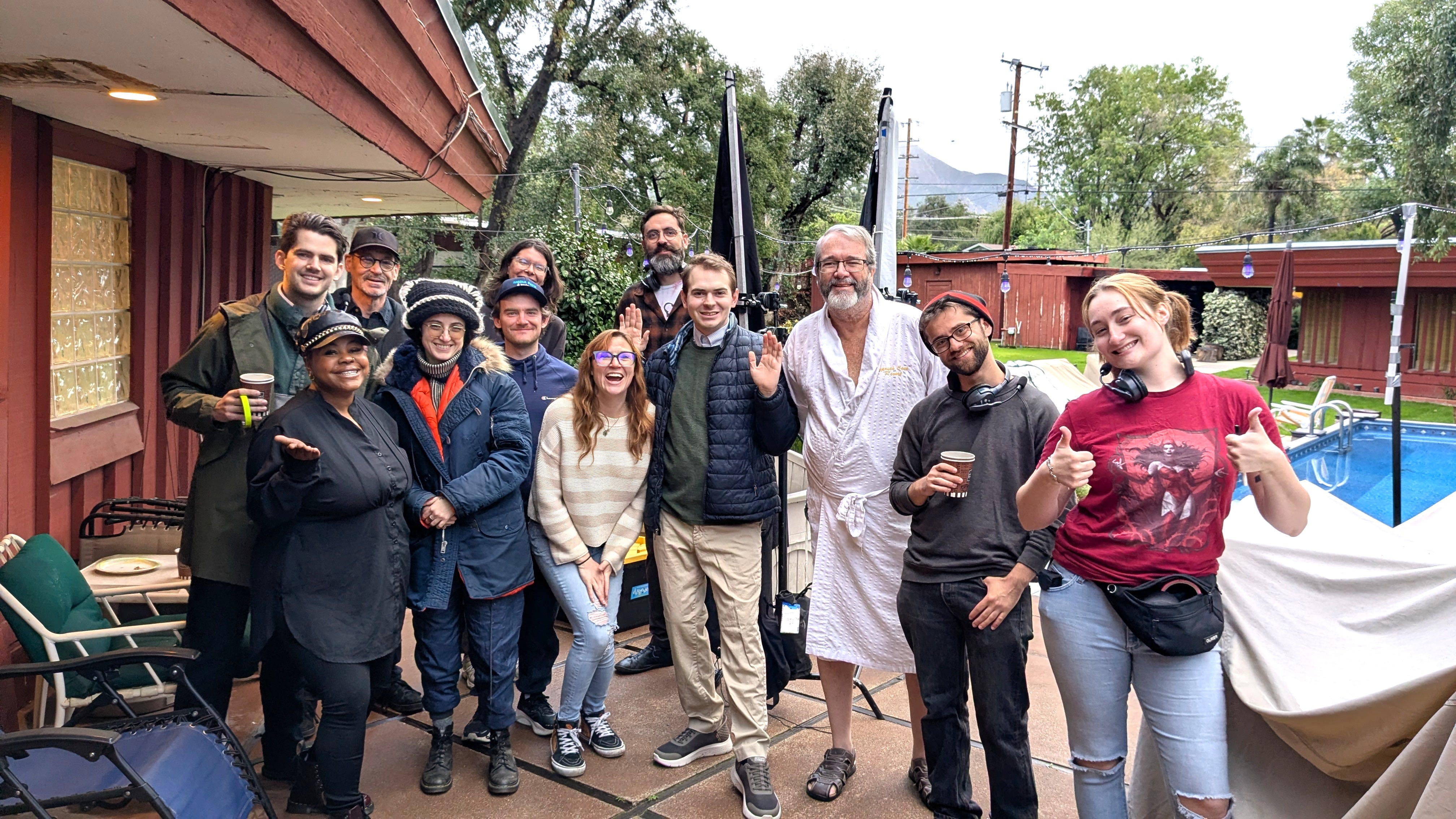
There are not many behind-the-scenes photos from the set of Disrobed. That was intentional.
We were making a feature film in a clothing-optional environment, on closed sets, with a cast that spent much of the shoot nude. Glen Eden has its own no-photography culture, and our production had its own rules as well. Together those boundaries helped protect the cast, respect the location, and build trust. They also left a strange absence once the shoot was over. Filmmaking is always temporary. You build a small world, live inside it intensely for a short time, then strike it and move on. Ideally there’s a dedicated behind-the-scenes documentarian, but even on smaller productions there are usually a few candid photos that help preserve the experience.
This time there were only a handful, and even those required careful clearance. So I decided to write things down instead. A kind of diary of the shoot.
For ten days, split between a rainy house in Altadena and the sunny grounds of Glen Eden Sun Club, Disrobed brought together several parts of my life that had mostly stayed separate before now. I was there as a camera operator, an executive producer, and an investor in the film. I was also there as a cultural liaison from the nudist world helping newbie crew members navigate that space. Usually these roles exist in separate contexts. On this project they didn’t.
Day 1: Figuring out the rhythm
We start at Arroyo Del Sol in Altadena, which serves in the script as the Schmidt family home for the first half of the movie. It’s cold, cloudy, and wetter than we hoped, though not unusual for mid-February in Southern California.
Arroyo Del Sol is the home of Cynthia and Rolf Holbach. Cynthia is the president of the Naturist Society Foundation, and she and Rolf are both founders of Southern California Naturist Association. This is not the first nudist film that has been produced in part in their home. By my count, it’s the third or fourth. They seem surprisingly accustomed to the business of a film set whirring all around their living room and kitchen.
Day one focuses on porch and bathroom scenes. The morning mostly consists of everyone getting used to each other and finding a flow. Most of our crew are non-nudists. Most of today’s scenes are clothed. But the production has a clothing-optional policy that was made clear before anyone was hired, and much of the cast is lodging on the site of our shoot. That means the crew is getting used to seeing a naked actor moving through the house between takes. It could be awkward. Instead it becomes normal surprisingly fast.
Once the work begins it’s just coverage, blocking, timing, weather, continuity, performance, and all the usual moving parts of filmmaking.
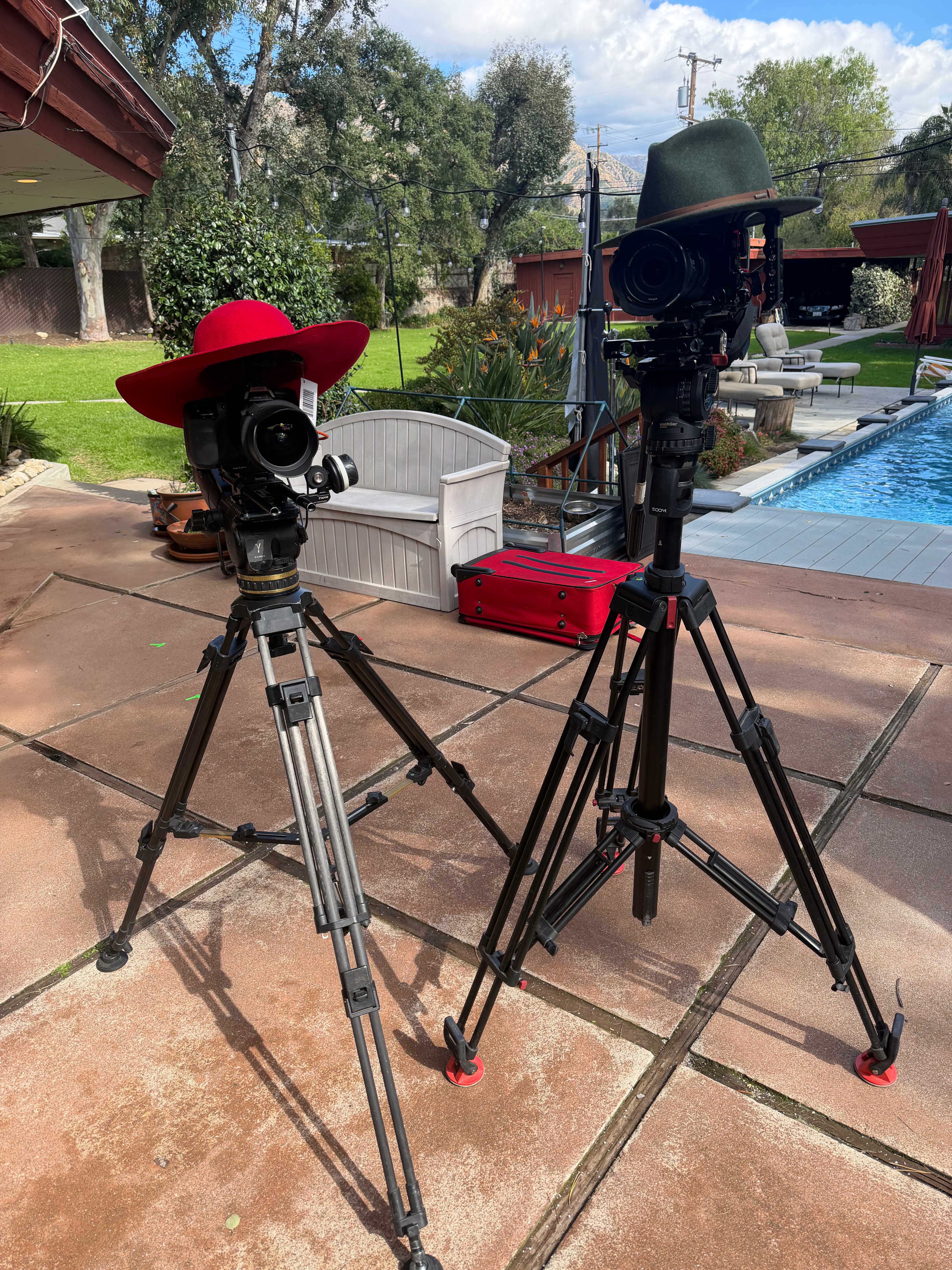
Day one I show up wearing a green felt Stetson I brought mostly to infuse a little whimsy. I always like to infuse a little whimsy on set for morale—a lesson I learned from a filmmaker mentor years ago. The hat turns out to be useful. When we’re shooting outside it helps block the sun so I can see my LCD monitor, and between takes I hang it on the camera.
A kissing scene on the porch results in the director and lead actor Troy’s lip bleeding. It was a kinetic scene. Luckily, he’s okay and no medic is needed — just makeup — and if this is the worst injury sustained on set we’ll do just fine.
The bathroom scene itself takes place in a very tight space. One of our goals is to shoot as much as possible with two cameras, but the room doesn’t allow it. Our DP, Autumn Palen, works inside the bathroom as A-camera while I spend most of the scene outside the closed door listening and preparing the next setups.
We make our day. That always feels like a victory on a first shoot day.
That night I go out to dinner with a few cast members staying on site. It feels like we’re actually doing this.
Day 2: Shooting in the rain
Back at Arroyo Del Sol. Most of the day takes place on the porch, in the hallway, and inside Axel’s room.
Arianna Evangelia joins the shoot today as Kat. She shows up wearing a bright red hat in one of her first scenes. When the shot wraps the hat migrates over to B-camera. By the end of the day both cameras have developed personalities. A-camera has the green Stetson. B-camera has Arianna’s red hat. It’s a small detail, but people laugh about it and the hat becomes a feature of the shoot. (It does.)
Light rain comes and goes, creating continuity headaches for scenes meant to happen during the same story day. We keep chasing dry windows and trying to keep the porch looking consistent from shot to shot.
One moment stands out. Ian Hayes has a scene that requires him to get into the pool. We don’t have time to warm it.
The water is freezing. Ian gets in anyway. Multiple takes. No complaints. Everyone notices that kind of professionalism.
Autumn and I are starting to develop a shorthand. There aren’t big debates about coverage. Instead we fall into a practical rhythm. Move fast. Get the angles. Stay out of each other’s way. “Hose it down,” we say. Two or three actors at a time. Quick setups. Stay ahead of the weather.
By the end of the day the crew is relaxed. Two days in, the movie feels possible.
Day 3: The day it gets hard
The weather is worse today, and we’re shooting our first major ensemble scene inside the house.
Up until now most scenes involve two or three actors. Suddenly we’re dealing with five or six people in a long interior scene adapted from a play.
To complicate things further, Autumn has a pre-existing commitment and we’re temporarily down a crew member. The problems don’t arrive as one disaster. They accumulate.
Rain complicates interior lighting against the windows. The director and actors want to maintain chronology, so we bounce around the house instead of shooting out each room. That means relighting spaces we already lit earlier. The schedule begins slipping. Small delays stack together. We lose time. We lose light. Some of the material will have to be redone.
It’s frustrating, but also familiar. Every production has days like this.
By the time we wrap, everyone knows we have work to recover. It’s gotten dark and we aren’t happy with what we’ve gotten for the day. Still, we also know Autumn will be back tomorrow and we can reset.
Day 4: Getting above it again
The day begins on the roof with Dave McClain and Karen Lasater.
After yesterday’s pressure, the rooftop feels like a reset button. The view stretches across Altadena toward Pasadena and the hills around JPL. The air is clear and the scene is simple. Everyone breathes a little easier.
Later we move to the pool.
I’ve been looking forward to this setup because we’re shooting underwater material. We’re using an underwater camera housing (and camera) from Light Forge Studios in Las Vegas, run by a longtime friend. I promised this friend I would personally operate the camera while it’s sealed inside the housing.
This becomes the first time I actually work nude on the production.
For a moment it feels slightly surreal. I’m used to being nude around other nudists, but doing it on a film set surrounded by mostly clothed crew gives me a few nerves. Then the feeling disappears. It’s just another technical setup.
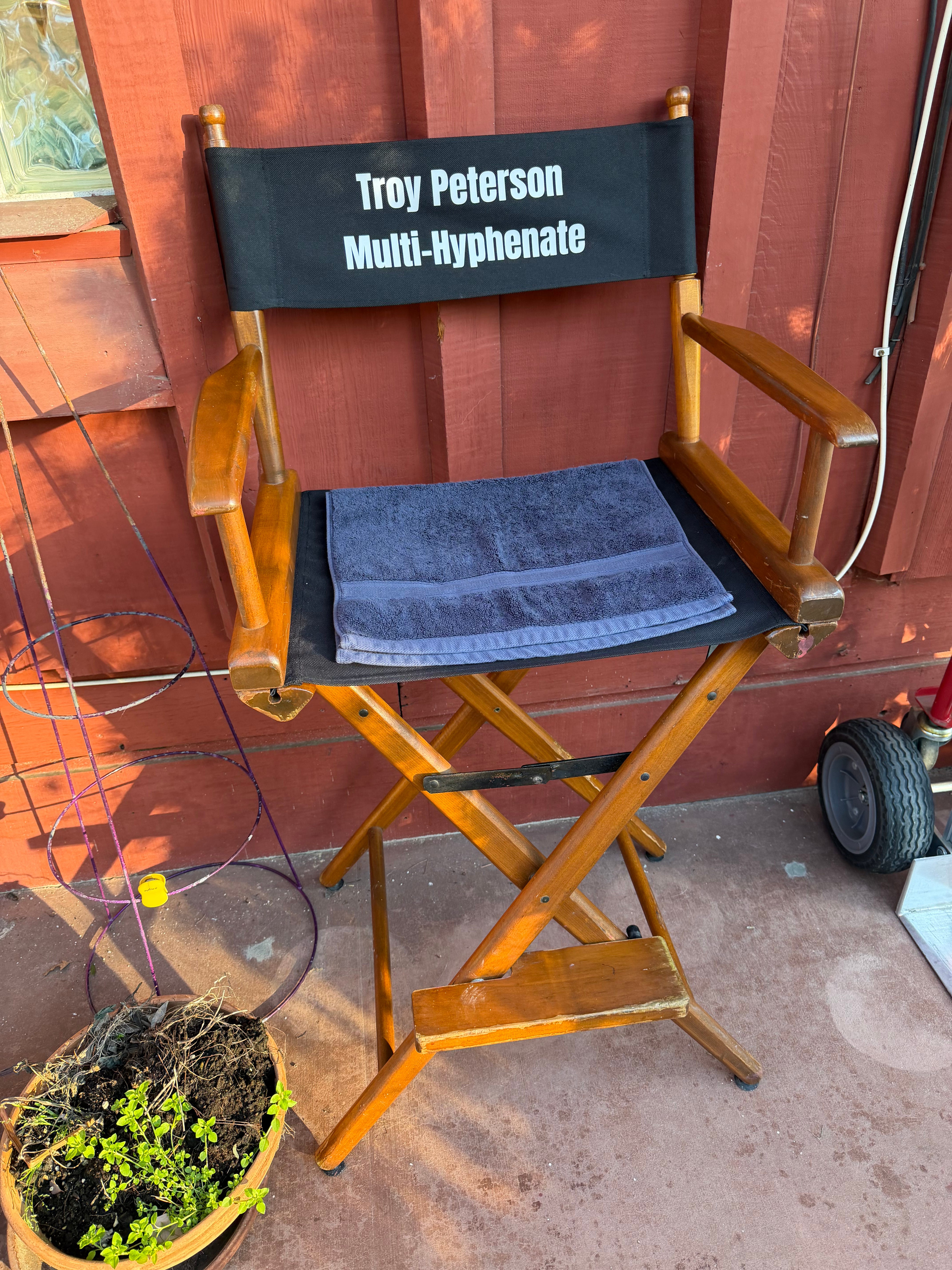
While we’re shooting by the pool, Troy’s director chair — a gag gift from the writer Steven Vlasak that reads “Troy Peterson — multi-hyphenate” — suddenly tips backward while he’s watching the scene. Troy jumps out just before it collapses into a large rock positioned exactly where his head would have landed. Crisis averted again, though Troy seems determined to injure himself before the movie is finished.
Later we wait on the roof for sunset so we can shoot the field scene. Waiting for the sun to set creates one of those rare pauses during production. People start chatting and laughing while we watch the light change over the city.
When the sun finally drops we grab the shot and call it a good day.
Day 5: The redo and the field
Today we redo the material that defeated us on day three.
With the full crew back and better preparation, the difference is obvious. The performances are stronger. The coverage works. The scene flows the way it should have before.
Sometimes filmmaking really is that simple. You try again and do it better.
Later we shoot a large dolly shot in the field with several extras, and I strip down to jump into the frame for a cameo.
The moment feels oddly meaningful. It’s playful, but it also feels like a small collision between my filmmaking life and my nudist life.
One of the extras is Linda Weber, president of AANR. She didn’t realize I was actively producing and shooting the film. Seeing me working on set seems to surprise her. I notice similar reactions from others in the nudist community. I’ve been a filmmaker much longer than I’ve been a nudist advocate, but those worlds rarely intersect. Today they do.
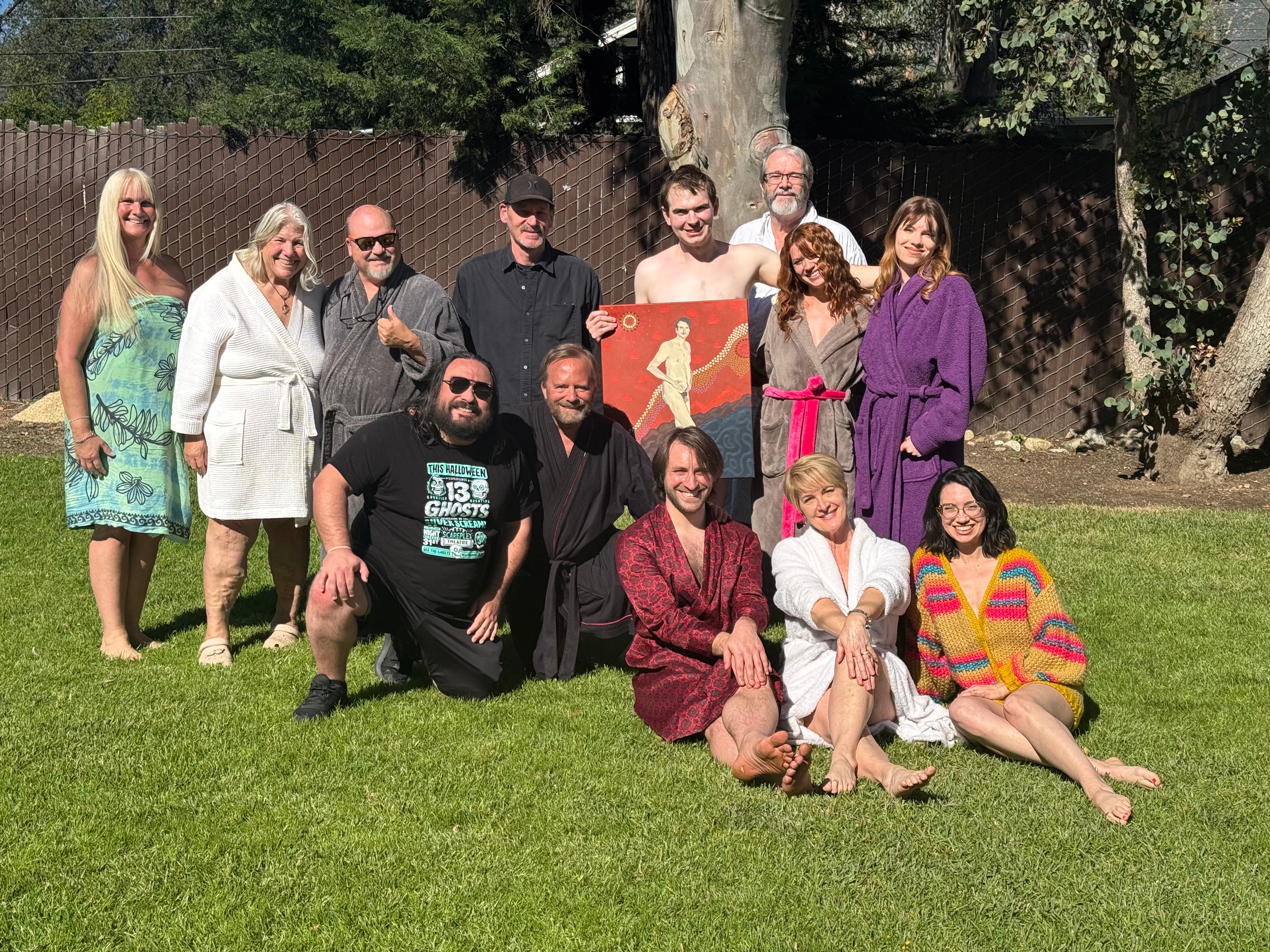
With Linda and Rolf and Cynthia all there, a real chunk of the nudist community has turned out to watch.
After wrap we load all of our gear into my van for the move. It’s sweaty work at the end of a long day.
Tomorrow we move to Glen Eden.
Day 6: A different movie in a different climate
The shift to Glen Eden changes everything.
The weather turns hot and sunny. The space opens up. Instead of cramped interiors we’re shooting short montage moments across the resort.
The movie suddenly feels bigger.
Because I know Glen Eden well and many locals know me, the crew naturally looks to me to understand the space. I mostly stay focused on the camera work, but I also find myself quietly helping bridge the production and the location.
Later I learn the crew is uncomfortable with their offsite hotel.
After wrap we all go to Chili’s, and hearing the stories about shouting and security problems there, I decide to buy dinner for everyone. It doesn’t solve the bigger issue, but it lifts morale for the night.
Back on set we shoot the café scene, another long dialogue sequence with a large cast. Actor-heavy scenes always bring tension, but the performers handle it well.
By now the production simply feels like moviemaking.
Day 7: Solving a real problem
The morning begins with an early email from our AD about problems at the hotel.
There were security issues overnight and shouting in the hallways. The crew wants to move somewhere else. I agree immediately and offer to help cover the cost if needed.
Morale improves quickly once people know the situation is being taken seriously, but it creates a new producer problem to solve during the day. Between setups we search for replacement lodging and coordinate moving everyone’s belongings.
Meanwhile the temperature climbs.
The tent scene that morning is short and funny. Then we move to the art class and the gardens, both of which are visually playful scenes.
By now the crew feels noticeably closer. During downtime we toss a ball around with Mason from sound.
At some point the camera crew decides that if we’re waiting on actors or makeup we should jump ahead and grab material from upcoming days. It keeps us moving and helps the schedule. More importantly, it gives everyone a sense of momentum again.
Day 8: Running all over Glen Eden
The day begins at Riverside Municipal Airport.
It was tricky to secure during prep but turns out to be easy in practice. The airport is small and quiet. We get the shots quickly and move on.
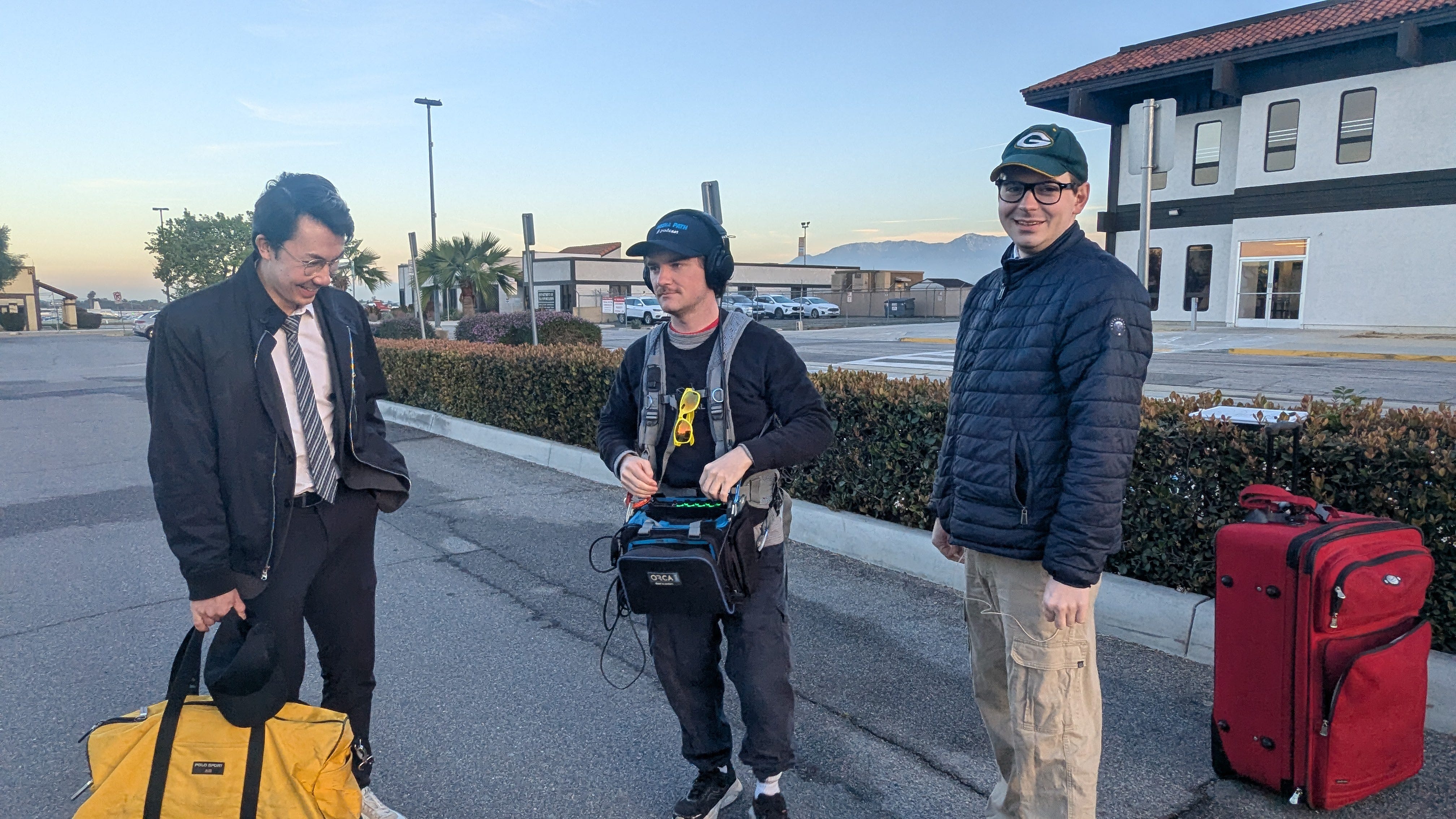
From there the day becomes a marathon across Glen Eden.
We film Skye running through different parts of the property, emotional scenes in the woods, and later small interior setups for the motel and apartment.
The challenge is distance. Glen Eden covers a lot of ground, and even short montage beats require hauling equipment across the resort.
By now the crew is tired. Still, the field material we capture late in the day is strong. Ian does an incredible barrel roll on the ground in one scene — acrobatic, electric, and so funny it lights up the cast and crew to finish the day strong.
That night we all go out to dinner again. It feels like the last real hangout before the finish line.
Day 9: The ending
Because it’s a night shoot, the day begins slowly.
I sleep in and go on a hike with Ian Hayes before call. The break helps. The evening ahead feels like a finale.
This is my last day on set and the wrap day for most of the principal cast.
We’re shooting the film’s climax in Piper Hall, including a large audience scene and backstage material around the community stage.
The energy feels different from the moment we begin.
We shoot the crowd first, then spend the late hours working through the stage scenes. At one point I look around and realize the room is full of nude performers, a few crew members, and a couple dozen extras, and the atmosphere feels completely ordinary.
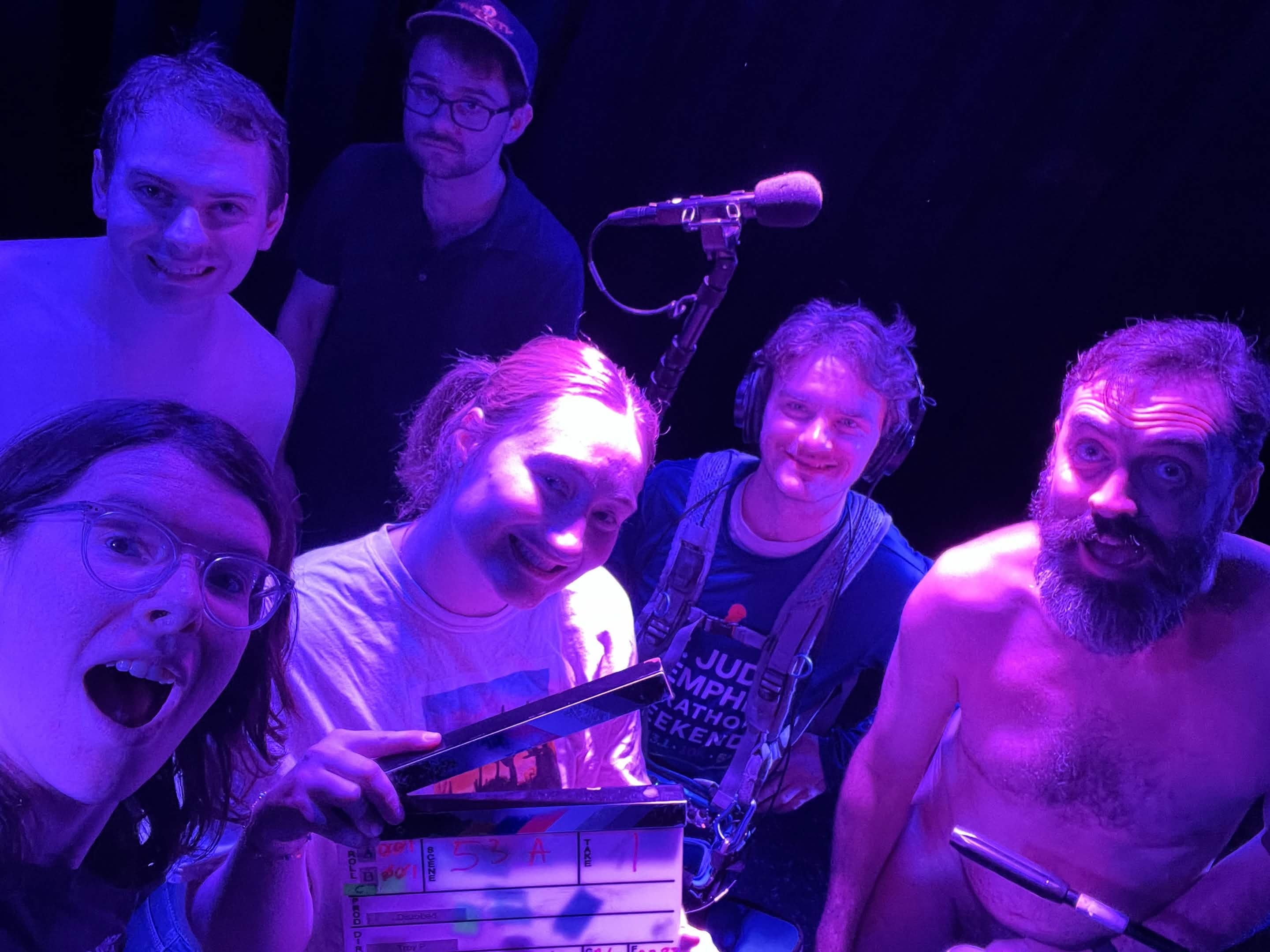
For a stretch I work nude myself and barely think about it. The internal logic of the production has fully settled in.
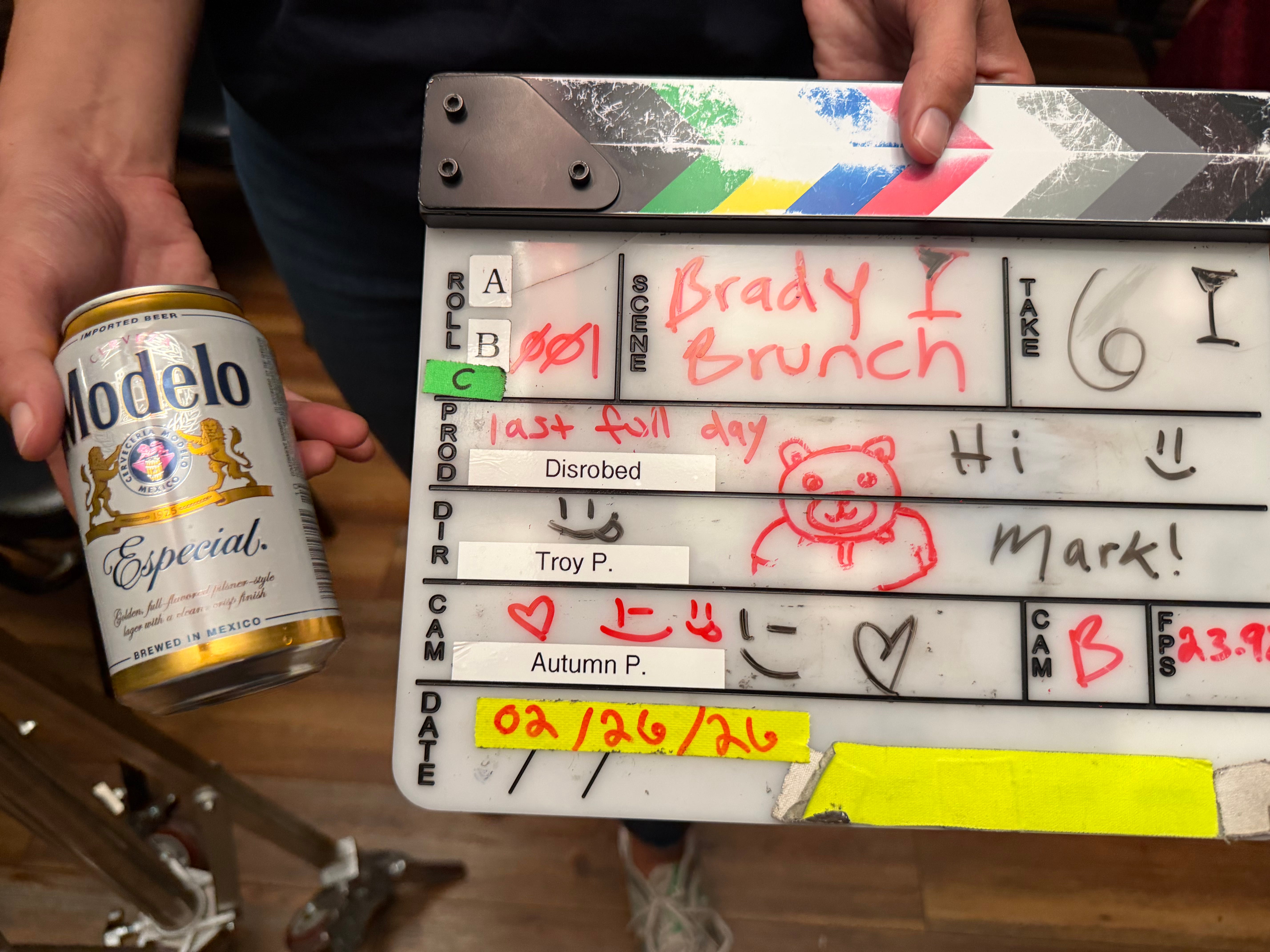
Near the end of the night the slate becomes a little artifact of the shoot, covered in drawings, jokes, and inside references.
We end the night with a playful green-screen setup where each actor gets a brief farewell moment.
It’s around three in the morning when we finally call the martini shot.
Someone surfaces a case of Modelo Especial. People cheer. Some people cry. A few of these folks have been with this project for the better part of a decade.
Then we break down the gear and say goodbye.
After
Two days later production returns for a final half-day of pickups at Glen Eden, but I’m not there for that. Instead I spend two quiet days packing gear, relaxing around the resort, and slowly easing back into normal life before heading to another job in San Diego.
I keep thinking about the lack of behind-the-scenes photos.
The no-photo rule served a purpose. It respected the location, protected the cast, and helped maintain trust. But moviemaking is a lightning-in-a-bottle experience, and once it ends, it ends.
Without images, much of it survives only in memory.
Maybe that’s why writing it down matters.
The film itself will remain. That’s the real artifact. But the experience of making it deserves a record too. Not because it was scandalous or wild. In many ways the most interesting thing about making Disrobed was how normal it became.
Once everyone settled in, it was simply a film set. A place full of problem-solving, jokes, stress, creative decisions, long days, quick resets, tired dinners, and the fragile chemistry that develops when a group of people commits to making something together.
For me personally, it also brought together parts of my life that had long stayed separate. On this shoot I didn’t feel like I was switching between filmmaker and nudist advocate depending on who was in front of me. Those roles were simply present at the same time.
For the nudists, I was a window into the filmmaking process. For the filmmakers, I helped translate the nudist world.
For me, it finally felt like everything fit together. 🪐
Small world: I recognize in a couple of the photos Mark, who I have met a few times at Star Ranch east of Austin, Texas.
You're right - this definitely deserved its own history. I loved the pandemic version of Disrobed, and through emails I got to know Troy, Ian, Eloise, Dave, and Karen a little. It's thrilling to see that the movie version is going ahead. The actors were all so fantastic in the online version, I'm excited to see the film. Thanks for this excellent insight into the process!