

Court blocks arrests over naturism at Brazil’s Praia da Galheta
Santa Catarina judges rule that nonsexual nudity at the historic Florianópolis beach does not constitute an obscene act

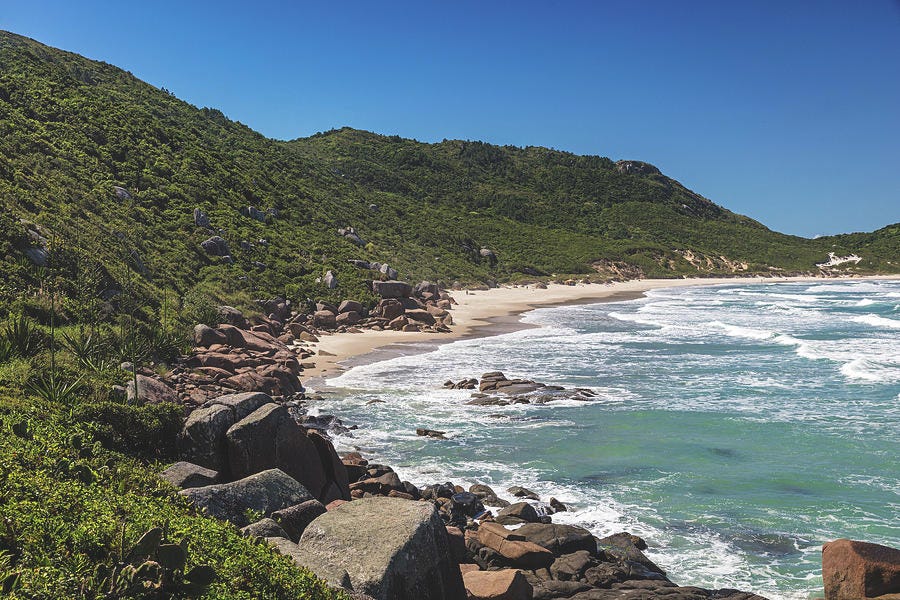
A Brazilian court has ruled that people visiting Praia da Galheta in Florianópolis cannot be arrested or detained simply for practicing naturism, marking a significant legal development for one of the country’s best-known unofficial nude beaches.
The decision, issued March 12 by the Santa Catarina Court of Justice (TJSC), grants a preventive collective habeas corpus protecting beachgoers from police action based solely on nonsexual nudity. The ruling orders police and municipal authorities to refrain from making arrests, coercive detentions, or issuing criminal citations when the only alleged offense is naturist nudity on the beach or in the sea.
Judges concluded that the practice does not meet the legal definition of an “obscene act” under Brazil’s Penal Code when it lacks sexual intent.1
The case was brought by the Associação Amigos da Galheta, which sought legal protection for beachgoers amid uncertainty about how authorities might enforce laws against public nudity.
Praia da Galheta, located on the eastern side of Santa Catarina Island, has been associated with naturism since the late 1970s and remains widely known among international naturist travelers. Although the beach once had municipal legislation recognizing the practice, that framework was effectively removed in 2016 when the area was reclassified as a protected natural monument, leaving regulation unresolved.
The court emphasized that the ruling does not create an official authorization for naturism. Instead, it establishes that criminal law cannot be used to punish nonsexual nudity while the city continues to debate formal regulations.
The decision also sets clear geographic limits. The protection applies only to the sand and the sea at Praia da Galheta, and does not extend to trails, vegetation areas, decks, or parking areas leading to the beach. Authorities remain free to enforce laws against harassment, sexual activity, environmental damage, or other crimes.
The ruling will remain in effect until Florianópolis adopts a final legislative framework governing naturism at the site. 🪐
More reading:


Mayer, S., & Silva, Â. (2026, March 14). Justiça proíbe prisões motivadas por prática do naturismo na praia da Galheta, em Florianópolis; entenda. G1 Santa Catarina. https://g1.globo.com/sc/santa-catarina/noticia/2026/03/14/justica-proibe-prisoes-naturismo-praia-galheta-florianopolis.ghtml