

The fight to save Hooksiel’s FKK campground
A planned 2027 closure has sparked a growing petition and drawn attention from across the naturist world

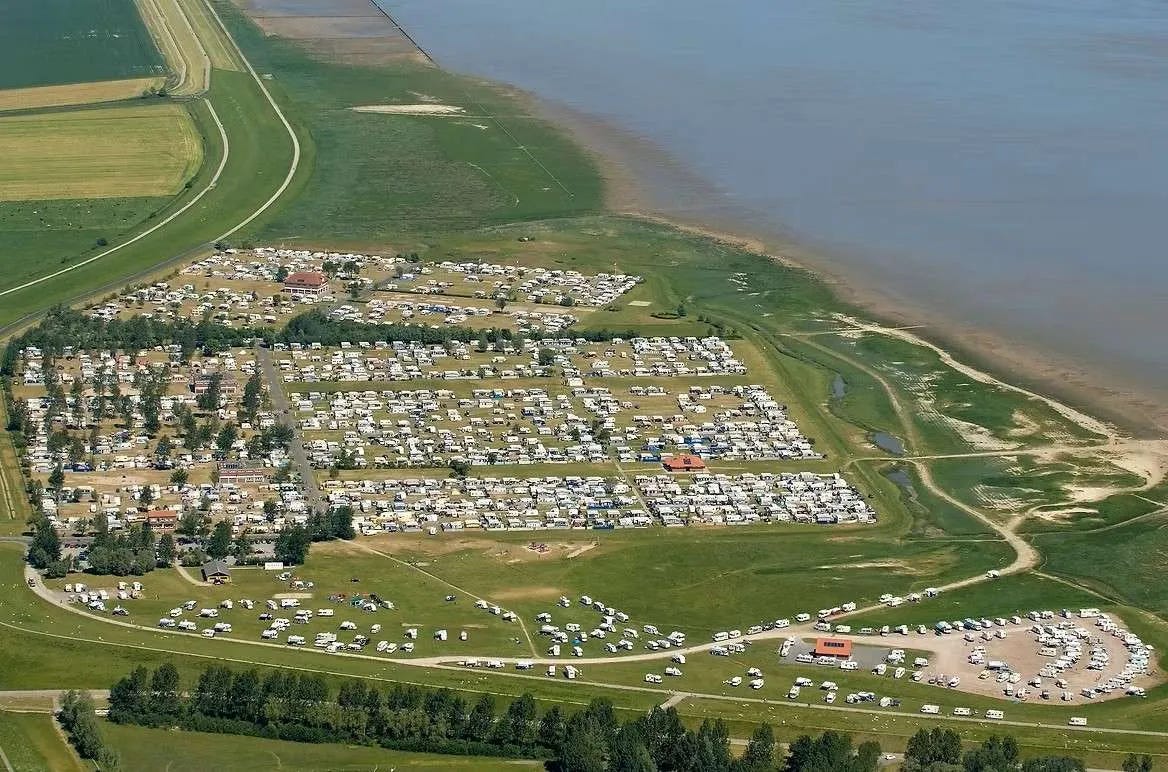
The future of one of Germany’s last dedicated naturist camping areas on the North Sea coast is now uncertain, as a growing petition seeks to stop the planned closure of the FKK section at Hooksiel campsite.
Launched in March by a regional naturist association, the Naturistenbund Wilhelmshaven-Friesland e.V., the petition calls on site operator Überland Services GmbH to reverse its announced decision to eliminate the clothing-optional camping area beginning in the 2027 season. Within days, it had gathered hundreds of signatures, with supporters describing the site as a rare and irreplaceable space for community, continuity, and cultural expression.
“This is about preserving a space of freedom and community,” the organizers write. “Its closure would destroy a place that has grown over generations.”12
The campsite was previously operated by the municipality of Wangerland before being sold to the private company Überland Services GmbH, reportedly due to financial pressures. Under private ownership, the site is now being evaluated more closely for profitability, with occupancy in the naturist section declining relative to the rest of the site. The company plans to repurpose the area for broader camping use aimed at a wider tourist base.
Naturists stand up
The issue has begun to extend beyond the local level. While the petition is organized by a regional association, it has drawn support from grassroots advocates, including Get Naked Germany, which has helped raise awareness of the situation among a broader audience. It has also attracted attention from Germany’s national naturist structure and beyond, including the Deutscher Verband für Freikörperkultur (DFK) and the International Naturist Federation (INF-FNI).
In a joint letter, the DFK and INF-FNI have urged the campsite operator to reconsider the planned closure, pointing to the site’s cultural and tourism value and its place within Germany’s longstanding FKK tradition.3 The organizations are also engaged in discussions with local stakeholders, including the municipality of Wangerland, aimed at finding a solution that would preserve a defined naturist area.
Both groups have indicated a willingness to support a compromise, including potential modernization or restructuring of the site, rather than full elimination of the FKK section.
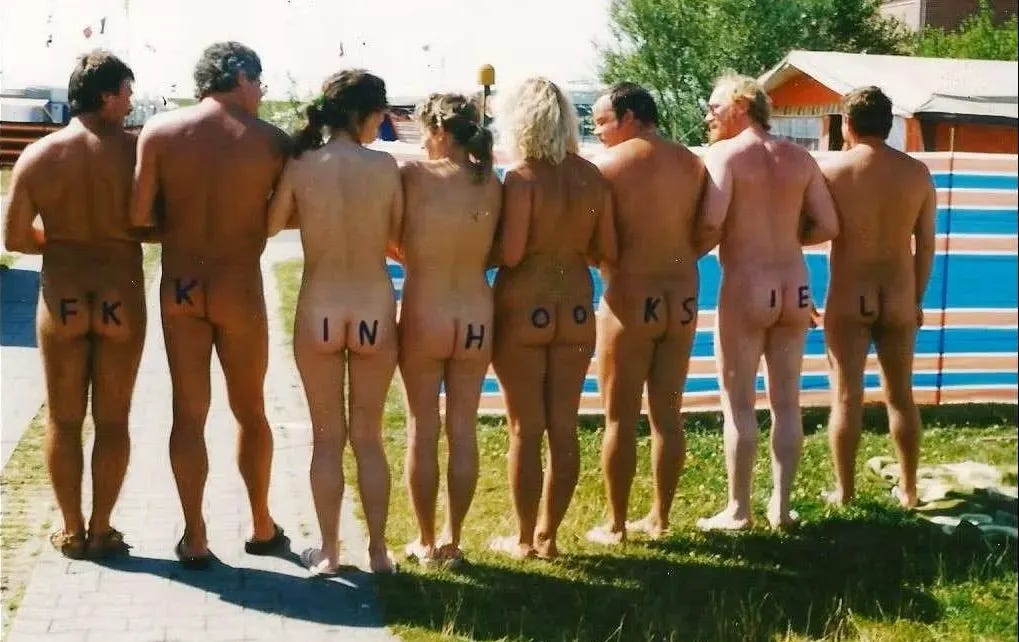
Hooksiel holds a particular place within Germany’s naturist landscape. Located in Lower Saxony’s Wangerland region, the campsite sits alongside a designated nude beach, creating one of the few remaining coastal environments where visitors can stay, socialize, and recreate nude in a continuous space.
Along Germany’s North Sea, naturist infrastructure has always been more limited than on the Baltic coast, making this kind of integrated setup increasingly rare.
Germany’s FKK tradition has long depended on a mix of informal public access and structured environments like associations and campgrounds. Hooksiel belongs to that latter category, a managed space where naturism is intentional and sustained through infrastructure rather than tolerated use.
Sign the petition
Across Europe, those types of spaces have faced growing pressure from redevelopment, shifting tourism models, and land-use decisions that favor broader market appeal. In many cases, naturist areas are not explicitly restricted. They are reallocated.
At Hooksiel, the planned closure would remove the FKK section while leaving the larger campsite intact, replacing a specialized use with general tourism.
Supporters see that pattern clearly.
“There are hardly any places left for FKK users. They are being pushed out more and more,” one wrote.
“Every lost FKK site is one too many,” another added.
The petition remains open through September, with organizers aiming to reach 2,000 signatures as discussions continue. Readers who want to follow the effort or add their name can find it online as local advocates and international organizations push for a solution.
Hooksiel is losing one of the few remaining places where German FKK culture operates as a fully integrated environment rather than a designated corner.
The timeline stretches to 2027, but the outcome will shape access on the North Sea coast well beyond that date.
If spaces like this continue to vanish, what replaces them? 🪐
Naturistenbund Wilhelmshaven-Friesland e.V. (2026, March 14). Stoppt die Schließung 2027 – Rettet den letzten FKK-Campingplatz an der Nordsee [Petition]. OpenPetition. https://www.openpetition.de/petition/online/stoppt-die-schliessung-2027-rettet-den-letzten-fkk-campingplatz-an-der-nordsee
All quoted material from the petition and its comment section was translated from German to English using Google Translate and may include minor edits for readability.
Kilby, E. (2026, March 11). INF-FNI and DFK call for preservation of naturist area at Hooksiel. International Naturist Federation (INF-FNI). https://inf-fni.org/inf-fni-and-dfk-call-for-preservation-of-naturist-area-at-hooksiel/