


Forest Emerson, a former president of the American Sunbathing Association, described Rod Swenson in a 1975 letter to Oui Magazine as one of nudism’s newer and less experienced promoters—though with regards to the Ms. All-Bare America contest held at Circle H Ranch on September 9, 1974, he felt Swenson was doing quite well.1 As it would turn out, however, Rod would soon leave mainstream naturism far in the rearview mirror. Living naked, it seems, would not be radical enough for him.
Rod Swenson’s road into the seventies was not unlike many artists of the day. To say he is a controversial figure in nudist circles is an understatement—assuming he is even remembered at all. Born in New York City in 1945, he developed an early passion for painting, earning a scholarship to the Brooklyn Museum and studying at the Art Students League as a teenager, before heading to Colorado to earn a BFA in painting from the University of Denver in 1967.
He then traded painting for conceptual, performance, and neo-Dadaist art, enrolling at Yale University, where he managed to irritate the faculty with his avant-garde ideas but was still awarded a Master’s degree in 1969. His interests also ran toward packaging consumer goods. “I was doing a mass-produced thing,” he has said. “I built a plastic vacuum-forming machine in my studio, which wasn’t too popular.”2
After graduation, Rod kicked around in a few jobs before discovering, of all things, granola on a trip to the West Coast. He had tired of making plastic multiples for their own sake, but now saw an opportunity to combine his packaging know-how with large-scale granola production. In 1971, he founded The Good Shepherd Cereal Company with his brother to mass-produce the first granola stocked in East Coast supermarkets. It was a sensation, expanding rapidly: New York Magazine called it the “patriarch” of granolas and credited the company with commercializing the cereal. Suddenly Rod was president of a large, successful company — though he saw it differently. “For me, it was sculpture, not food. I didn’t call it art, but that’s what it was.”
A rich man at 22, he was written up in business features as a “hippie capitalist.” He could have stayed with it, but he sold the business to Sovex Foods in 1973 and decided to do something completely different. He joined Sunshine Park nudist club in New Jersey and turned his attention to the health aspects of nudism.
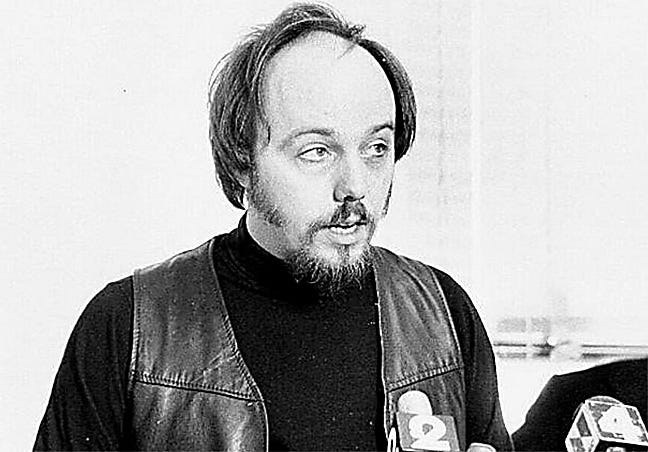
To outsiders, Rod looked every inch the young nudist: a lithe body, a golden perma-tan, a receding hairline, and a small satyr’s beard. But he was a natural entrepreneur. In 1974, he was commissioned to set up and run a natural foods restaurant at Cypress Cove Resort in Florida, and that same year he published a guide to naturist resorts. His most high-profile venture, however, was the creation of All-Bare Entertainment Corporation, whose principal activity was staging the Ms. All Bare contest — “America’s Honest Beauty Pageant.”
Ms. All-Bare America | Circle H Ranch 1974
By 1974, the energy crisis was hitting nudist clubs where it hurt. Earl and Lucille Hansen, who ran Circle H Ranch in Glen Gardner, New Jersey, were finding that fewer people could afford the gas to drive out and get naked. Earl also complained that his winter electricity bill for the heated pool had tripled to nearly $600 a week. The typical weekend winter crowd of 100–150 guests in 1972–1973 had dropped to between twenty and fifty. In 1974, to save electricity, he kept the building temperatures down in the sixties — which, especially for nudists, did not work too well. Even at the fully attended New Year’s Eve party, few guests were willing to be nude with the heat so low.
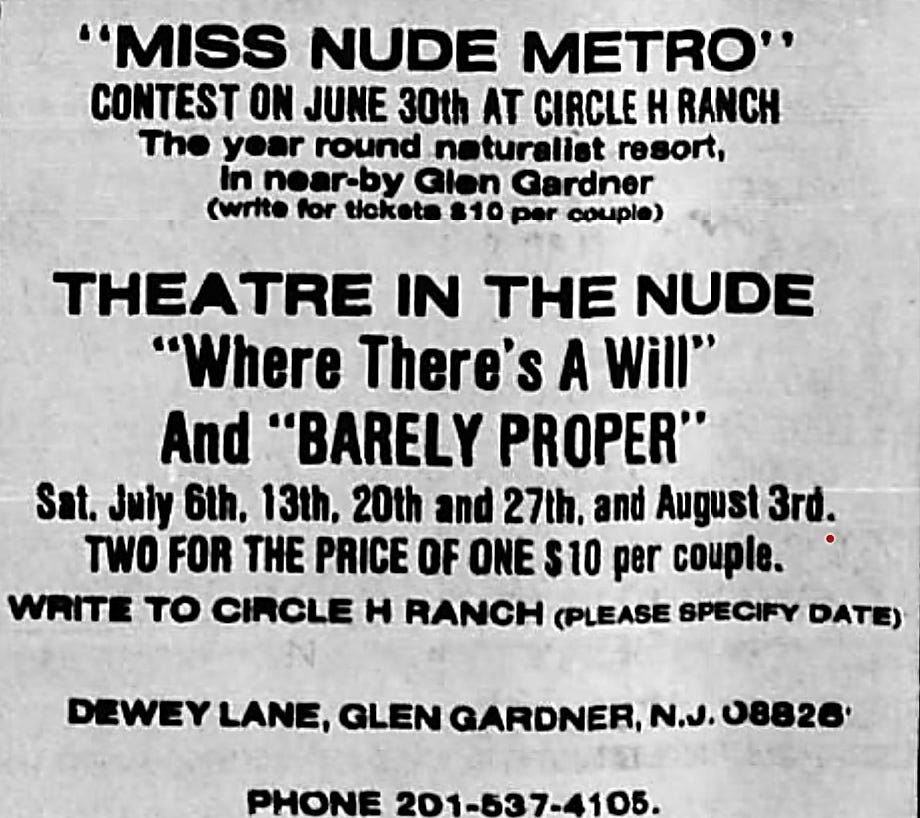
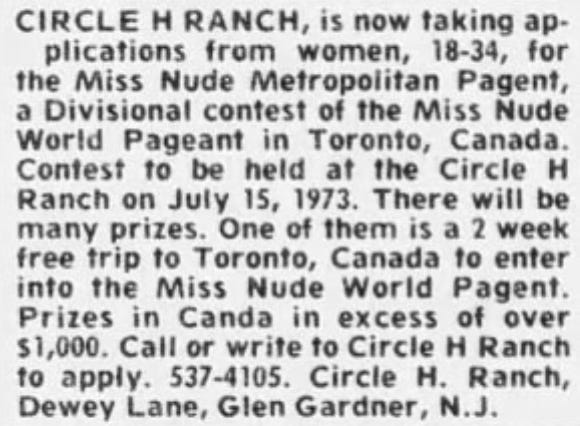
Besides the summer theatrical productions (a long-running series called Barely Proper), the resort tried other ways to generate revenue — at least a few of which look more questionable through the lens of 2025. Miss Nude Metro, a regional event of the Miss Nude World pageant, was held at Circle H and open to the public for $10 tickets, with attendance capped at 1,000. The contest ran at the resort at least in 1972, 1973, and 1974, with advertisements casting wide for contestants. Jacqueline Kong won the 1973 event at Circle H and went on to take the 1973 Miss Nude Galaxy title in Quebec. That same year, Circle H hosted the first-ever Mr. Nude Metropolitan contest.3
Apparently willing to try anything to keep the pool warm and the lights on, Lucille and Earl partnered with Rod Swenson. In August 1974, he trademarked the name and organized the Ms. All-Bare America Pageant for September, held after that year's Barely Proper run. It was marketed as a bona fide nudist pageant sponsored by the national organization. Don Imus served as master of ceremonies. Some 2,000 spectators attended, and the contest was won by 21-year-old Wendy Blodgett, an aspiring actress from Vermont then living in New York. The third runner-up was a Black woman from South Carolina — something that would have been unheard of a few years earlier. Although that may have improved the organizers' social responsibility score, the exploitative nature of this particular “beauty pageant” seems even more questionable than most, especially in the two later years of production. After 1974, the event moved to a burlesque theater in New York. Blodgett parlayed her win into a Penthouse Pet of the Year title in 1975.4
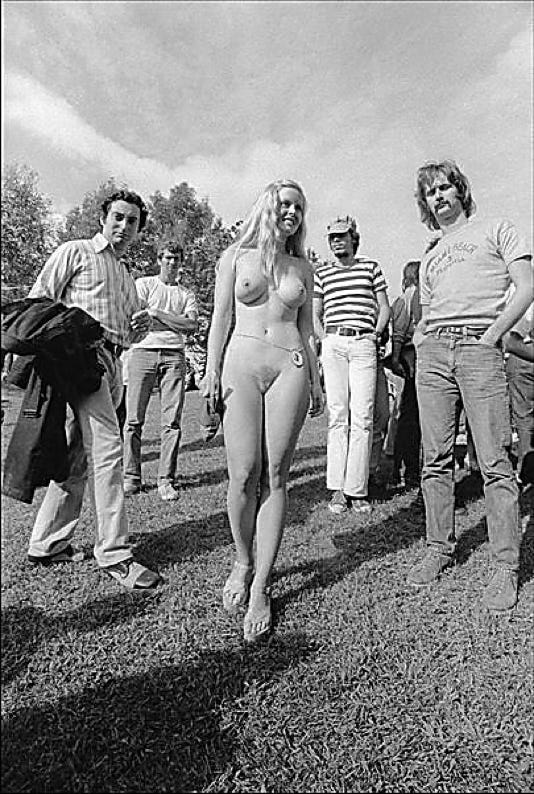
Done as a potential marketing bonanza, it seems doubtful many of those ticket-buyers ever returned to Circle H as members.
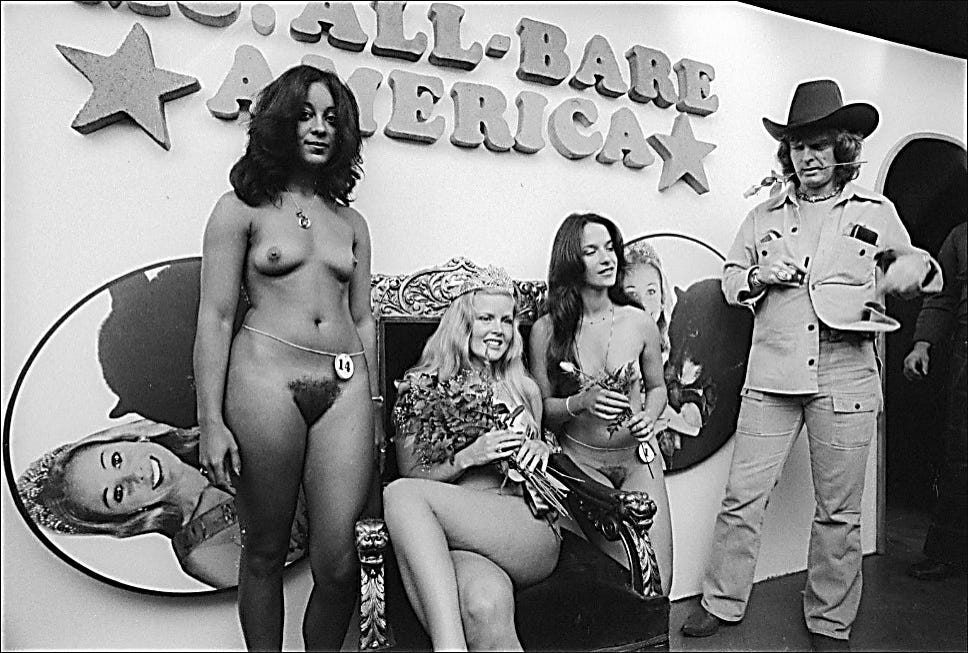
A few weeks later, at Sardi’s restaurant in New York City, Blodgett appeared at a press conference wearing nothing but red platform shoes. She said the event was a plea for “accepting our own bodies and each other's bodies without fear, shame, or disgust.”5


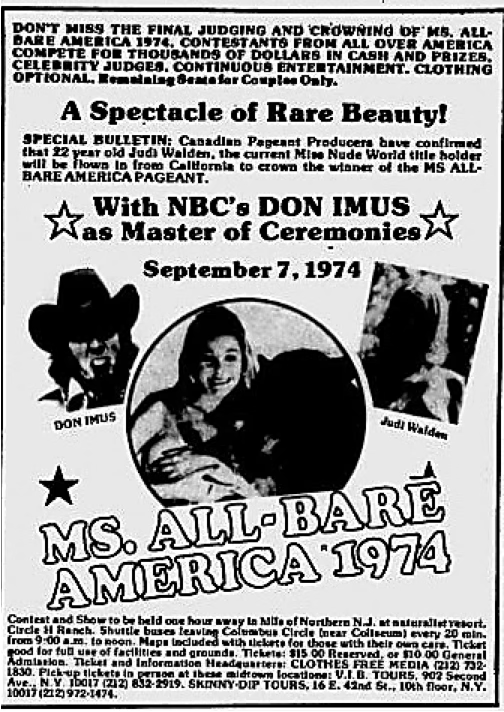
The Ms. All-Bare America ran for three years, from 1974 to 1976, and received substantial coverage from mainstream news outlets, including lengthy interviews with the earnest, deep-thinking man behind the enterprise. The second pageant was held at the Beacon Theater in New York in September 1975, and Rod insisted it would be no tacky throwaway, no peep show — it was to be a fantasia. He had big plans: closed-circuit broadcast to venues across the country, major sponsorship, a winner rocketed to stardom. The 1975 and 1976 shows were, by most accounts, even tackier than the one held in New Jersey.
New York’s Captain Kink’s Sex Fantasy Theater
Rod, however, had already seen greater potential for outrageous performance, and the Ms. All-Bare Pageant was nothing compared to what came next. He called his new show Captain Kink’s Sex Fantasy Theater. Despite its content, it was a hit from the start. “The deal started on a week-by-week basis but soon drew solid crowds,” he recalled. “It seated about 150 people, and we ended up running five shows a day beginning at lunchtime seven days a week.” The press dubbed him the Barnum of Beaver. One of the young women performing on stage was Wendy O. Williams. Swenson recognized her potential almost immediately — and then the city started making arrests, including Williams herself.
The Plasmatics invade Sunshine Park
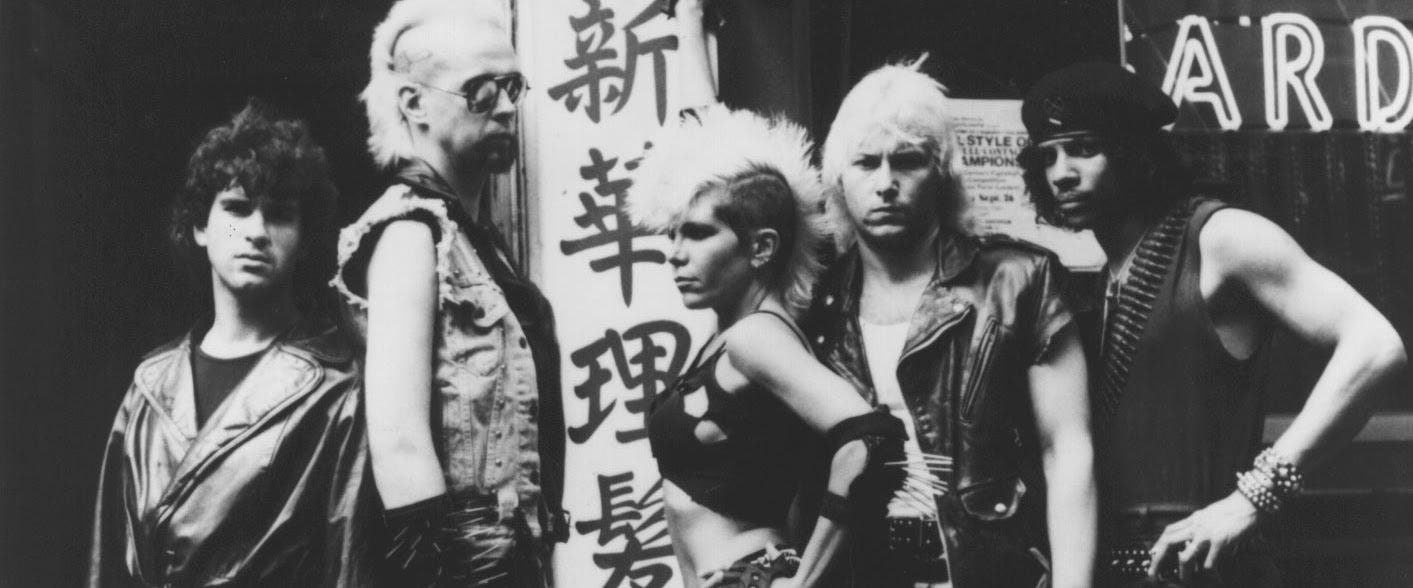
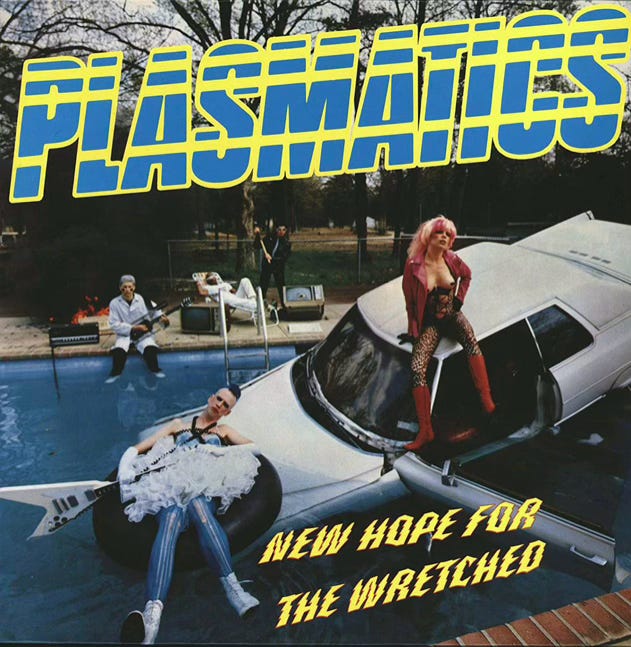
Convinced that Wendy would make an extraordinary front woman for a band, Swenson developed the punk rock group the Plasmatics in 1977 and managed them throughout their run. They quickly became a sensation around New York City. Williams performed nearly naked, typically with electrician’s tape over her nipples and a dominatrix aesthetic. The band built a reputation for chaotic, destructive live shows: chain-sawing guitars, sledgehammering television sets, destroying speaker cabinets, blowing up automobiles on stage. Billboard Magazine called the Plasmatics “the absolute limit of what can be accomplished in rock and roll theatrics.”6
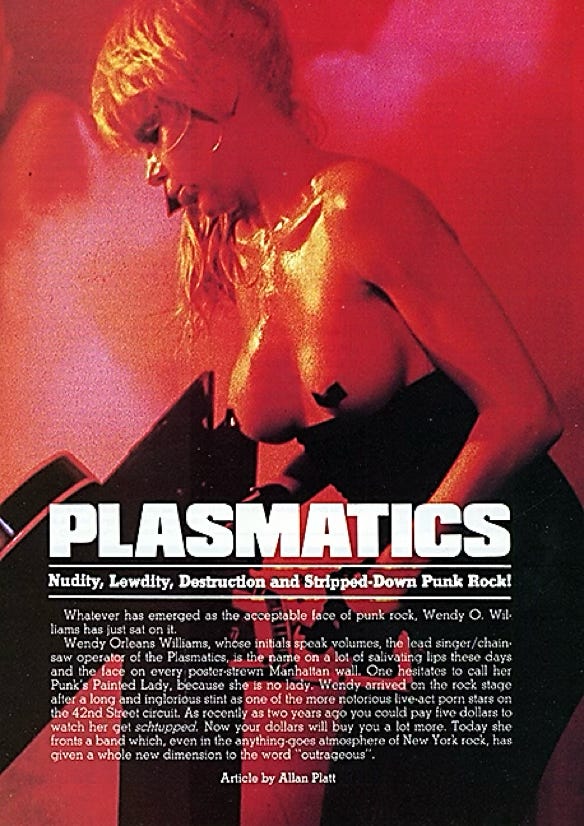
It is hard to put this band in perspective forty-some years later. Wendy was a charismatic figure — screaming insurrectionist lyrics with shredded clothes barely covering her body, demolishing stacks of televisions with sledgehammers. One song, “Butcher Baby,” featured a chainsaw through a guitar in place of a solo. Here was a vegetarian who didn’t drink or smoke and ran six miles a day, appearing nearly naked on stage as a muscular, mohawked woman, gleefully destroying the beloved symbols of American middle-class complacency. The band emerged during a time of rampant materialism and Wendy was in the business of symbolic destruction — consumerism, conformity, complacency. This wasn’t just entertainment; this was warfare. And the ringmaster behind it was Rod Swenson.
Since he knew the owner, Swenson brought the band to Sunshine Park nudist club in Cape May, New Jersey for a live performance on June 18, 1980. By then, Sunshine Park was a failing enterprise, in frequent fights with local officials over zoning and health codes. While the band was there, they shot the video for the lead single from their debut album — the Monkey Suit video, which includes the band submerging a Cadillac into the pool.


The Plasmatics went on to make five studio albums and broke real ground in the genre. Both Wendy and Rod were beaten and arrested by Milwaukee police in 1981. The band broke up in 1987. Swenson went on to teach at the University of Connecticut, and after a period focused largely on caring for animals, Wendy O. Williams died by suicide a decade after the band's end.
Swenson rarely held press conferences during the Plasmatics years — Wendy handled that well enough on her own. Afterward, he became a somewhat reclusive figure who almost never discussed his past with the band. In yet another turn, and in keeping with a lifelong interest in science, he became a fellow at the University of Connecticut's Center for the Ecological Study of Perception and Action, publishing research on the laws of evolution, thermodynamics, and entropy. As far as anyone knows, the weekend at Sunshine Park was his last foray into nudism. 🪐
Emerson, Forrest, ”Nudist Lament In: Letters,” Oui Magazine, July 1975.
West, Asley, “Times Square’s Most Outrageous Sex Show, The Queen of Shock Rock, and The Svengali,” Rialto Report, August 18, 2019, found at Rialtopeport.com
“Nudists select Ms. All-Bare,” Gloucester County Times, Woodbury, NJ, September 16, 1974.
“Ms. All-Bare New Jersey picked,” Springfield Leader and Press, Springfield NJ, July 6, 1975.
“New Title holder barely noticed,” The Jersey Journal, Jersey City, NJ, September 26, 1974.
Webber, Jason, “Revolution, Evolution, and Rock ‘N’ Roll: An Exclusive Interview with Plasmatics Founder Rod Swenson,” Vive Magazine, August 30, 2012
 | A guest post by
|
Olaf, Thanks for the trip down memory lane. I worked at Circle H Ranch in 1977 -78 so just missed these events but did hear about them. Many know stars from NYC came to the club for these events. Merv Griffin was a neighbor and invited to come over for events. The oil and gas crisis made it impossible to maintain the marketing of a year-round club in central NJ. The pool had a metal structure over it that was covered in plastic so it was a bit of a greenhouse / terrarium to be warm enough to sit at the side when done in the water. This is a very timely reminder as oil and gas prices are currently sky-rocketing putting additional financial costs on our clubs. Everyone is looking for creative solutions, again.
In 1960s and 1970s, Public Nudity was illegal. But they were released.