


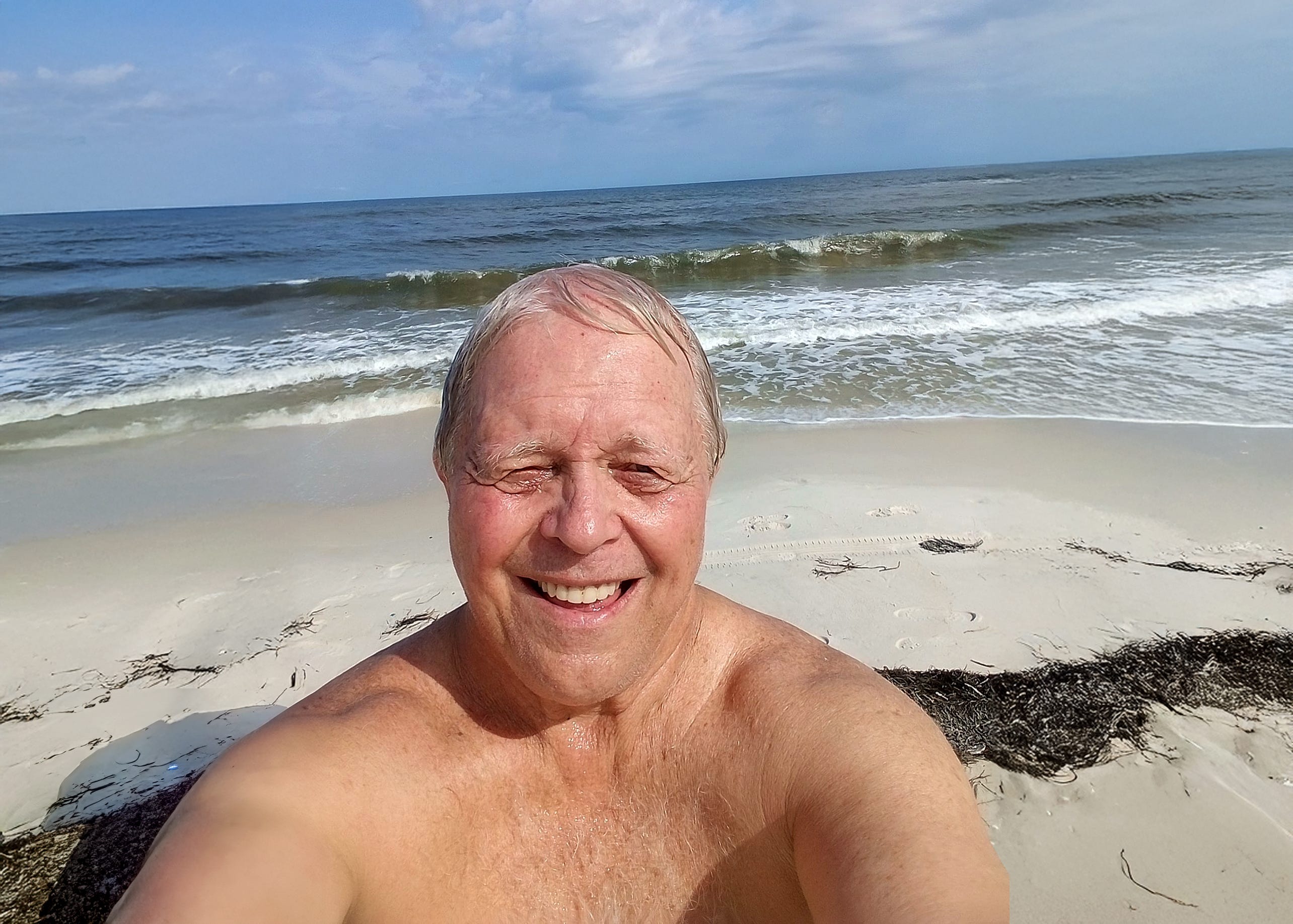
Bruce Frendahl, a longtime Florida nudist organizer, writer, and political advocate whose work helped clarify public nudity as lawful, nonsexual, and socially ordinary, has died in Gainesville, Florida, a few days after his 73rd birthday.
Frendahl was best known for his leadership with South Florida Free Beaches, where he served as vice president and, during especially difficult periods, president. In the early 1990s, as Florida became a national testing ground for battles over nude recreation, he emerged as one of the movement’s most consistent public voices, writing, organizing, and directly challenging officials he believed were misrepresenting the law.
Frendahl also served on the founding board of the Florida Association for Nude Recreation (FANR), the organization now known as AANR-Florida. In the early 1990s in the role of Government Affairs Chairman (while simultaneously leading South Florida Free Beaches), he helped align statewide messaging with on-the-ground free beach advocacy.
His advocacy came during a volatile moment. Florida courts had repeatedly affirmed that simple nudity, absent lewd or lascivious behavior, was not illegal. Yet park administrators, police departments, and lawmakers continued to pursue crackdowns through selective enforcement and proposed statutory changes. Frendahl responded by insisting that public space itself remained central to the issue, not just private clubs or resorts.
Between 1992 and 1994, acting in his leadership role with South Florida Free Beaches, Frendahl wrote extensively to newspapers including The Miami Herald, Florida Today, the Orlando Sentinel, the Key West Citizen, ICE, and XS, challenging how public nudity was being portrayed and policed. Much of that work survives today in a biographical file maintained by the American Nudist Research Library in Florida, where his letters, drafts, and organizational correspondence document a steady, disciplined public campaign. His writing was direct and unsensational, returning again and again to a core point that guided the organization’s advocacy: nudity was not sexuality, and the human body was not inherently disorderly.
At Canaveral National Seashore, Frendahl became a leading critic of what he described as unlawful harassment by park administrators and police. His arguments, preserved in that same archive, rejected claims that nudity endangered families or invited criminal behavior. He pointed instead to decades of quiet use by beachgoers who deliberately chose remote areas, self-policed their conduct, and coexisted peacefully with other visitors. Citing favorable court rulings and public opinion data, he argued that officials were ignoring settled law in favor of moral panic. Frendahl framed the conflict not as provocation, but as a civil liberties issue rooted in whether public agencies would respect constitutional limits on their authority.
He advanced similar arguments on behalf of SFFB during disputes over Fantasy Fest in Key West—where police threatened arrests for body painting and simple nudity despite long-standing legal precedent—as well as in fights over topless equality and access to Haulover Beach.
In later years, Frendahl experienced periods of personal difficulty, and friends within the naturist community helped support him through those transitions. He was a frequent visitor to Cypress Cove, often staying with Paul LeValley, president of the American Nudist Research Library and a fellow member of the original FANR board. Speaking to Planet Nude, LeValley remembered him simply: “He was good company.”
Professionally, Frendahl was an architect and project manager, a background that may have shaped his pragmatic approach. He appeared to treat nudist advocacy as systems work: understanding jurisdiction, documenting inconsistencies, and engaging media rather than relying on spectacle. Later in life, living in Gainesville, he became known locally as “the Naked Poet,” embracing performance. An openly Christian naturist, he led workshops at events such as the Midwinter Naturist Festival at Sunsport Gardens and was a tireless advocate for unhoused people, drawing on his own experiences with homelessness. He leaves behind a brother, a daughter and two teenage grandchildren.
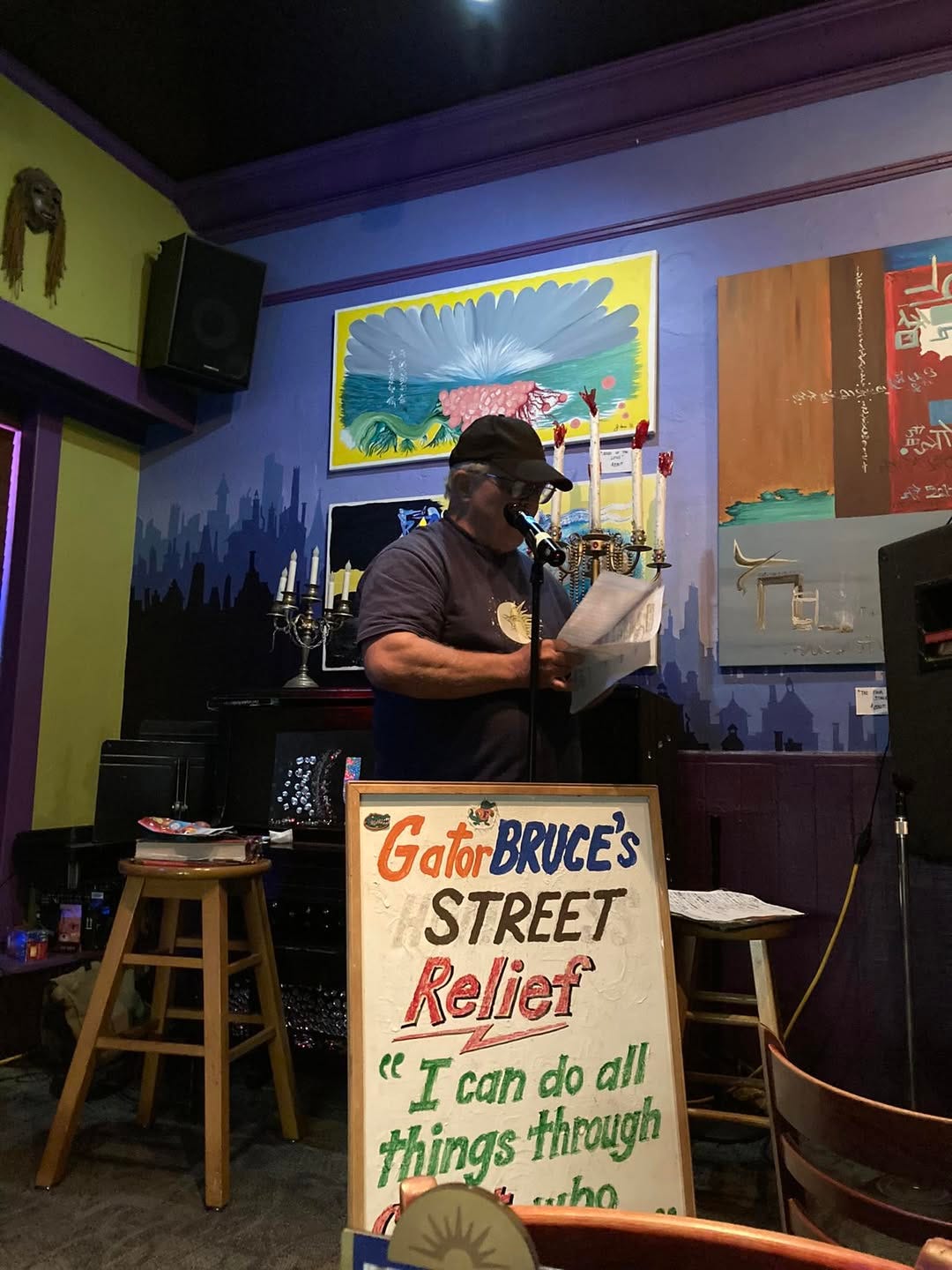
Not long before his death, Frendahl shared a simple question on his Facebook page: “Out of all the things you love, what do you love the most?” Friends responded with answers about faith, family, music, and companionship. Frendahl’s reply to his own post stood out: “The beaches in Florida.” 🪐
Just as I was making plans today for this year’s MidWinter at Sunsport I was wondering if Bruce would be there. He was such an interesting naturist, always excited about everything in our world. We didn’t know each other well but had much in common, like having served on the FANR Board as Government Affairs Chair, serving BEACHES Foundation and working with the late Rich Pasco. In fact Bruce put together a very moving tribute to Rich at the MidWinter that followed his passing.
Our naturist world is better for all of Bruce’s contributions. I was honored to know him. Thank you for showcasing his many gifts to what we all love so deeply - our Florida beaches!💜
I was so fortunate to meet Bruce at MWNF 2 years ago. He led the session on the history of promoting free beaches. Later he gave me a short tour of Haulover beach. I was looking forward to meeting him again in February but it is not to be. I would like to carry on his advocacy in Remembrance.