


Foreword from the author
Before you read the article below, I want to be transparent with you about where I am writing this from.
After several years of writing about the joys and struggles of the nudist community and contributing time and energy to various nudist projects and organizations, I stepped away from my blog, my volunteer positions, and nudism itself over a year ago. For a variety of reasons, I came to recognize a growing misalignment between my convictions and the institutional direction of nudism, despite agreeing with many of its ideas. Though I am reluctant to call myself a nudist today, I have not stopped pondering what nudism means, what it has meant, and what it could mean going forward. I now also question whether the structures and assumptions of American nudism adequately address the very problems they aim to solve.
As I think back on many of my writings over the years, there was always a core tension that I could describe from various, narrow perspectives but I never quite took in the full picture. The following is not a rebuke of the nudist idea, but an examination of it through the eyes of someone who has stepped back far enough to, perhaps, see it clearly and who is not burdened with the responsibility of painting it in the most flattering light.
Writing this piece has clarified my own thoughts around nudism, and I hope it offers some kind of clarity to you as well.
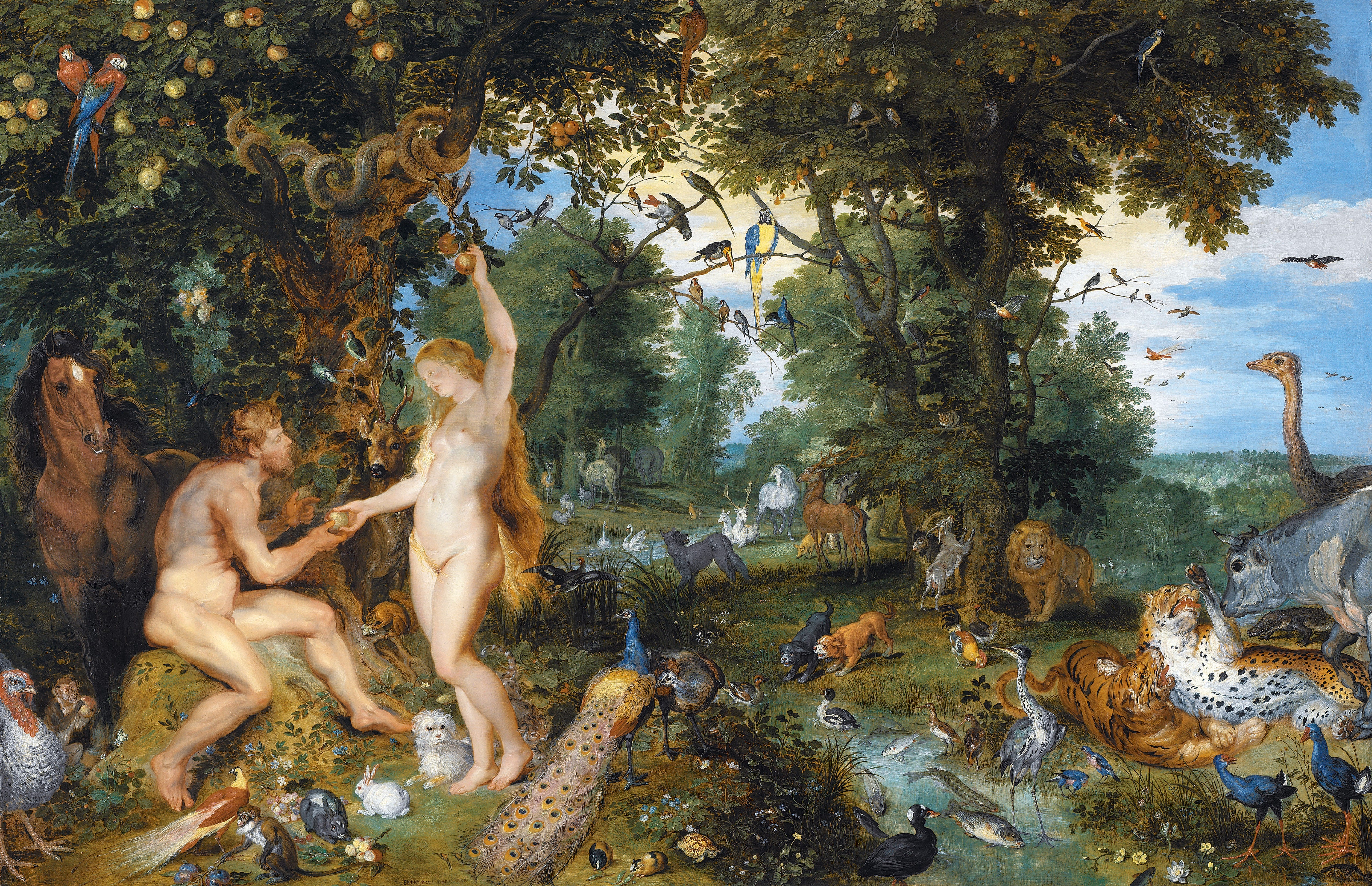
In the beginning
Before American nudism, there was Freikörperkultur—not an accident of aesthetics, but a response to its historical moment. It was a pastoral reform movement that emerged in late nineteenth- and early twentieth-century Germany amid industrial acceleration and urban crowding. It imagined healing through return—to sun, soil, air—and through the disciplined cultivation of bodies thought capable of reaching their highest potential. In a Europe unsettled by mechanization and modern alienation, nakedness was framed not as spectacle but as restoration.
The body was not only something to be seen, but something to be lived. It was Körper—visible, physical, commandable, and external—and Leib—internal, feeling, breathing, moving in harmony with landscape and others, sometimes obedient, sometimes not. The promise of Freikörperkultur was not simply the exposure of the body, but its reintegration with the natural world.
When these ideas crossed the Atlantic in the early twentieth century, they entered a markedly different cultural terrain. Like Germany, America in the late 1920s and early 1930s was grappling with rapidly expanding industrial cities. But it was also charged with its own distinct social and economic upheavals. The market collapse of 1929 and the Great Depression brought mass poverty and a turn toward escapism. The Great Migration brought roughly a million Black Americans northward in search of safety from Jim Crow violence, reshaping cities and provoking backlash from white communities unwilling to share space. Women, newly enfranchised on the heels of a controversial suffrage movement, were swiftly pushed out of industrial jobs they had filled during the war. Queer communities carved out fleeting urban visibility even as police raids intensified and moral panic spread. Meanwhile, Federal Comstock laws criminalized the mailing of material deemed obscene and cast long shadows over conversations about the body itself.
In America, the body was already charged—politically, racially, sexually—before nudism ever arrived.
Into this atmosphere, American nudism offered relief: sunlight over soot, leisure over labor, simplicity over crowding. For some, that promise carried nostalgic undertones. Early nudist imagery almost exclusively centered white bodies in pastoral settings, subtly echoing the racial hierarchies of the era. Men and women appeared balanced yet distinctly gendered, athletic yet decorous, liberated yet orderly. For others, nudism suggested something more radical: a leveling of class distinction, a softening of rigid gender codes, perhaps even the possibility, albeit imperfectly realized, of broader equality through shared vulnerability in a world plagued by resistance to progress on those fronts.
The movement attracted idealists, pragmatists, reactionaries, reformers. The nudist idea held within it competing visions of what “natural” might mean: restoration of the past or progress toward a freer future. As nudism evolved in the United States, those tensions did not disappear; they were negotiated. In the process of translation, of determining what nudism would mean in America, some possibilities narrowed while others hardened into doctrine, shaping not only how the body would be seen, but how it would be allowed to be lived.
The tree of Leib & Körper
Nearly one hundred years have passed since Freikörperkultur arrived in the United States. History may not repeat itself precisely, but periods of economic contraction and rapid social change generate familiar tensions. When prosperity falters, when communities are reshaped by migration, when longstanding hierarchies and social norms are unsettled and institutions feel less secure, public discourse turns toward purity, belonging, and control over bodies and lives. Like a siren song, moments like these invite both escapism and scapegoating. It was in just such a climate that Americans first encountered organized nudism and began shaping it to their own context and needs. It is no coincidence that, in our present moment, the meaning of freedom feels newly urgent again.
This past summer, with today’s social, economic, and political anxieties on my mind, I set out to read On Freedom, in which historian Timothy Snyder examines how political systems cultivate—or quietly undermine—the conditions for freedom. Central to his argument are two dichotomies, the first of which is the idea of freedom from versus freedom to, and the second is Leib versus Körper, two German words for “body” which each carry their own philosophical implications.
A freedom from approach defines liberty by removing perceived barriers, whether or not those barriers meaningfully shape lived experience. It protects the body from intrusion and defines freedom negatively. From this perspective, taxes that fund public services are seen as infringements on autonomy; removing them is imagined to increase freedom, even if doing so leaves many without education, healthcare, or mobility: If we do away with taxes for me now, prosperity will find its way to you eventually, too.
A freedom to approach seeks to construct systems that expand access, increase mobility, and enable fuller participation in society. It defines freedom positively. In this view, taxes used to improve education, provide healthcare, and invest in transportation grant individuals greater participation in civic life, along with financial, medical, and geographic stability; in this way, taxes create the conditions for freedom by first expanding access to life-improving services and, consequently, removing the actual barriers to freedom.
Snyder pairs this distinction with another: Leib and Körper. Though both terms refer to the body, they are not entirely interchangeable. Leib, etymologically related to the English word “life,” refers to the body as an intimate, animate being capable of experiencing life, perceiving and interacting with the world around it and connecting with others. Körper, on the other hand, is etymologically related to the English word “corpse,” and refers to the body as a physical, countable object to be perceived, owned, shaped.
Leib is our whole person, the body we are and experience. Körper is our shell, the body we have and that is seen.
Long before contemporary debates about autonomy and identity, European philosophers wrestled with the tension between the lived body—Leib—and the body as object—Körper. Nineteenth-century German philosopher Friedrich Nietzsche rejected the notion that the body was merely a vessel for reason—Körper—insisting that the self is inseparable from the lived, desiring Leib. Decades later, twentieth-century French philosopher Michel Foucault examined how institutions discipline and regulate the body as object—the Körper. Between Nietzsche’s affirmation of embodied life and Foucault’s analysis of embodied power lies an unresolved tension: whether the body is the ground of freedom—Leib—or the surface upon which authority is stamped—Körper. This distinction becomes visible in the language that we use to discuss freedom. As Timothy Snyder argues in On Freedom, the very idea of “negative freedom” rests on an underdeveloped view of what a person is.
… negative freedom is the self-deception of people who do not really wish to be free. Those who present freedom as negative ignore what we are, ignore the Leib. If we are just Körper, physical bodies, then the idea of negative freedom would make a kind of sense. Objects can be restrained by other objects. Freedom could just be freedom from, without aspirations or individuality, without any sense of what life is or should be.
-Timothy Snyder, On Freedom, p. 23
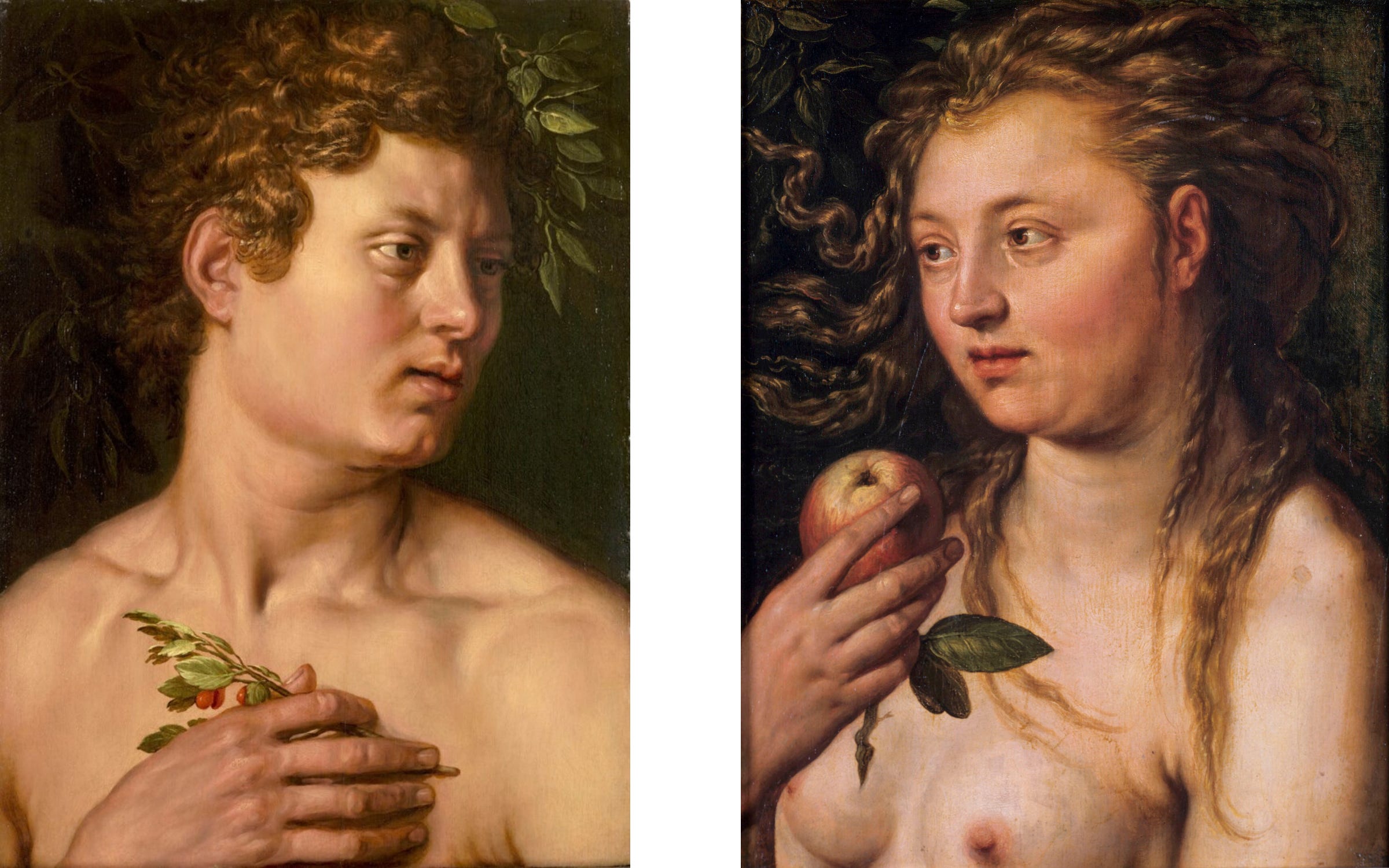
The fruit
Perhaps not-so-subtly, the Leib versus Körper dichotomy is baked into the origins of the nudist idea itself, present even in the name Freikörperkultur, or “free body culture.” Whether consciously chosen or not, the use of Körper—the physical, visible, commandable body—aligns with the movement’s emphasis on discipline, exercise, and the deliberate cultivation of the body toward a “natural” ideal. Exposure of the nude body—to others and to the elements—was promised as a cure for urban malaise. American nudism emphasized escape from increasingly industrialized and—not-coincidentally—racially and sexually diverse urban environments. Yet this retreat into idyllic, isolated natural spaces also set nudism apart from civic life, quietly defining which bodies, which spaces, and which forms of exposure counted as natural.
It is unfair to paint the burgeoning American nudist movement of the early twentieth century as a purely Körper-focused pursuit. Even in Germany, alongside Freikörperkultur also existed the Lebensreform, or “life reform,” movement, which did indeed place Leib—the living body—at the forefront, at least in name. This umbrella movement encompassed much of what Freikörperkultur had to offer but placed greater emphasis on holistic living beyond physical fitness and nudity. Yet its long-term influence is more visible in contemporary organic and natural health movements than in American nudism itself.
Among the earliest American adopters of Freikörperkultur, views on the potential applications of social nudity varied widely. For some, nudism held possibilities that extended beyond physical health or pastoral retreat. American author and sex researcher Jan Gay, writing of her experience as a lesbian participating in social nudity in Europe, suggested an early openness to rethinking sexuality, intimacy, and community itself. Taking this further, early nudist pioneer and sociologist Maurice Parmelee argued in Nudism in Modern Life that nudism could reshape social norms, including through what he called the “play function of sex.” Parmelee’s controversial support of a more sexually liberated nudist practice, however, betrays the conservative, puritanical views that were far more common among the movement’s early leaders who preferred to frame nudism narrowly—as wholesome, apolitical, and non-sexual—revealing a foundational tension between nudism as social reform and nudism as respectable refuge.
While some nudist pioneers imagined some more lived, experiential, Leib-oriented elements of nudism, most nudist writings, including many by Gay and Parmelee, were decidedly more Körper-oriented, focusing on the exposure of the body and discipline applied to it to bend it to one’s will.
In a climate of sexual repression and economic hardship, nudism also found commercial opportunity. While Comstock laws restricted the distribution of sexual materials, nude photography and literature presented through a purportedly educational, nudist lens exploited a loophole. According to Brian Hoffman in Naked: A Cultural History of American Nudism, during the Great Depression, illustrated nudist publications were among the few profitable ventures, despite frequent censorship, quickly becoming a prominent marketing tool and unifying force of the American nudist community. As writer Mark Haskell Smith notes in an interview with CBC, American soldiers during WWII were provided with nudist magazines because the Pentagon could not sent them pornography. Upon their homecoming, nudist resorts boomed. Nudist imagery continued to occupy a carefully negotiated cultural space between pornography and propriety.
The blurring of sexuality with nudity that came as a result of censorship against pornography and obscenity benefited the American nudist movement but it also further complicated its relationship with sex and reduced bodies to commodities—Körper.
Though some leaders expressed their own views on sexuality, the early American nudist movement never articulated a coherent public vision of how social nudity might relate to healthy sexual expression—likely out of fear of censors and a lack of internal consensus. Nudist literature and magazines, alongside more overtly sexualized publications posing as such, circulated widely among nudists and non-nudists alike. Yet it became the party line to assert that these publications were strictly non-sexual and wholly educational. Defending against legal and public scrutiny required that nudism declare itself a wholesome way of life that resolved the problem of sexuality through repeated exposure of and to the body. In practice, this performance of respectability reshaped the movement itself: couples-only restrictions took hold, domesticity was elevated, whiteness and heteronormativity became policy, and identities deemed too disruptive—Black, queer, overtly sexual—were pushed to the margins or excluded altogether. Nudism promised freedom—but only for those deemed acceptable. Liberation and legitimacy came with invisible borders drawn around whiteness, heterosexuality, and domestic propriety.
Despite its own ideations of a world made more free, natural, and egalitarian through the practice of social nudity, American nudism did not concern itself with extending those freedoms to non-white or queer participants. A fleeting hope for racial progress existed in theory, yet the movement never acted; freedom was optional, inclusion was optional, and the body remained disciplined above all else. In Nudism in Modern Life, Parmelee did speculate that interracial nudism might one day soften racial prejudice through prolonged exposure, but he stopped short of recommending integration as integral to the movement. Only that if we remove our clothing now, other unfreedoms may someday resolve themselves.
In practice, American nudism adopted a freedom from posture. It sought freedom from obscenity charges, from sexual suspicion, from racial controversy, from moral panic. But it stopped short of embracing a Leib-oriented approach, from articulating a freedom to—a freedom to cultivate genuine interracial community, to integrate sexuality honestly, or to dismantle the hierarchies it quietly preserved.

The fall
Much like the unfreedoms that nudism promised to resolve, the defensive instincts forged in the early decades of American nudism have not disappeared. Instead, they have hardened into the organizational structures and community culture that define today’s nudist movement. The American Association for Nude Recreation’s own framing of its purpose reflects this orientation: protecting nude recreation from political interference, defending its wholesomeness and respectability to skeptical publics, and preserving its own organizational structures and institutional stability. Its language is careful, managerial, and defensive, oriented toward safeguarding the right to exist rather than articulating a broader vision of what embodied freedom might become. What is absent is an expansive account of how nude recreation might contribute to rethinking gender, race, sexuality, or communal life more broadly. The emphasis remains on protection and containment, on freedom from.
Within both formal organizations and everyday nudist culture, the longstanding anxiety over the conflation of sex and nudity persists. Conversations about race, sexuality, and other forms of difference are often deferred, and when they surface, they become contentious. Clubs continue to assert their respectability through family-friendly branding, strict codes of conduct, and occasional couples-only policies. Leaders debate whether the inclusion of marginalized participants requires intentional effort or will resolve itself over time. Online communities protest censorship and plead for visibility and exposure, framing their struggle in terms of corporate interference and limits on sharing nude imagery. Adherents police one another on appropriate expression, and may judge one another on adequate exposure. Meanwhile, the physical spaces for social nudity continue to shrink through club closures and, in the case of nude-friendly beaches, precarious legal protections. Yet even in the face of contraction, the movement’s energy remains focused less on articulating a transformative vision of freedom than on defending its fragile legitimacy.
Without such a vision, the modern American nudist movement prioritizes defense and visibility, holding out hope that broader social prejudices will soften over time, much as Maurice Parmelee once speculated that interracial exposure among nudists might gradually diminish racism.
Increased visibility becomes both tactic and aspiration: if nude bodies are seen often enough, framed as wholesome and respectable, and portrayed as free from the complications of race and sexual politics, perhaps acceptance and liberation will follow. By tightly regulating sexual expression and maintaining a strict separation between nudity and sexuality, the nudist movement seeks to shield itself from suspicion and secure public legitimacy. Yet these strategies subtly invert means and ends. Nudity became the goal, not the vehicle and bodies were curated for optics, not felt for life.
The American nudist movement’s focus on visibility and respectability often overlooks the lived, embodied experience that makes us human. It treats the body as Körper: an object to be displayed, curated, and consumed—a means of asserting the legitimacy of a larger cause—rather than as a felt, connected, experiential self. Leib, the body as we inhabit it, a site of perception, connection, and relational freedom, is largely absent from this vision. By treating the body as an object, the movement betrayed its own promise of liberation and reinforced the very hierarchies it claimed to escape. Nudism centered on Leib, in contrast, would begin with the lived reality of the body—its sensations, desires, and interactions—and consider social reception as a secondary concern. It would treat freedom as something actively experienced and shared, not merely defended or performed, and would measure success by interpersonal connection and the inclusion of diverse human experiences, with nudity serving to deepen connection across differences.
In striving to liberate the body, nudists may have objectified it; in striving to overcome prejudice, they may have simply absented themselves from the conversation. Escapism became the movement’s solution to worldly unease. “We’re all equal when we’re naked,” shrouded a culture of, “we don’t discuss inequality when we’re naked.”
The central roadblock for the century-old American nudist movement is an unresolved tension: a reluctance to embrace a bold, expansive, inclusive vision of freedom. Instead, the movement commodifies nude bodies in service of spectacle, framing clothing, sexuality, government intervention, identity discourse, and social media censorship as obstacles to exposure. While many practitioners carry a Leib-centered philosophy—sometimes identifying as naturists—these views do not drive the movement or its organizations. Without centering lived human experience and connection, American nudism continues to fall short of its promise. Its pattern of prioritizing image over experience, defending a narrow respectability, and avoiding engagement with difficult social questions reflects a broader human tendency to favor comfort and legitimacy over genuine connection. This philosophical misstep—the prioritization of a Körper-centered approach over one grounded in lived, felt, relational experience—is nudism’s original sin.
Return to Eden
Just like the America of the 1930s, America over the past ninety years has been marked by social unease, sexual revolutions, and modernization. The mistake American nudists made was believing that geographic and ideological escapism—absenting themselves from both the world and its ongoing struggles over injustice and inequality—was the solution. By centering the exposition of the nude body, stripped of deeper meaning or relational experience, and adopting a defensive posture toward its surrounding cultural context, the movement quietly bent toward the premise that freedom could be secured through exclusion. Certain people, certain conversations, even certain garments became framed as barriers. Yet the absence of those things was never freedom itself. It could only narrow it—contain it to fit within the space that nudists occupied.
Looking to contemporary social movements, we glimpse what a Leib-centered nudism might become. LGBTQ advocacy, racial justice initiatives, body-positivity campaigns, and movements for sexual autonomy place lived experience, relational connection, and the dignity of diverse bodies at the center—precisely the qualities largely absent from organized American nudism. These movements remind us that freedom is not merely the absence of interference or the visibility of the body, but the ability to inhabit one’s body fully, safely, and authentically within community. They insist that bodies are not abstractions or spectacles—they are lived sites of vulnerability, history, and relation. They also caution against a visibility-first approach: placing queer bodies, Black bodies, or other marginalized bodies before the public without attention to their lived realities risks turning them into symbols, commodities, props—Körper. A nudist philosophy attentive to this distinction would shift emphasis from defending exposure to cultivating connection, from curating appearances to honoring embodiment, and from policing sexuality to educating and celebrating it.
Whether the modern nudist movement can atone for the original sins of its forefathers is, I believe, a difficult question, because the solution requires deeper introspection than the nudist movement has previously demonstrated. Rather than looking to outside factors as the root of nudism’s limited success, nudists must examine their history, retrace their path, and take responsibility for the choices made along the way instead of becoming mired in resentment. The unfortunate problem I see is not that the nudist movement lost its moral compass along the path it took, but that whatever compass the movement had has been leading it in the wrong direction from the start.
Nudists must imagine what their movement could look like if it embraced a Leib-centered philosophy, one that treats social and artistic nudity as a path to fuller participation in civic life, mobility across identities, improved education around healthy sexuality, and ecological stewardship. In this scenario, nudity would remain an important condition of participation—encouraging vulnerability and heightening the body’s senses—but it would not be the end goal. Instead of retreating from the world, the movement might engage more fully with broader social initiatives, measuring success by expanding access to its spaces across communities, demographics, and regions. It would ask what freedoms it could build, rather than simply what freedoms it could protect. How can nudity expand the human experience, rather than limit it?
Exploring these possibilities would be an important exercise for the American nudist community: to examine why they believe nudity is uniquely capable of creating the kinds of freedoms they hope to see. Yes, it feels good, and yes, it is physically unrestricted—but freedom from restraint alone does not resolve broader unfreedom. In the previous example offered by Maurice Parmelee regarding optimism that interracial nudism might gradually erode racism, his suggestion rests on the assumption that proximity transforms prejudice—an assumption equally plausible in clothed social life. If simply being naked does what activism, education, and empathy already do, then what, exactly, is nudism for? Does a nudism that is unwilling to address unfreedom have a place in society? Is it really just about being naked, about seeing each other naked, and should that come at the cost of greater freedom? And if that’s the case, why do so many nudists claim that merely taking off our clothes will solve all these issues? It seems to me that the average nudist wants nudism to be meaningful and impactful—not just a hobby, not just propaganda, not just a body on display. To reflect on Timothy Snyder’s earlier excerpt, does the average nudist actually want freedom, or just a different set of restrictions?
I am skeptical that the nudist movement as it exists today can fully address the unfreedoms it claims to confront, but I do not doubt the unique and novel usefulness of nudity in that pursuit. Nudity can be powerful, and it deserves to be more than seen—it deserves to be felt, to evoke vulnerability and introspection, to open us up to deeper connections with one another and to the world around us. That, to me, is what has always made nudism appealing: that there is more to nakedness than met the eye. Perhaps the nudist movement can correct course, or perhaps another movement that recognizes the potential in nudity will rise to the challenge. In any case, I don’t see why nudists could not start asking for a movement that means more: one that expands freedom rather than containing it, that connects people rather than isolating them, that celebrates human experience rather than reducing it to bodies, that engages with the world rather than escaping it.
That is a nudism that could change people and systems and society for the better, that could make being human a bigger experience, not a smaller one. I hope one day to know that nudism, or maybe something even better. 🪐
An interesting and well-written piece, thank you. I've always enjoyed reading your work and appreciate your thoughtful approach. In that spirit, I'd like to offer some additional food for thought in your historical analysis, namely the shift in the locus of moral authority over the past 100 years and how that has affected organized nudism.
Nudism has always been playing defense against mainstream culture, and a large part of the reason for the presentation of the movement as "just like you, but without clothes" is that from the 30s through the 50s that moral authority rested almost solely with conventional, heavily-WASPy institutions and their lingering puritan traditions, traditional mainline Protestant churches, social and cultural organizations, institutions of polite society, which many minority groups sought to replicate to demonstrate their belonging to, and a ability to participate in, American society. When The New York Athletic Club doesn't let you in, well, maybe time to start a club that will let you in.
But that began to change in the 1960s, not just because those parallel structures began to move towards acquiring more participation in mainstream institutions, but also because of the sheer demographic force of the Baby Boom generation and the emerging cultural dominance of postwar cool.
There's any entire book to be written behind this next sentence, and since this is just a comment field I'm going have to ask you to take a little on faith, but the anti-Vietnam war movement began supplanting that institutional moral authority with cool as not just a cultural, but a moral arbiter.
By the mid 90s, when the Baby Boomers were firmly in charge of academic, political, and religious institutions in America. The radical, liberation politics of the late 60s and early 70s have become the institutional politics of our current day, particularly in academia. Take a minute to look up how many members of the Weather Underground ended up as tenured professors, and for a bonus look at what won best picture the other night. And now, as the Baby Boomer demographic edge is fading, a new generation schooled in those politics is coming into charge. A generation that, like a fish, doesn't really understand what the water is.
And institutions being what they are, ways of being in control seem to get handed off surprisingly intact when someone else comes into control. So those same puritan modes of operation are still lingering, only with a different set of ideas behind them. Foucault, Said, and Butler have combined into the new Emily Post. Here's another sentence which could have a book behind it, but because cool has so often derived from Black, Queer and other marginalized cultures in America, as cool has become institutionalized, those identities have been invested with a per se moral and cultural authority.
And, nudism is still playing defense against a very different mainstream American culture. But instead of aggressively displaying conformity to the American mainstream as it was 100 years ago, now the call is to center LGBTQ voices and racial diversity initiatives. I am in no way saying that these are bad things or unworthy goals. I'm only noting that when the object in embracing them is to atone for the original sins of our forefathers, the new boss may bear some resemblance to the old boss. That the institutions of nudism may come across as out of date is that they are, by and large, still working to appease the demands of the old boss.
Personally, I think a hot day, a cool lake, and maybe a beer or two naked under the sun is a pretty appealing proposition, and ultimately welcoming the people to whom that proposition appeals, from wherever they may come, is probably the simplest path forward for organized nudism in America.
Again, thanks for a great essay. Even if it's not on nudism, please keep writing and I look forward to reading more from you in the future.
As someone who is involved in a handful of activist causes lately and is also trying to directly be involved in nudist/naturist advocacy, I really resonate with what you've written here. I especially relate to the feeling of moving on from it. A lot of nudists I've met in person seem completely content with the state of things, which keeps making me think, "Maybe this is not what I thought it was, maybe this is just not for me..."
It keeps making me feel like my energy and time could be focused better towards movements which have foundations that align more with values I think are important, such as autonomy and liberation. That's ultimately what I thought I'd be getting out of going into nudist spaces and interacting with nudists, but I'm just not seeing it as part of the culture at the moment.
Excellent work by the way, loved the exploration of dichotomies especially!