

Nudist History Month, three years in
A 1957 golden wedding gift shows what’s worth digging out of the archives

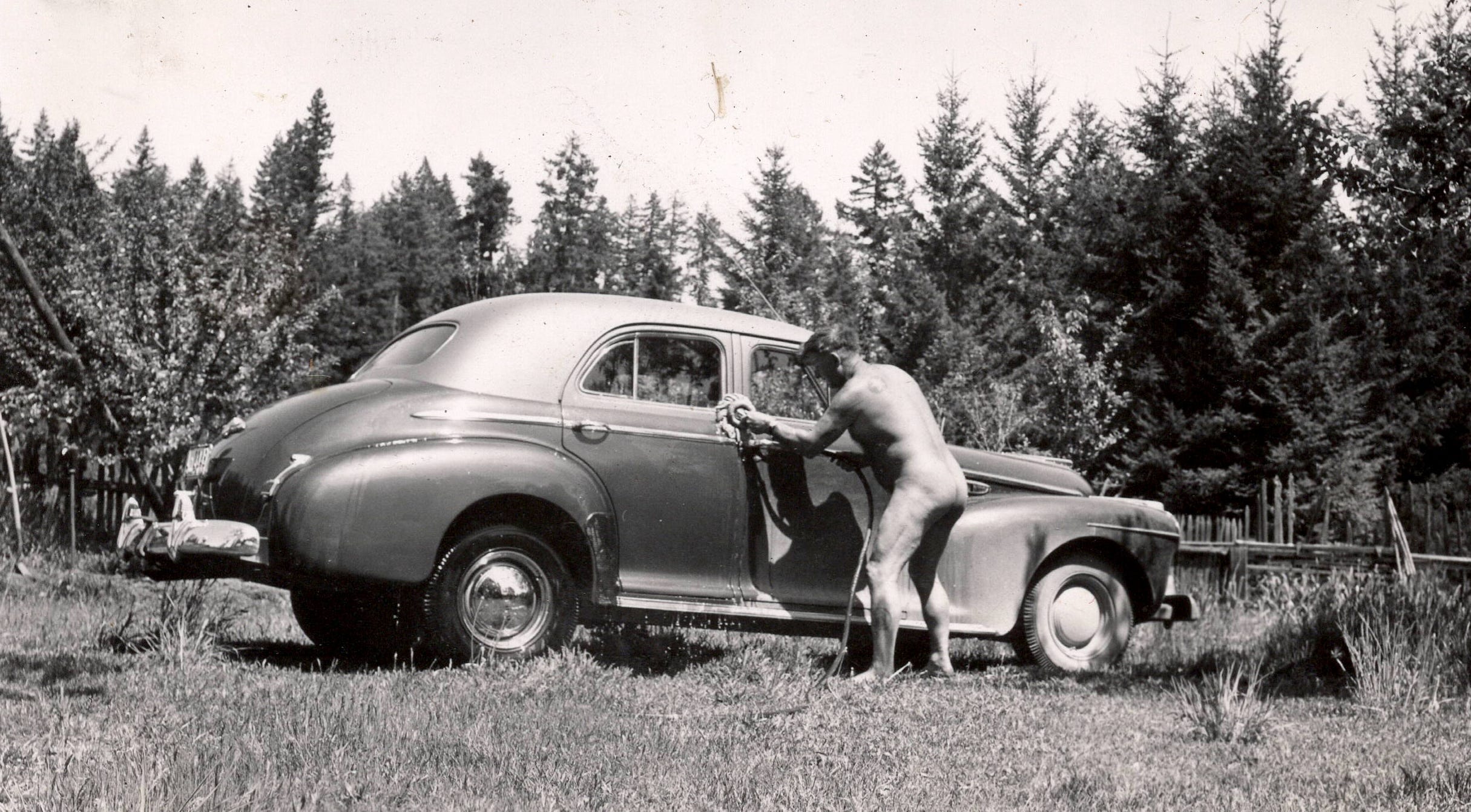
August is Nudist History Month again. The American Association for Nude Recreation declared it in 2024, and the it still holds three years later. The movement’s summer calendar was lopsided: June carries Pride Month, the World Naked Bike Rides, and Naked Hiking Day. July has Nude Recreation Week, National Nude Day, and International Skinny Dip Day. August, outside of AANR’s own national convention, had nothing set aside for looking backward instead of just getting outside. AANR is now in its 96th year, and the gap this designation filled was a real one.
It’s also urgent, because nothing is really preserving this material except the people who happen to still have it. A longtime clubmember with a box of newsletters in the garage, for example, or one of the few volunteer-run libraries that takes in a collection when someone’s finally ready to hand it over. The founding generation, the people who could actually answer a direct question about any of it, are mostly in their eighties and nineties now if they’re still around. Nudist History Month exists because somebody has to keep doing that work before it’s too late to do it at all.
We’ve spent the last two Augusts resharing our favorite history pieces and pointing readers toward the libraries doing the actual preservation work: the Western Nudist Research Library, the American Nudist Research Library, the Naturist Education Foundation Research Library, and their Pacific Northwest and Canadian counterparts. We’re doing that again this year. This time we also wanted to hand over something pulled directly from that kind of research, the small stuff that never makes it into a club’s official founding story but is exactly what this month is supposed to rescue.
A small story, from the family archive
My grandfather, Rudolph Johnson, founded Cobblestone Suntanners, a nudist club outside Yelm, Washington, in 1944, and spent years afterward building it by hand, most famously the “Lake Rudolph” pool: laid stone by stone out of the Deschutes River, with water pumped four hundred feet uphill to fill it. That’s the part of the story people already know. What follows is smaller, the kind of detail that only turns up when you actually read the newsletters cover to cover instead of skimming for the founding date.
In July 1957, Cobblestone hosted what its own newsletter called the “Cobblestone Olympics,” three days of races, volleyball, horseshoes, and diving, padded out with the sideshow events every mid-century nudist gathering seemed to run alongside the real competition: a gumming contest, a raw-egg toss, a penny hunt for the kids. Clubs came from around Washington, down from Oregon, and up from western Canada, and someone lit a torch atop a wooden pole to open it. Some of it survives as 8mm home movie footage in the family archive, including the torch lighting and a nail-driving contest for the women, footage I’ve been able to match scene for scene against the event’s own published account. Here’s a video I made for a post last year celebrating Rudolph’s 119th birthday:
The real news of the weekend, though, wasn’t a race result. Rudolph and his wife Mary had been married fifty years that summer, and members and clubs from around the country had secretly pooled money to buy them round-trip, all-expenses-paid fares to that year’s ASA national convention at Lupin Lodge, in Los Gatos, California. The club paper called them “the grand old couple of nudism” and framed the trip as a golden wedding anniversary gift.
They made the trip, and days later, at the convention, the anniversary was celebrated properly: on stage, with an enormous cake, in front of the national membership. Someone screened the colored home movies of the Lake Rudolph pool going up, the same project that had, a few years earlier, nearly cost Rudolph his beard and his back. The couple who had hauled water uphill by hand watched it played back to them as entertainment, in color, to applause.
Rudolph wrote a thank-you note for the club paper afterward. Almost everything else that survives of his writing is procedural: meeting minutes, convention reports, years of businesslike letters lobbying Sunshine & Health‘s editors to run more candid action photography and fewer posed studio shots. In the thank-you note, he wrote that the gift left him with, in his own words, “a fluttery feeling,” one of the only moments in the written record where he sounds genuinely moved by something rather than simply organizing it.
That’s the case for Nudist History Month. The founding dates and vote counts already made it into the record. It’s the smaller stuff, a fifty-year marriage, a swimming hole dug by hand, that ends up sitting forgotten in a faded newsletter until somebody goes looking for it.
Supporting nudist history
This stuff only survives because someone kept the newsletters, scanned the film, and filed the convention reports where a family, or a library, could find them again.
We hope you’ll spend some of this August with the movement’s actual history, ours and everyone else’s. Read, share, and if you can, give something to the people keeping the record. 🪐

