


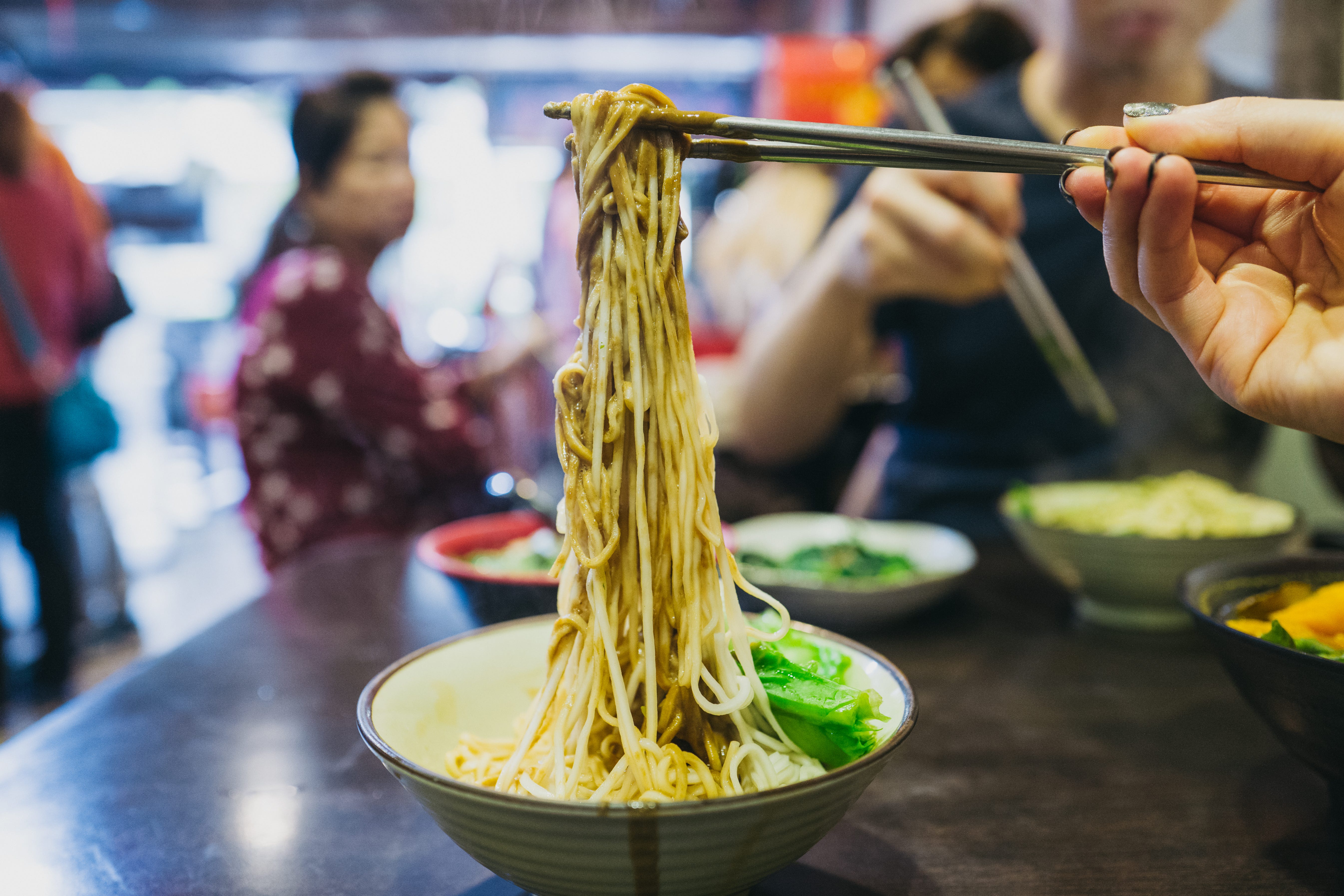
Noodles come in many forms. Long, short, flat, spiraley. Some have little ridges that hold sauce. Others mostly mind their own business. Each month in News of the Noodle, we take a closer look at a few of the shapes, tools, and small culinary details that continue to define noodleism all around the world. Plus we explore some actually true noodle news and stories from noodle history. So put some water on to boil and enjoy this month’s dispatch from Planet Noodle. 🍜
America accidentally declares war on spaghetti
A brief trade dispute with Italy, and how it ended
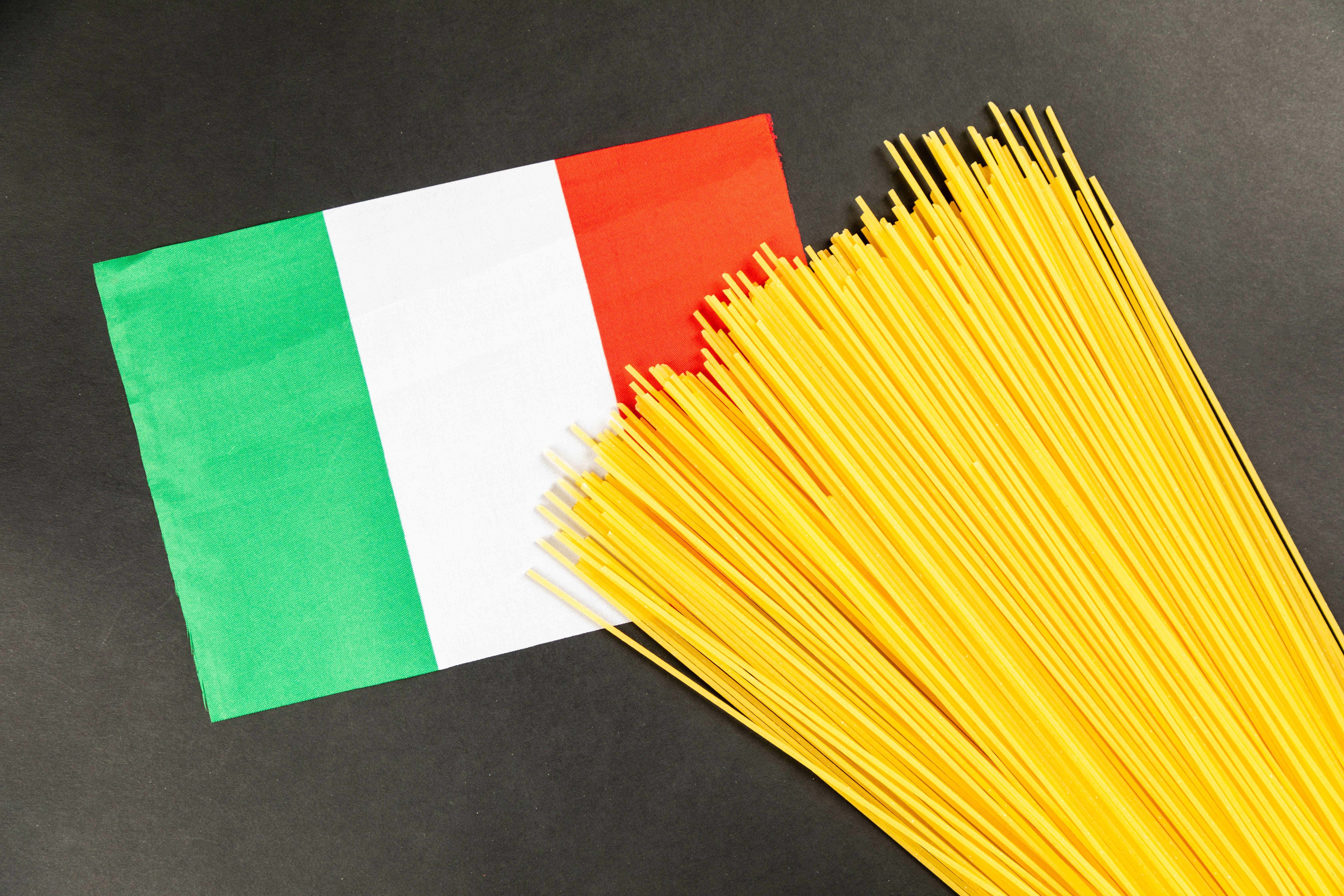
For about three months last fall, the United States government was technically at war with pasta.
In September 2025, the Commerce Department proposed a 91.7% anti-dumping tariff on thirteen Italian pasta makers — including Barilla, Garofalo, and Rummo — stacked on top of an existing 15% EU tariff, bringing the total above 107%. Italian pasta retailing around $4 a pound would have more than doubled overnight. Trade organizations warned exports would be “virtually wiped out.” Americans panic-posted on Reddit about stockpiling De Cecco.
Then, on New Year’s Day, Commerce quietly walked most of it back. Proposed rates dropped from 92% to as low as 2.26% for some producers. The Italians called it a recognition of their “constructive cooperation.” The spaghetti stayed on the shelves.
It bears mentioning the U.S. has been monitoring Italian pasta companies for dumping violations since 1996. The noodle cold war, it turns out, has been simmering for thirty years. 🍜
Cavatappi and the pop star who inspired it
A corkscrew noodle, a dancing singer, and one of pasta’s strangest naming decisions
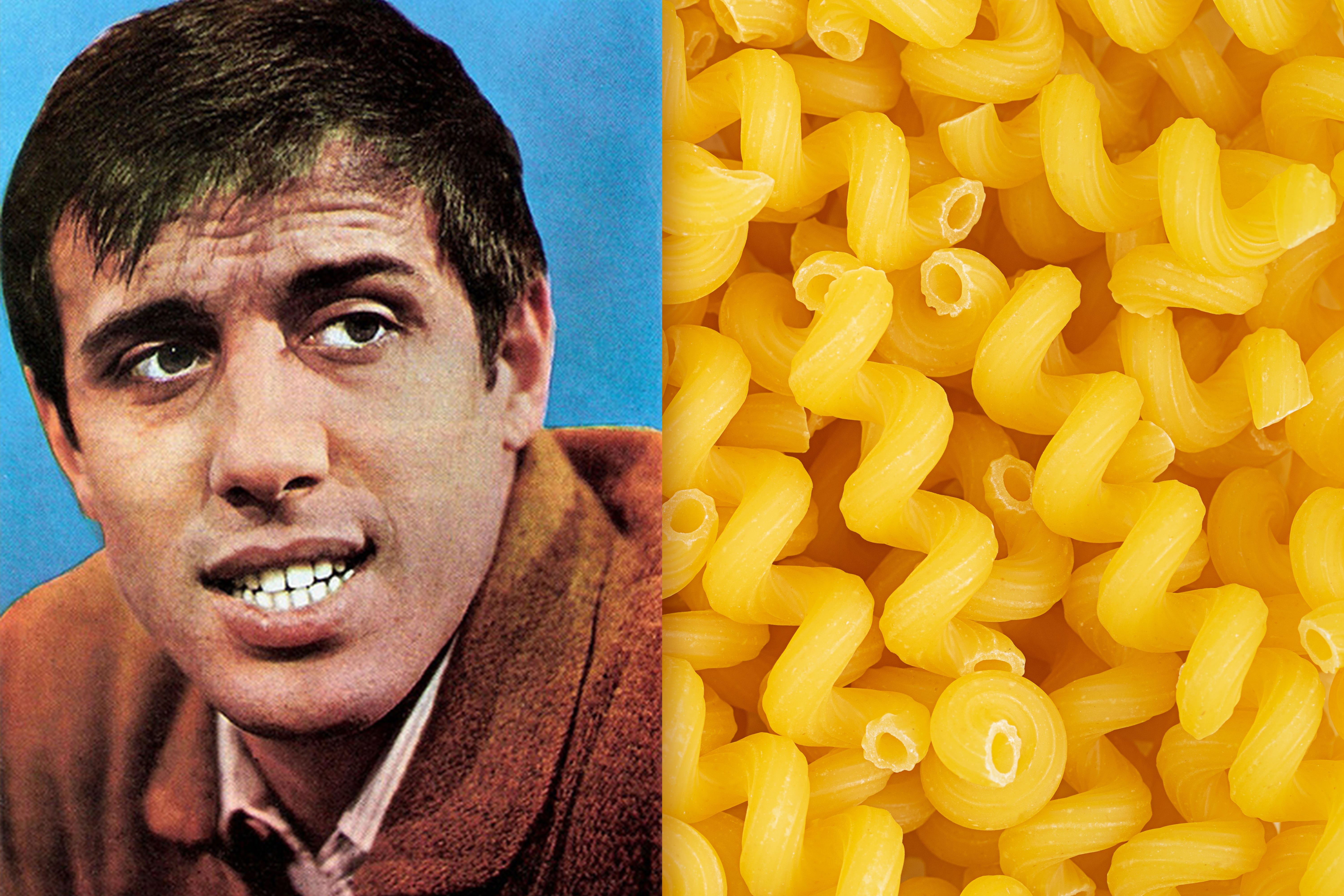
Cavatappi rarely receives the same attention as spaghetti or penne, but the spiral tube once had a far more glamorous identity. When the shape first appeared in Italian pasta catalogs in the mid-20th century, it was marketed under the name cellentani, a reference to Adriano Celentano, one of Italy’s most famous singers.
Celentano’s nickname was Il Molleggiato—“the springy one”—a reference to his loose, energetic dancing style. The corkscrew shape of the pasta seemed like a natural match. A noodle with a little bounce to it, named after a performer known for the same quality. For a time, the association stuck. Pasta companies sold the shape under the celebrity name, pairing it with the usual claims about how well its ridges held sauce and how its hollow center helped heat circulate during cooking.
Eventually the name shifted. When one manufacturer trademarked cellentani, competitors adopted a simpler description for the same corkscrew form: cavatappi, literally “corkscrews.” The spiral tube itself never changed. It still performs the same reliable job in baked dishes and heavier sauces.
Celentano is still alive and noodling around at 89 years old, presumably still upset that his name is no longer synonymous with the spiraled noodle, but hopefully not too bitter to enjoy his own baked dish from time to time. He can at least take some solace in the memory that for a brief period, one of pasta’s most practical shapes carried his branding. 🍜
The pasta spoon and its mysterious hole
A kitchen tool most people misunderstand
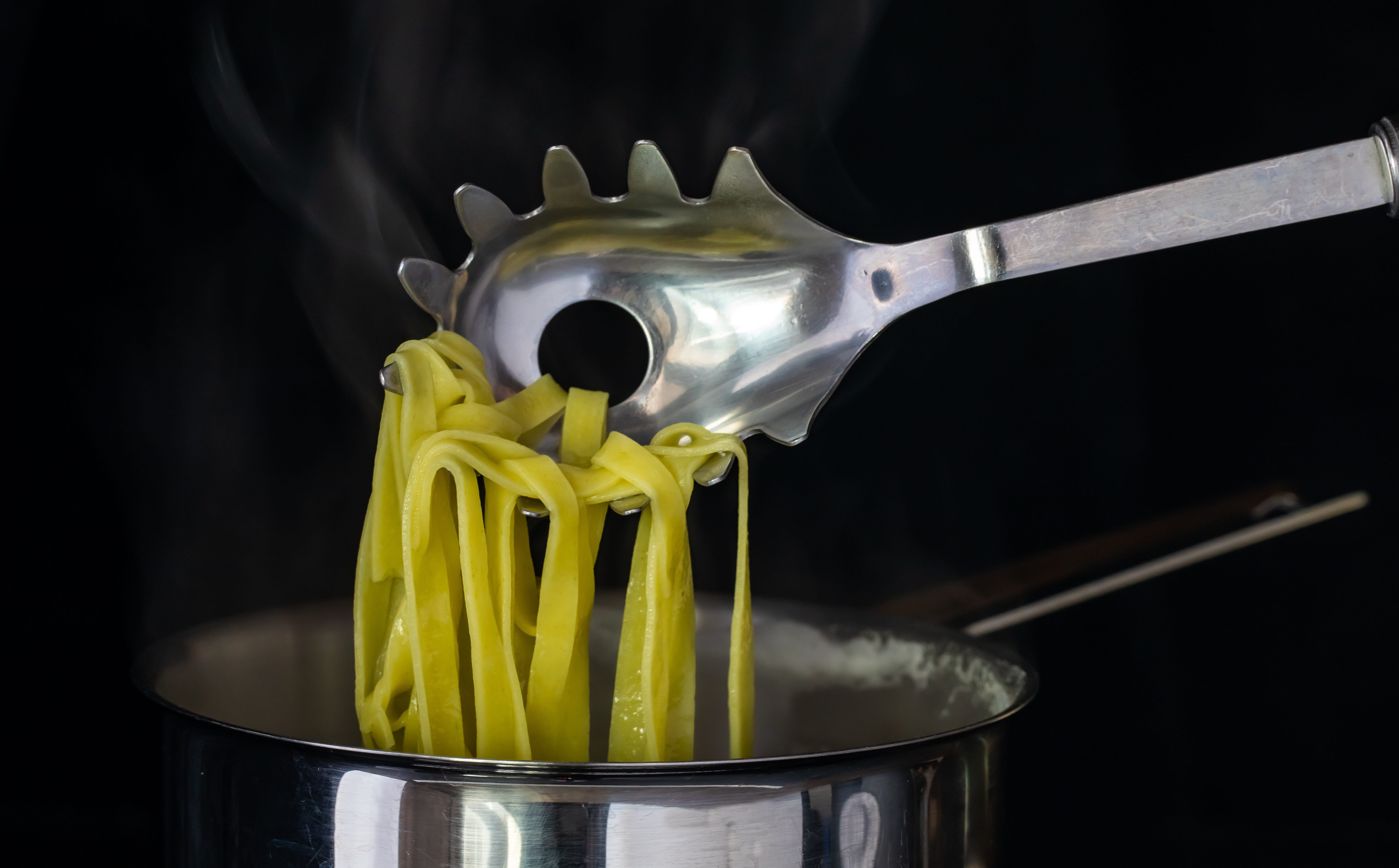
Most kitchens contain a pasta spoon: a wide, claw-like utensil with curved teeth and a curious hole in the center. It usually lives in a drawer beside ladles and spatulas, taken out occasionally to lift noodles from boiling water.
Let’s talk about the hole.
For decades, many cooks assumed it was simply decorative or intended to drain water. In reality, it was originally designed to measure a serving of dry spaghetti. A bundle of noodles threaded through the opening roughly equals one portion.
The feature is clever, if oddly specific. It turns the utensil into both a measuring device and a serving tool—two functions built around the peculiar needs of long noodles. The spoon’s teeth serve a similar purpose. They grip slippery strands of pasta while allowing water or sauce to drain back into the pot.
The overall design reflects a kitchen truth that has endured for generations: spaghetti is difficult to control once it becomes wet. 🍜
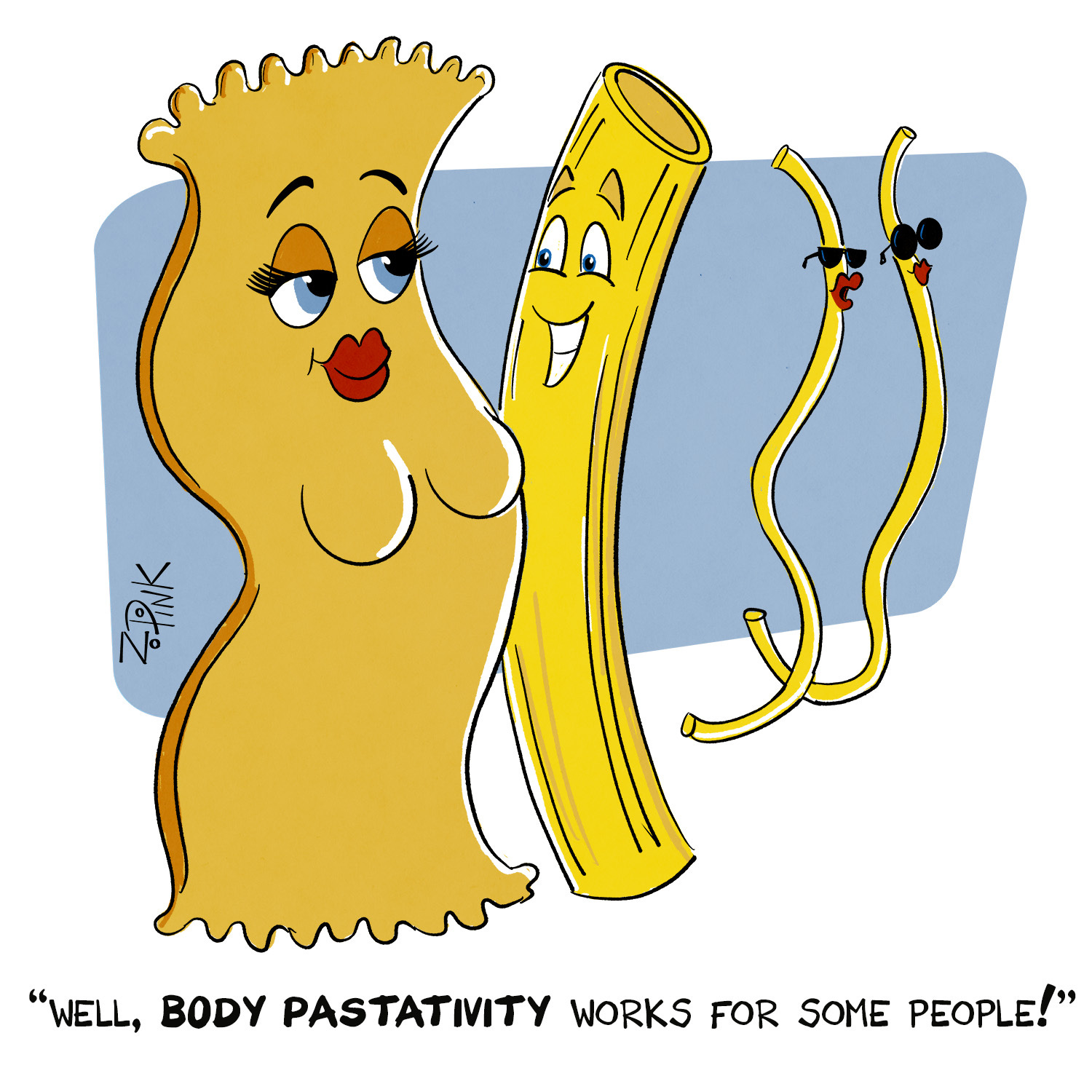
Noodle Cutie Comics
By Zaftig Pink

The noodle that K-pop built
How South Korean instant ramen became a global export strategy
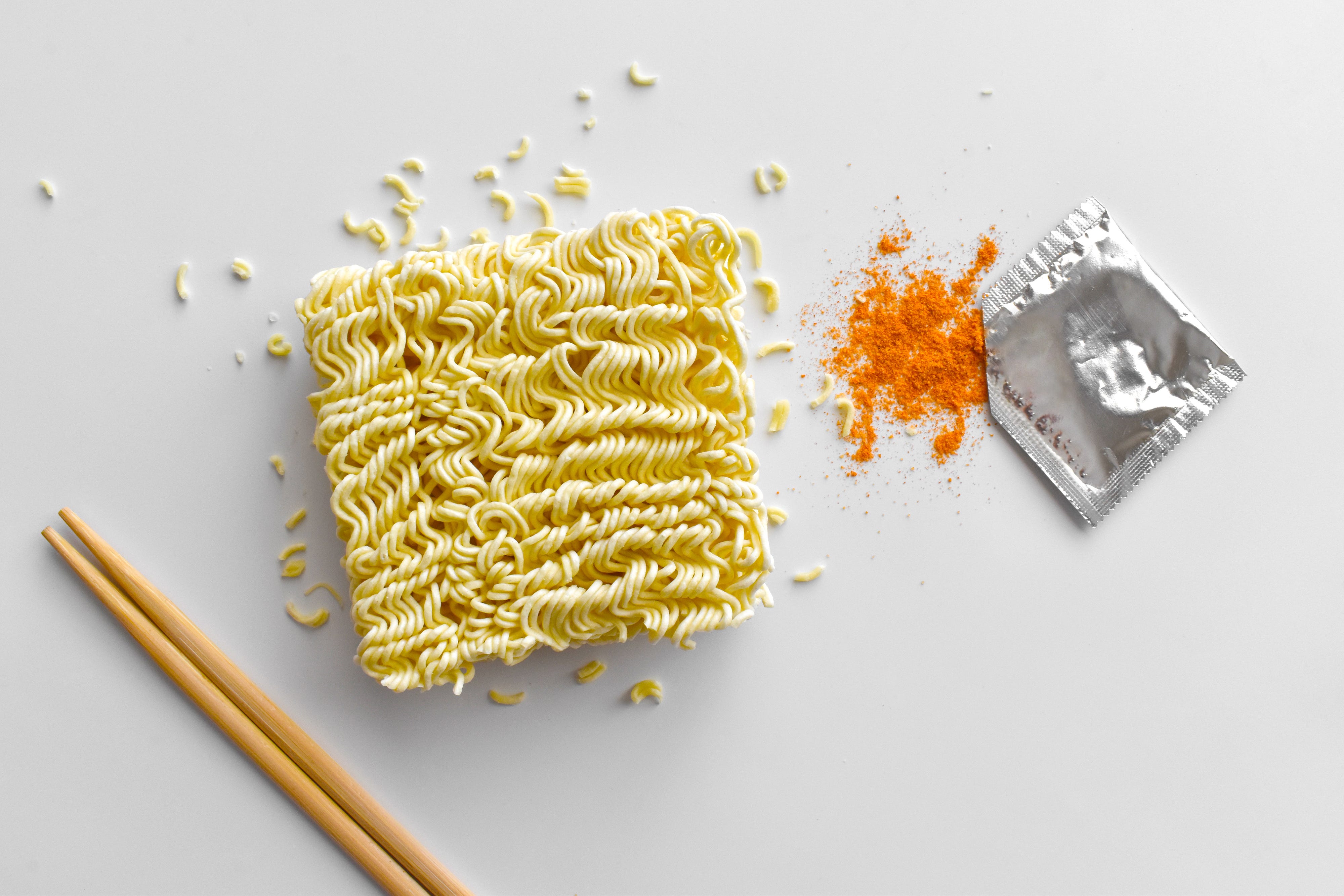
For most of its existence, instant ramen carried a specific cultural meaning: affordable, convenient, and slightly embarrassing to be caught buying in bulk.
South Korean ramyeon makers have spent the last few years aggressively rebranding that, and it appears to be working. Nongshim—the company behind Shin Ramyun—named K-pop group Aespa as global ambassadors in late 2025, following a Netflix collaboration on a K-pop Demon Hunters-themed noodle line. Ottogi, maker of Jin Ramen, tapped BTS member Jin as its brand model; a casting decision that, given the product’s name, was either brilliant planning or an extraordinary coincidence.
The economics are straightforward: eating out in the U.S. and Europe has become expensive, and ramyeon is flavorful, filling, and about a dollar a pack. The U.S. instant noodles market has grown 36% over five years and now tops $2.7 billion. Inflation built the market. K-pop showed up to take credit.
The humble noodle, it turns out, didn’t need a rebrand. It just needed a good enough reason for people to try it. 🍜
The man who kept inventing new ways to eat noodles
From backyard ramen experiments to a pantry staple and noodles designed for astronauts
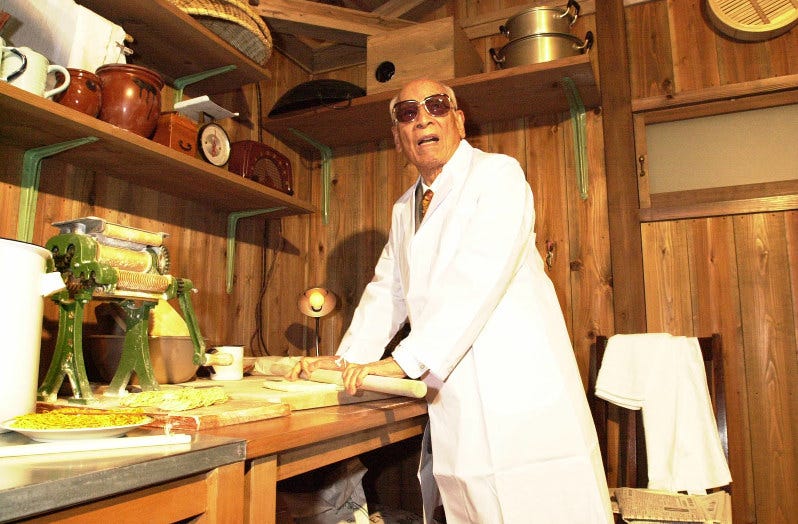
Momofuku Ando invented instant noodles when he was 48 years old, working alone in a small shed behind his house in Osaka.
In the years after World War II he often saw people standing in long lines for ramen. Determined to create a noodle that could be prepared quickly at home, he began experimenting with wheat noodles and frying oil in that backyard workshop. His breakthrough came when he discovered that frying cooked noodles created tiny pores that allowed them to rehydrate rapidly in boiling water. The result was Chicken Ramen, released in 1958.
But Ando kept improving the idea. While visiting the United States in the late 1960s, he noticed Americans preparing instant noodles in paper cups and eating them with forks. The observation led to his next invention: Cup Noodles, a noodle that arrived already packaged inside its own bowl.
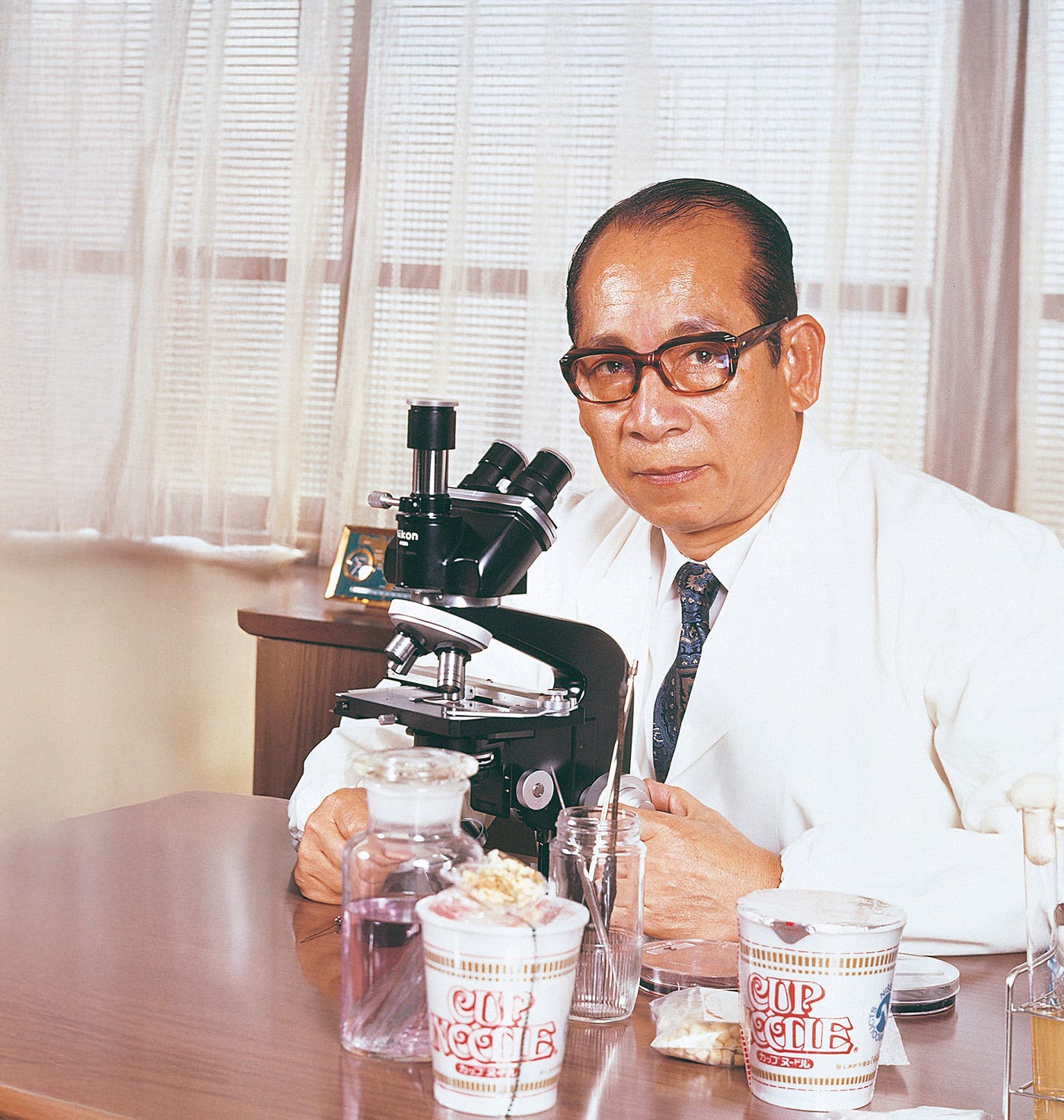
Most inventors would have stopped there, content with their unprecedented chrome in noodle science. Ando, being the noodle badass that he was, did not.
In his nineties he helped develop “Space Ramen,” a version of instant noodles designed for astronauts, with broth engineered to cling to noodles in zero gravity.
By the time he died at 96, Ando had spent nearly half his life refining the simple idea that noodles should be easy to eat anywhere. Including, if necessary, in orbit. 🍜
A brief taxonomy of pasta butterflies
The surprising number of species in the farfalle family
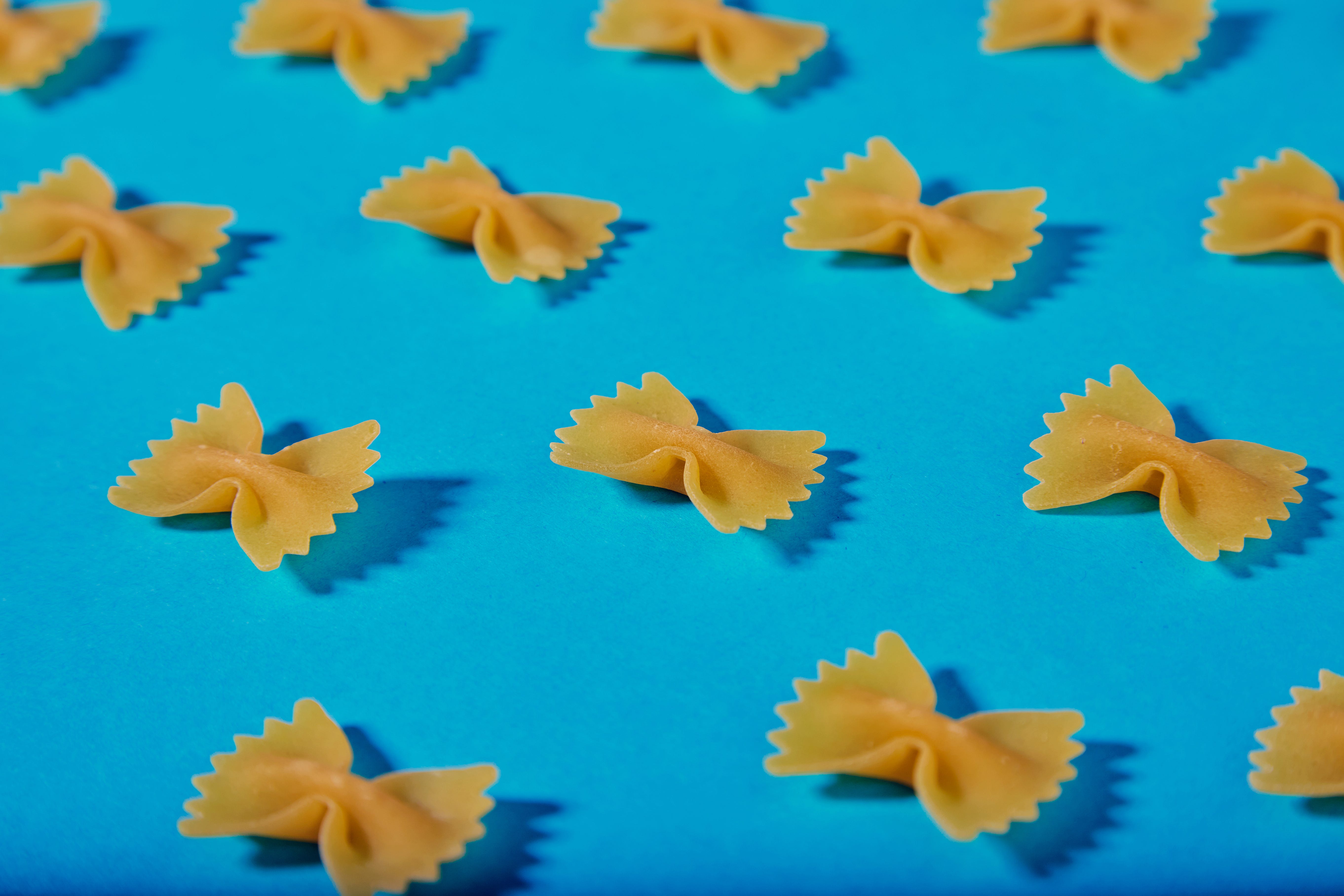
Farfalle are widely known in English as “bow tie pasta,” but the Italian name tells a different story. Farfalle means butterflies. Like actual butterflies, the farfalle family has several recognizable variations. The most common is farfalle itself: the standard butterfly, medium-sized and widely distributed across pasta salads, potlucks, and weeknight dinners. A smaller relative, farfalline, appears frequently in soups, valued for its ability to circulate through broth without drawing attention. At the opposite end is farfalloni, the large butterfly. These oversized specimens are less common but appear in specialty assortments, where their expanded wings hold more sauce.
Complicating matters further, some regions of Italy use a different name for the same creature. In Emilia-Romagna the shape is often called strichetti, or “little bows,” suggesting that even experienced pasta observers cannot always agree on the species. Regardless of the name, the defining characteristic remains the same: a pinched center knot with two thin wings, a simple geometry that has kept these pasta butterflies migrating through kitchens for generations. 🍜
That’s a warp!
Well, we’ve thrown a fair amount of pasta at the wall this month. Some of it stuck.
Planet Noodle will return to its usual programming shortly, but we appreciate you indulging this brief excursion into the wider world of noodle journalism. Until then, keep the water boiling. 🪐
Did you enjoy this? Let us know!
I’d have guessed that Al Dente was the author of this piece.
…and remember to stay as salty as seawater!