

Naked doesn’t mean yes
Exploring how being a gay man in nude spaces requires clarity around boundaries, desire, and respect.

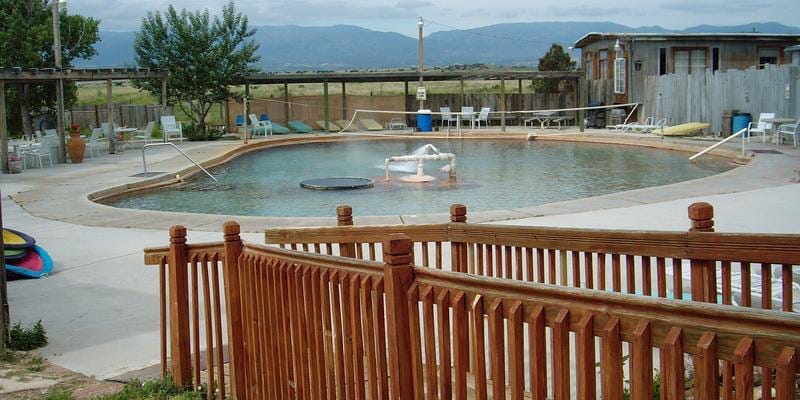
Let me paint you a picture. You’ve driven out to a clothing-optional hot spring, somewhere the landscape is stunning and the whole point is to slip into steaming mineral water and decompress. You shed your clothes, ease into the pool and try to do absolutely nothing. Exist without the weight of the world or, honestly, your swimsuit. And then someone slides into the water beside you, uninvited into your space, with eyes that are saying something you never agreed to hear.
If you’re a gay man or a woman, you probably know exactly what I’m talking about because you’ve also experienced this.
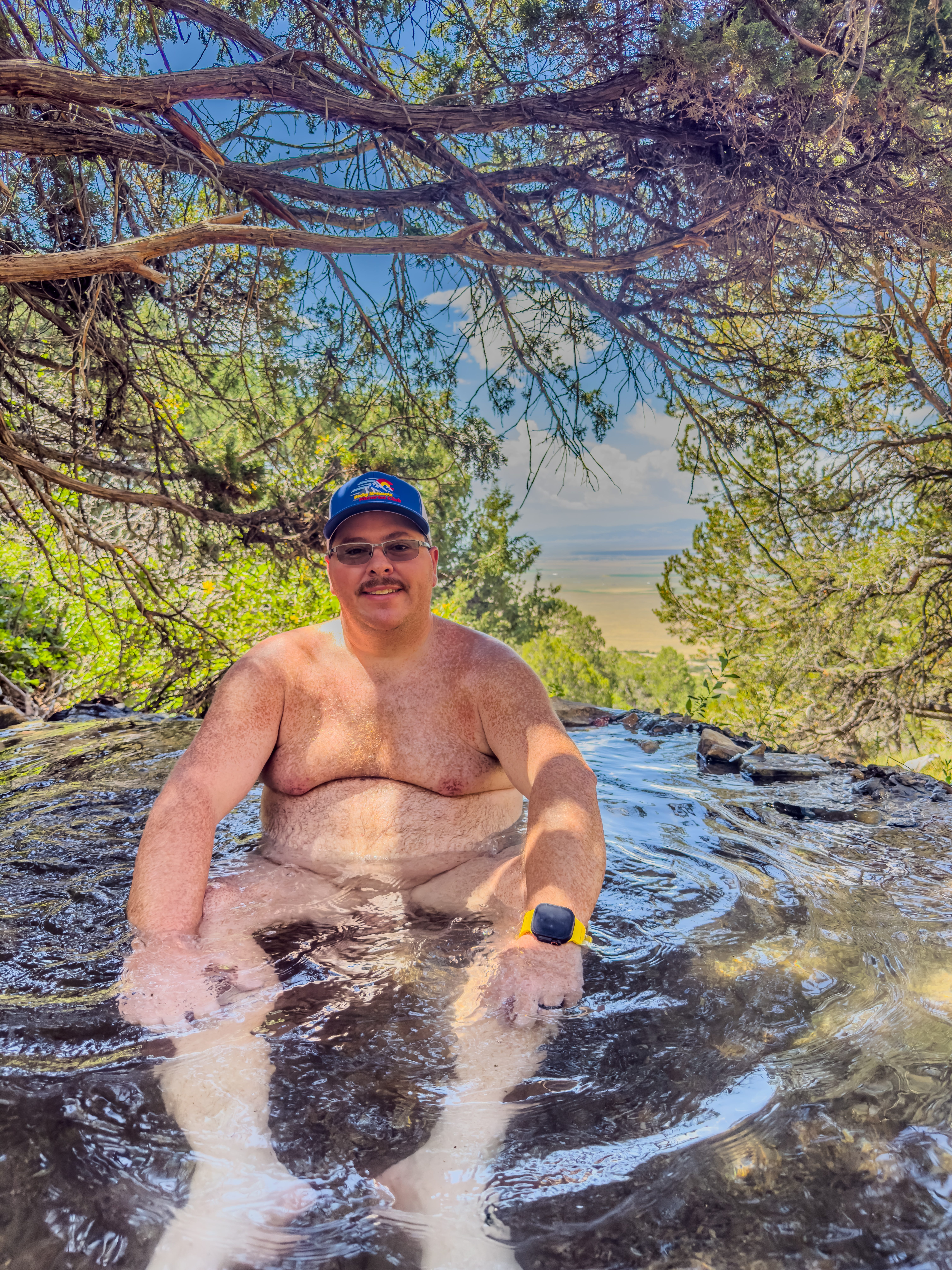
I’m a gay married man, and I love to visit my local clothing-optional hot springs. There’s something genuinely freeing about them. The radical normalcy of it all. But I’d be lying if I said I haven’t walked away from a visit feeling uncomfortable, vaguely surveilled, and frustrated that once again, I had to manage someone else’s assumptions about what my naked body was broadcasting. I go there obviously to relax and let the stress melt away, not to be hit on by other gay men.
I used to enjoy attending the hot springs with a local “naked brotherhood” group on a regular basis, that is until a certain man joined the group and began attending as well. At first, there was no issue, he just seemed to enjoy hanging out with everyone having a nice conversation. That was until, there wasn’t anyone else nearby. He made me very uncomfortable by hitting on me and getting way too close. This didn’t just happen once, it happened a couple of times. Finally I stopped attending the nude soaks with that group to avoid being uncomfortable.
This is the conversation our LGBTQIA+ nudist community doesn’t always want to have, because we’ve spent so long fighting for the right to exist in these spaces at all. But it’s overdue. Especially in spaces like clothing-optional hot springs, which attract a genuinely mixed crowd of people seeking healing, rest, and connection with nature, and where the assumption of shared sexual intent can feel wildly out of place.
The myth that nudity is a signal
Here’s the thing that gets conflated constantly: being naked around other people is not the same as being available to them. These are two entirely different statements about a body in a space.
Mainstream nudism has understood this for decades. The naturist philosophy, in its traditional form, is almost aggressively non-sexual. Bodies are just bodies. This is often well understood in nudity required spaces, but clothing-optional spaces tend to operate in a grayer zone, and that gray zone is where things get complicated.
Consent in different location types fundamentally shapes how consent gets negotiated, with sex venues and cruising spaces often carrying a level of implied consent for sexual advances that other spaces do not. The problem is that when we are in a clothing-optional space we are not there for that implicit contract. Some of us are there for the sun. Some of us are there with our husbands. Some of us simply want to feel at home in our bodies without having to field advances we never invited.
The writer and cultural critic Michael Musto once observed that gay culture has “always had to negotiate the line between liberation and license.” That tension is alive and well at every clothing-optional venue where gay men visit or gather.
Part of what makes this dynamic so exhausting is how it’s often framed as a personal failing rather than a cultural problem. If you’re uncomfortable with someone’s advance in a nude space, the subtext can feel like: well, what did you expect? As if showing up is consent. As if you’ve opted into a particular kind of attention everywhere, always.
One framework for thinking about this holds that entering certain spaces involves accepting a kind of contract, and that everyone retains the freedom to participate or not in whatever way they choose. Saying no is always an option. That’s a generous and mostly useful way to think about it. But it assumes the contract is legible to everyone present, and that “no” is always received without pushback or social awkwardness. In practice, that’s not always how it goes.
In my experience a polite decline was met with lingering, hovering, or the kind of slow retreat that makes it clear the person wasn’t actually accepting the no, just waiting for a different answer. That’s not consent culture. That’s pressure wearing a patient face.
What’s particularly uncomfortable as a married man is the assumption that monogamy or disinterest somehow needs to be explained or defended in these spaces. It doesn’t. “No, thank you” is a complete sentence. It doesn’t require a footnote about my relationship structure.
What consent actually looks like here
Here’s what I’ve come to believe after several years of navigating these spaces, sometimes badly, sometimes well: clarity is kindness. Not just for the person whose boundaries need to be respected, but for everyone.
Respect for personal boundaries is genuinely considered a cornerstone of nudist community values, and staring or making assumptions about others’ availability runs directly counter to what these spaces are supposed to be about. That’s not a new idea. The nudist community has been saying it for generations. The specific gay context just sometimes forgets it.
Asking rather than assuming is the whole game. It sounds almost embarrassingly simple, but in practice it requires something a lot of us weren’t socialized to do easily: verbal, explicit checking-in. Not a look held a beat too long and interpreted as an invitation. Not a proximity that edges closer and waits to see what happens. An actual question. And then, crucially, a genuine openness to the answer being no.
This isn’t about sanitizing nude spaces or turning them into something clinical and joyless. Desire is real. Attraction is real. Gay men have built remarkable cultures of pleasure and connection that deserve celebration, not apology. But desire and respect are not in competition with each other. They should be the same practice.
This is the same thing that often happens with female identifying folks as well. They visit a nude space and instantly there seems to be some guy who thinks it’s a buffet and the neon open sign just turned on. It’s why many are afraid when there are too many men around at a nude venue or event. What I am saying is that… they are not alone in this feeling! It just so happens that no one talks about this happening to gay men, and that’s why I’ve chosen to share this with you.
The particular position of gay men who want different things
One of the less discussed dynamics in nude spaces with gay men is that we’re not a monolith. Gay men show up to these places with wildly different intentions, relationship structures, and comfort levels and the assumption of shared purpose can do real harm.
For married gay men especially, there’s sometimes an unspoken friction. The assumption from others can be that we’re secretly looking for permission, that the wedding ring is a bit of theater that polite insistence will see through. It won’t. And the fact that this assumption exists at all says something important about how we’ve constructed these spaces, and what stories we tell ourselves about what kind of gay man belongs in them.
You can be gay, happily married, and want to soak in a hot spring without it meaning anything other than exactly that. The freedom to be in a nude space without having to field advances is not a heterosexual value accidentally imported into gay culture. It’s just a value. Full stop.
This doesn’t require a manifesto. It just requires a little more care.
If you’re someone who approaches others in these spaces: read actual signals, not projected ones. Prolonged eye contact and a smile might be interest, or might just be a person being polite. When in doubt, ask or leave it alone. And when someone declines, let it be done. No hovering, no second approach ten minutes later, no slow orbit that communicates you’re still available if they change their mind.
If you’re someone who, like me, has found yourself uncomfortable in these spaces: you are not obligated to manage the discomfort of the person making you uncomfortable. A clear, calm “no thank you” or even just physically relocating is not rudeness. It’s self-respect in action. And telling venue staff when something crosses a line is not difficult. It’s how spaces actually improve.
The best clothing-optional hot springs nude soak sessions I’ve been to have one thing in common: they feel genuinely relaxed. Not performatively loose, but actually easy. Nobody is working too hard to be seen or to see. People talk, laugh, swim, read, and exist without a constant undercurrent of unspoken negotiation. That feeling doesn’t happen by accident. It’s built by the people in the space deciding, together, that everyone gets to be there on their own terms.
Gay men have always been good at building community. We’ve built it in the face of extraordinary pressure, in spaces that were never meant for us, out of almost nothing. We can absolutely build nude spaces that hold both freedom and respect. Those two things were never opposites to begin with. Just like the females I mentioned earlier in this essay, we just want to be respected and allowed to relax and just be ourselves.
And yes, I left that naked brotherhood group because it was the right thing to do. Even after expressing my discomfort to the leader of the group and getting nowhere, I felt it was the best course of action I could take. It’s sometimes not an easy choice to make but, it’s ok to walk away from a people group or space that makes you feel uncomfortable. 🪐
Cis, white, hetero, married dude here. I'm hoping that the following paragraph was inspired by Orient Land Trust's Valley View Hot Springs, for that is what I've always found there:
The best clothing-optional hot springs nude soak sessions I’ve been to have one thing in common: they feel genuinely relaxed. Not performatively loose, but actually easy. Nobody is working too hard to be seen or to see. People talk, laugh, swim, read, and exist without a constant undercurrent of unspoken negotiation. That feeling doesn’t happen by accident. It’s built by the people in the space deciding, together, that everyone gets to be there on their own terms.
My partner and I have had a similar ongoing dialogue about this topic lately. We're both queer and gender non-conforming, so at first we thought we just no longer felt comfortable in gay male spaces (which ANY space seems to become really, once enough cis gay men show up), but now we've developed the perspective that this seems to be a problem with men in general. Consequently, I tend to think feminism should be a more central value for people who engage in nudist spaces.
It seems like gay men tend to think they are above replicating patriarchal social and sexual norms simply by virtue of living a non-traditional lifestyle, but that is not the case in my experience. They also share the same predatory boundary-violating behaviors as heterosexual men, the tendency to make any situation about their own individual sexual or emotional experience, the objectification of others' bodies, and the expectation that the environment around them must conform to their masculine desires.
Not surprising though, since gay men (especially gay naturists/nudists) tend to insist on excluding women from their spaces. How would they ever hear any opinions on their behavior other than those of the cis gay male?