

Marv Frandsen and the Canaveral fight
A careful thinker who helped carry a local battle into federal court

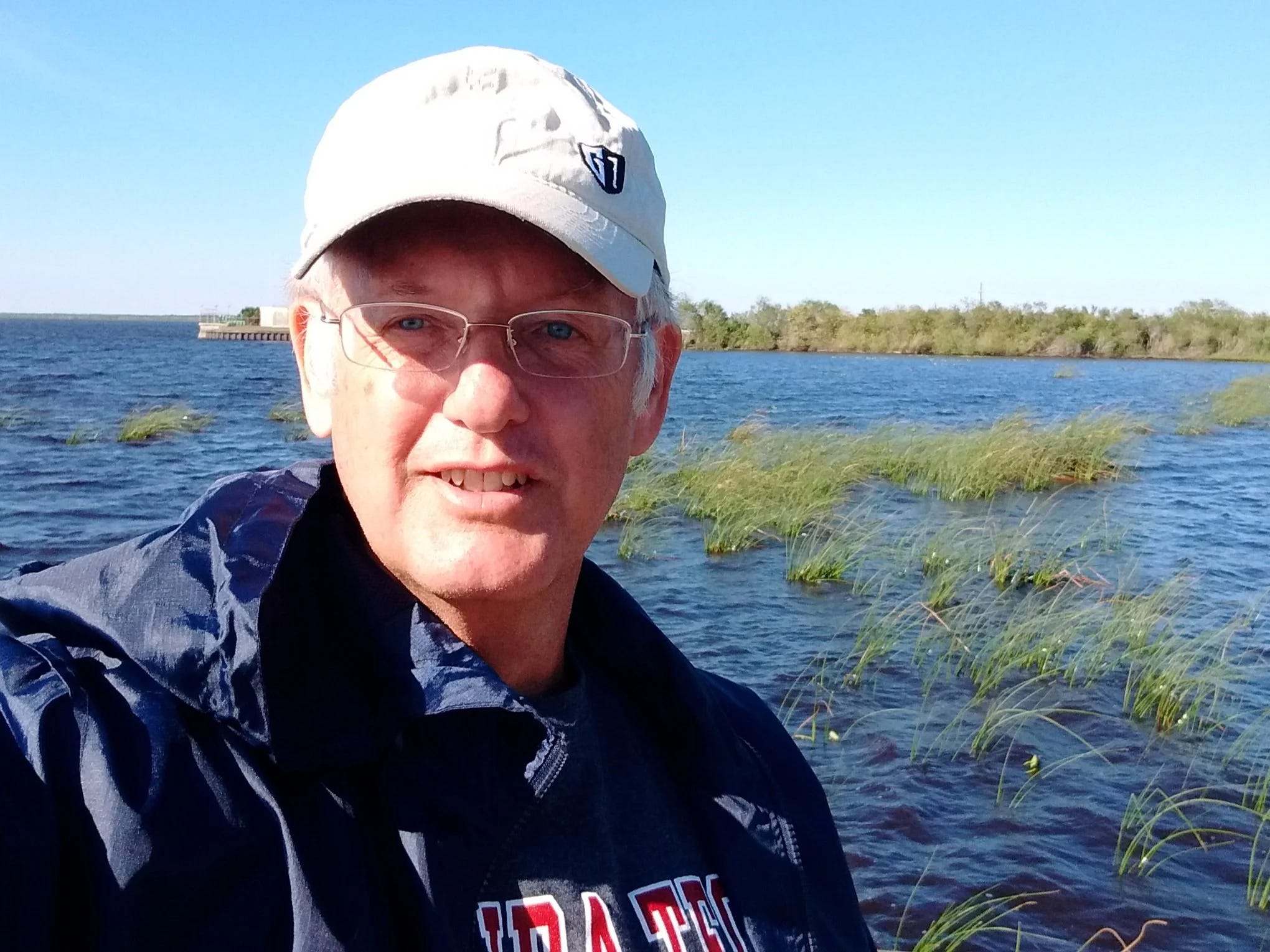
Marvin “Marv” Frandsen, a longtime Florida naturist advocate and key figure in the legal battles surrounding Canaveral National Seashore, has died following complications from cancer. He was 67.
Frandsen’s path into naturism began in Florida. Trained as a physicist with a Ph.D. in solid state physics from the University of Illinois, he relocated to the state for defense work and discovered a nude beach at Navarre after a colleague quietly pointed him in that direction. The experience stayed with him.
He later moved to central Florida, arriving as a conflict was beginning to take shape at Canaveral National Seashore.
That conflict would define much of his work.
Organizing on the beach
During the 1990s, local officials and the National Park Service moved to restrict long-standing clothing-optional use at Playalinda and Apollo beaches. Frandsen became part of a small group organizing in response, first through Space Coast Naturists and later Central Florida Naturists, where he served as legal-political chair and vice president.
The group pushed the issue across multiple fronts. They worked with city and county officials, engaged the state legislature, and challenged federal policy. Frandsen focused on the legal side, researching case law and scientific literature, and often representing himself in court.
In 1996, he was among those cited under Brevard County’s anti-nudity ordinance. The question was whether the county had authority to enforce that law on federally managed land. The dispute moved through the courts as part of a broader effort to keep naturist use alive at the seashore.
At the same time, Frandsen and others organized protests at the park entrance and surrounding areas. These actions were designed to test enforcement and force legal clarity.
One of those protests led to U.S. v. Frandsen.
U.S. v. Frandsen
Before the case became a First Amendment victory, the government tried to keep it from ever being about free speech at all.
In 1997, Frandsen and fellow activist Bryan Morris were cited for gathering without a permit while expressing opposition to the crackdown. The National Park Service charged them under federal regulations requiring permits for public expression. Frandsen challenged the charge and represented himself through much of the process.
The case moved through the federal system. A magistrate judge and district court upheld the convictions. Frandsen and Morris continued their appeal.
In 2000, the Eleventh Circuit reversed those convictions and struck down the permit scheme as unconstitutional. The court found that the regulation lacked the procedural safeguards required under the First Amendment and gave too much discretion to officials. The ruling has been cited in later cases and contributed to changes in how the National Park Service regulates expressive activity.
As he later wrote for the B.E.A.C.H.E.S. Foundation website, “the NPS completely rewrote its permit scheme” and adjusted its national free speech regulations in response to the case, extending the impact beyond Canaveral.
After the appellate win, his legal work drew attention beyond naturism. An ACLU attorney later used his briefs to support a separate free speech case in Miami, extending the reach of his arguments into a different context.
Frandsen’s impact in Florida
Frandsen’s work did not end there. He challenged a Florida state parks “free speech rule” in administrative court, securing a change in how the rule could be applied, particularly in preventing content-based distinctions. He supported efforts around topfree equality, including cases in which members of his own family served as co-plaintiffs, and continued to follow legal developments closely.
In time, the National Park Service posted signage at Apollo and Playalinda formally recognizing naturist recreation, and clothing-optional use at Canaveral continued. Even then, access and expression at the seashore remained a constant negotiation.
As Erich Schuttauf, executive director of American Association for Nude Recreation, recalled to Planet Nude, “Even as [Marv] was successful in stages of the permit wars (litigation) they continued to put up roadblocks and challenges and he met them. For example, he was often relegated to areas of the park where he would not be likely to make his point where it could be heard or seen.”
Frandsen’s influence extended beyond Canaveral. Alongside others in the Florida naturist community, his work helped lay the legal and organizational groundwork that made future efforts possible, including the establishment of Blind Creek Beach by Treasure Coast Naturists, one of the state’s most visible and successful clothing-optional public beaches.
He also documented what he learned. He organized legal materials, tracked cases, and shared analysis within the naturist community. His writing reflected a consistent approach: careful reading, attention to detail, and a focus on how decisions would function in practice.
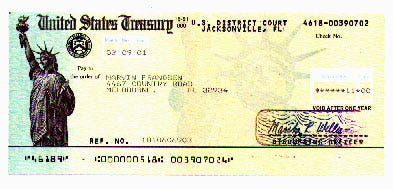
Years later, when Marv sent me materials from the case, he included a copy of the refund check the federal government eventually mailed back for the fine assessed against him. It was the kind of detail he appreciated: archival proof, a small bureaucratic artifact, and a dry little coda to a fight he had helped win.
Decades of nude beach stewardship
Frandsen has remained active in the years that followed. He served as president of the B.E.A.C.H.E.S. Foundation and later as a compliance officer, and was involved with AANR-Florida. He stayed connected to the same issues that had defined his earlier work, including public access, policy, and the legal framework surrounding naturism.
I met Marv in 2024 at the INF conference in Zipolite in Mexico, after corresponding with him about these earlier cases over the course of a year or so. He was soft-spoken and analytical, with a dry sense of humor. He listened carefully and responded with precision. The same qualities that show up in his writing were there in person.
The conflicts he engaged in at Canaveral remain active in different forms. Questions about public land use, administrative authority, and the treatment of nudity continue to surface across the country. Many of those debates now rest on legal ground established during that period.
Frandsen was part of the group that helped establish it. He stayed with the work long enough to see how those decisions played out and how the rules changed.
He focused on the details and followed them where they led. 🪐
I miss you terribly Marv. I enjoyed our conversations at the 2024 INF world congress in Zipolite, Mexico, and now you are gone at age 67, far too soon, but your naturist legacy will live forever! Thank you so much as a fellow BEACHES FOUNDATION governor!