

Magical nudism with Tito Adler
The Florida cartoonist behind Unsexy Nudie Tales From Pretty Beach! on treating nudity as ordinary, comedy as the point, and why naturist stories deserve a broader imagination.

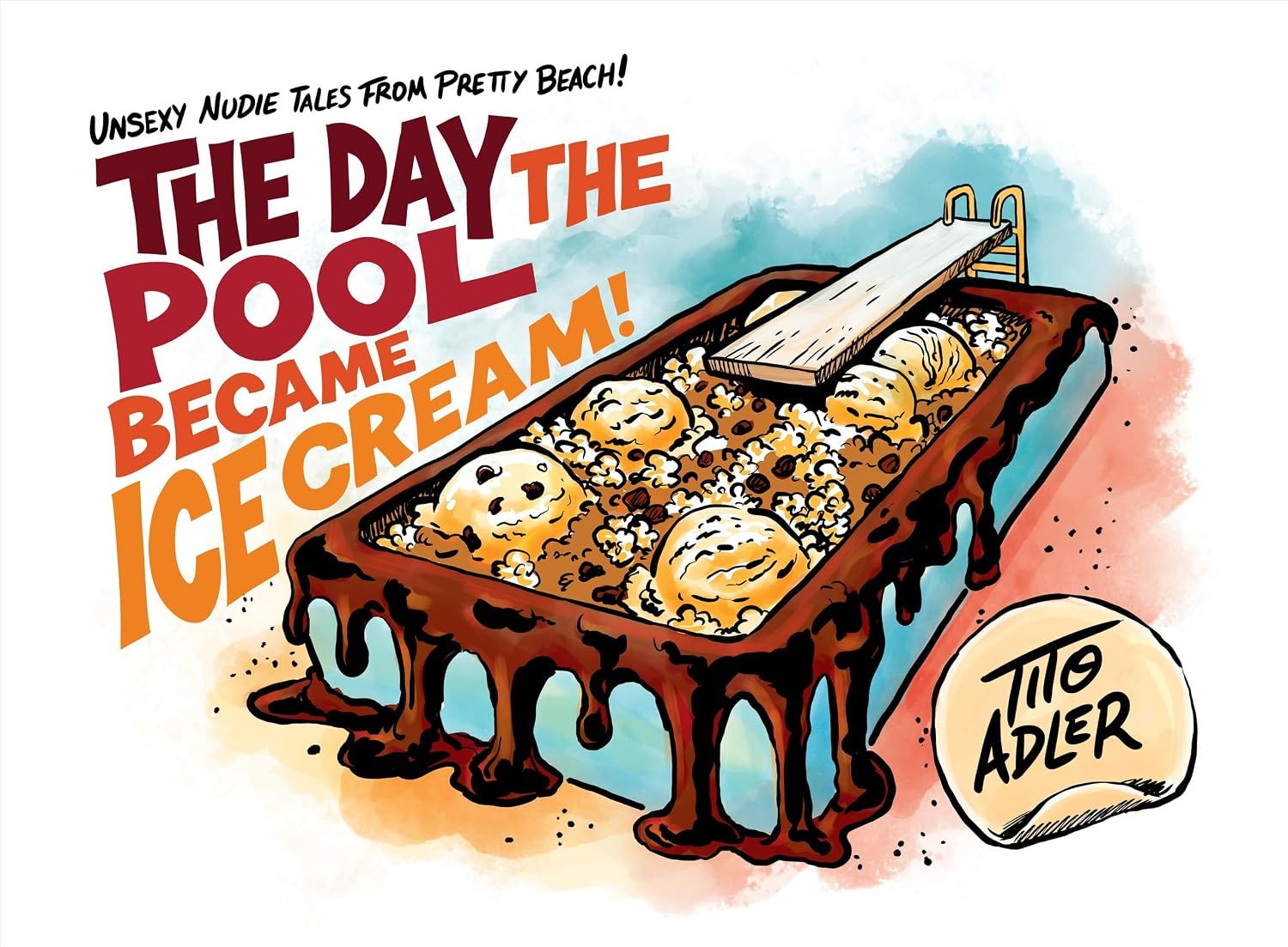
Florida cartoonist Tito Adler set out to solve a problem. After discovering naturist fiction, he found himself wanting stories where nudity wasn’t the central premise, the central joke, or something that needed to be explained. The result is Unsexy Nudie Tales From Pretty Beach! The Day the Pool Became Ice Cream!, a debut e-book that combines the pacing of classic newspaper comics with surreal comedy and an unabashedly naturist setting.
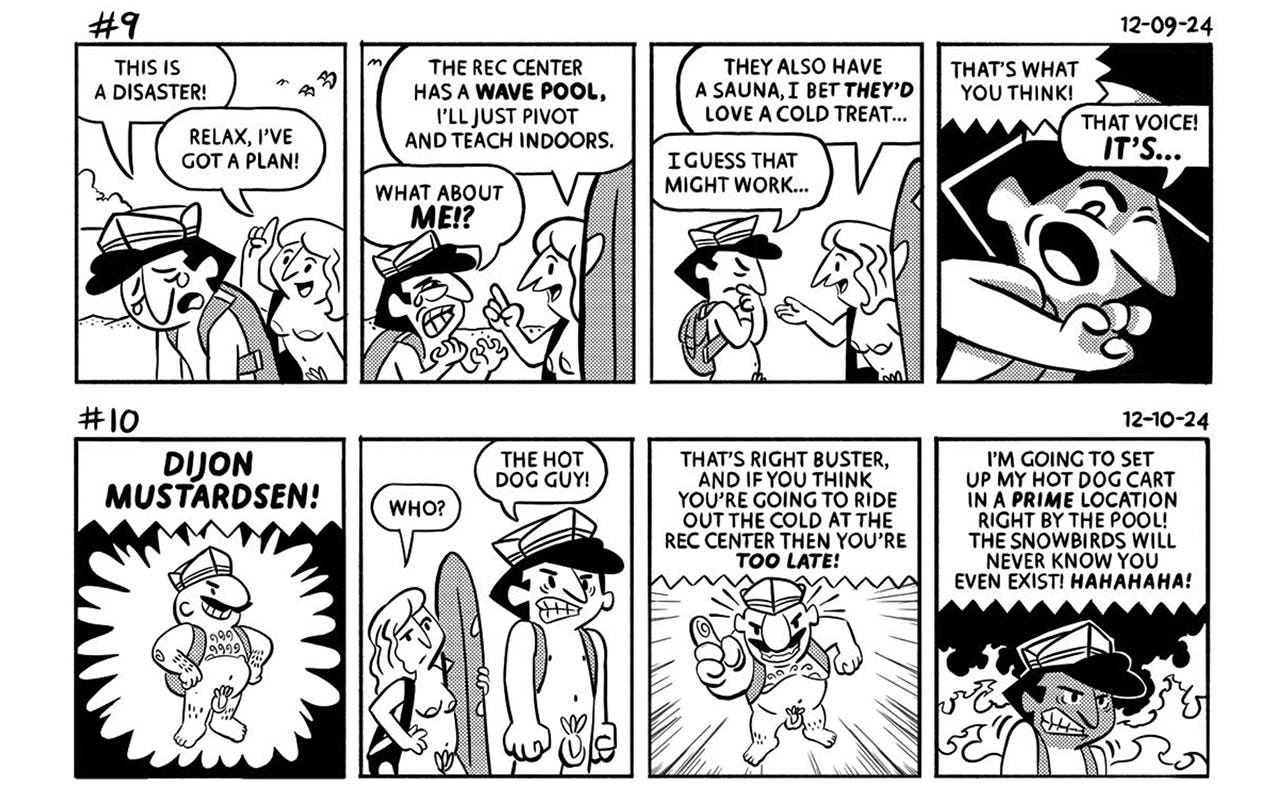
What makes Pretty Beach especially distinctive is that it isn’t really about naturism at all, any more than Duck Tales is about ducks. Instead of treating social nudity as something to explain, defend, or sensationalize, Adler’s characters and world simply accept it as part of everyday life. The result is a comic where the biggest surprises come not from the absence of clothing, but from melting swimming pools, eccentric beachgoers, hotdog vendor beefs, and an escalating whirlpool (literally) of cartoon logic.
The Kindle edition is just $3.99, and I suspect many Planet Nude readers will find themselves wishing there were more stories from Pretty Beach by the time they reach the last page. If you’re looking for something funny, inventive, and unlike just about anything else in the genre, it’s an easy recommendation.
I caught up with Tito to talk about the real Florida beach that inspired Pretty Beach, the cartoonists who shaped his work, and why he wanted to tell a naturist story where the nudity isn’t the point. 🚀
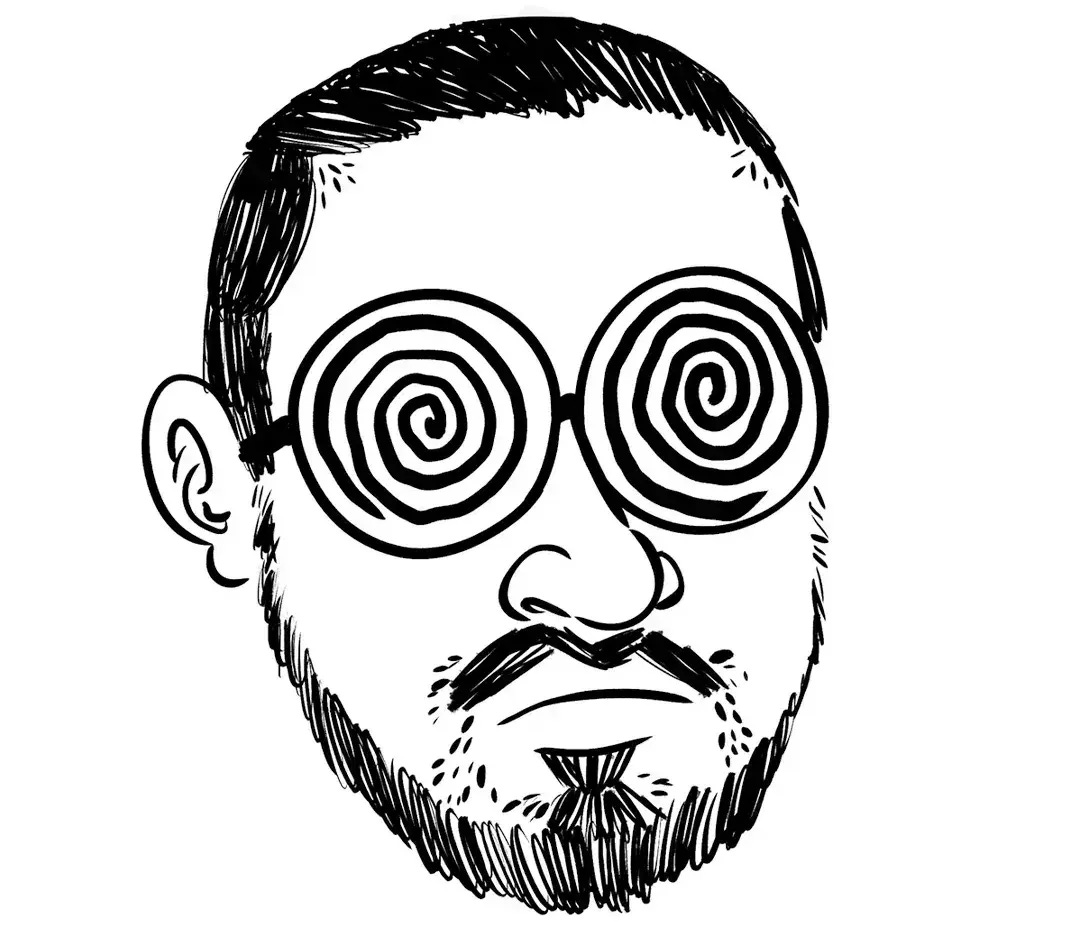
Interview with Tito Adler, Jul. 2026
What first inspired Pretty Beach?
The name comes from Playalinda Beach here in Florida, about an hour or so away from Orlando, where I live. “Playalinda” is Spanish for “pretty beach.”
Many years ago, when I was in my twenties, Playalinda was my first social nudist experience. I expected the most memorable part would naturally be all the nudity. Instead, after the shock of the nude wore off, what stayed with me were the people.
I saw a woman wearing headphones dancing to music only she could hear. I saw a man asleep in a beach chair with three fishing poles planted in the sand and their lines stretched taut into the surf. I saw a naturist casually chatting with a clothed park ranger. I met a man who claimed to work security at NASA’s Vehicle Assembly Building. I even saw a gentleman flying a space shuttle kite, which eventually found its way into the book as a pin-up.
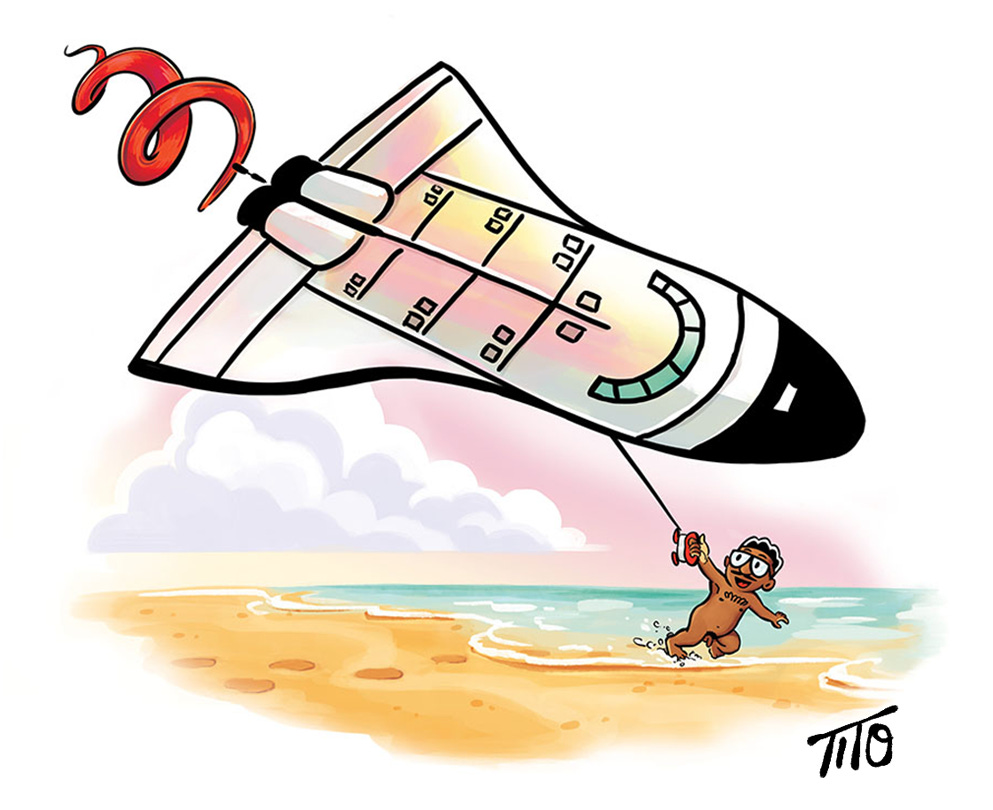
What struck me was that every one of those moments would have played out almost exactly the same if everyone had been wearing clothes. It was one of those moments where you encounter someone you think of as “other” and realize that their otherness isn’t actually the most interesting thing about them.
When I started writing, I wanted to recreate that experience for readers. For non-naturists, I wanted the nudity to register immediately, then gradually fade into the background as you got to focus on the characters more. The nudity is still there, but it stops functioning as the spectacle the reader may have expected.
For naturist readers, I wanted something that would reflect the way we experience life, where nudity is something more day-to-day, more mundane.
You mentioned wanting to do something different from most naturist fiction. What were you hoping to create?
When I first started getting into naturist fiction, I lost interest fairly quickly. Enough of it felt self-conscious, almost preoccupied with defending itself. Vaguely salesy. They often follow a familiar structure: an outsider encounters this strange community, discovers they’re ordinary people after all, and is invited to join them.
Which is fine, and I don’t mean to sound like we should stop writing these kinds of stories, because they still have an urgent role.
As of this writing, we continue to live in a culture where naturism is widely misunderstood, so stories that introduce readers to that perspective still serve a purpose. A “guided tour” kind of approach, to add nuance and context to their worldview.
But I still had that itch. I wanted something different. To be able to experience a naturist story where the most salient thing was not the nudity.
So I set out to write a story featuring naturists but not about naturism. A story that was character-driven, like the people I experienced at Playalinda.
Looking back, I realize now I ended up writing my own retelling of the outsider story anyway. The difference is that the outsider never appears inside the comic. Instead, the outsider is the non-naturist reader, who gradually comes to see the characters as ordinary people.
I wonder if that’s becoming a broader direction within contemporary naturist comics, not just something I’m doing.
Nudity isn’t really the joke in your comic. It just feels like part of the world. Was that a conscious decision from the beginning?
Very much so. In my head I like to describe it as “magical nudism,” borrowing from magical realism, the literary movement where extraordinary things are treated as ordinary while ordinary things can become extraordinary.
I wanted to apply that same approach to nudity by presenting it as something ever-present, unremarked upon, yet structurally important. It is not the primary dramatic engine. There are no explanations, no origin stories, or quiet manifestos.
What interests me is the dramatic irony that creates. The characters ignore the nudity, while the reader never entirely does. That difference in perception creates a quiet tension that I think becomes one of the book’s recurring sources of humor.
Your storytelling has a classic newspaper-comic feel. Which cartoonists or comics have influenced your work the most?
When I was a child in the late 1900s, long, LONG ago when gas was $1.20 and Sunday newspapers could still reach one inch in thickness, I would pore over pages and pages of comics. My favorites were Bill Watterson’s Calvin & Hobbes, Charles Schulz’s Peanuts, Greg Evans’ Luann, and Darby Conley’s Get Fuzzy. I would read Paige Braddock’s Jane’s World online. I also read Hergé’s Tintin, and somehow my dad had a book by Scottish writer R. D. Low and artist Dudley D. Watkins called The Broons.
I was born in Colombia and also lived in Brazil, so I grew up reading South American comics as well. Brazilian cartoonist Mauricio de Sousa’s Turma da Mônica (Monica’s Gang/Monica and Friends) and Argentinian comics like Quino’s Mafalda and Pepo’s Condorito.
While earning my BFA, I learned about more indie fare like Ben Snakepit’s Snake Pit, Scott Campbell’s Double Fine Action Comics, and Tasha Harris’ Tasha’s Comic. Daniel Clowes and Chris Ware in general. I absolutely love François Boucq, the French comic book artist.
When I later became interested in nudist/naturist comics, I learned about Gene Packwood’s Angel, published in old nudist magazines, and John Dempsey’s work for Playboy. These lean more titillating than truly naturist, as expected, but I still value them for being early examples of comics built around social nudity.
Who else? Hmmm. Oh, speaking of Playboy, Shel Silverstein’s “Shel Silverstein in a Nudist Camp,” illustrated for Playboy and published in August 1963, is one of my favorite examples of humor mixed with nudity.
Pretty Beach already feels like a fully realized place. Do you see yourself returning to it in future stories?
I think so. In a not very subtle way, the first part of the title Unsexy Nudie Tales From Pretty Beach! suggests there are more stories to tell.
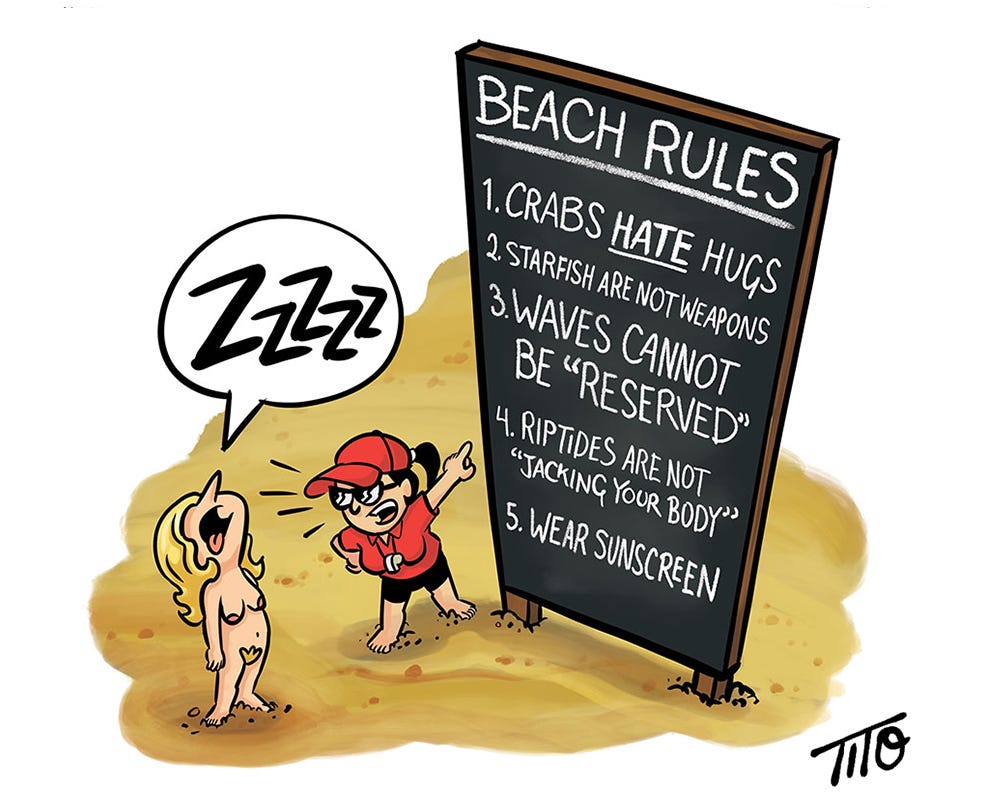
I don’t know if I will bring back the characters in this book. I am leaning heavily toward the idea of assembling a new cast every time a new book comes out, but I haven’t decided yet. We’ll see where that goes.
Finally, what do you hope Planet Nude readers take away after spending some time at Pretty Beach?
Hopefully something fresh.
Sometimes that doesn’t feel like preaching to the choir. Naturist stories often carry the burden of explaining, defending, or advocating for naturism before they can say anything else. I wanted something that simply assumes the world and gets on with being funny.
I would like for non-naturists to discover that the most memorable part of the story wasn’t the nudity after all. And if someone finishes the book thinking more about the characters than about nudity, then I feel like I accomplished what I set out to do. 🪐
Buy the book!

Check out Unsexy Nudie Tales From Pretty Beach! The Day the Pool Became Ice Cream! on Kindle for just $3.99.