

David Hockney painted the naked body into the daylight
He took the male nude out of coded, underground imagery and into the open, while the law still said he couldn't

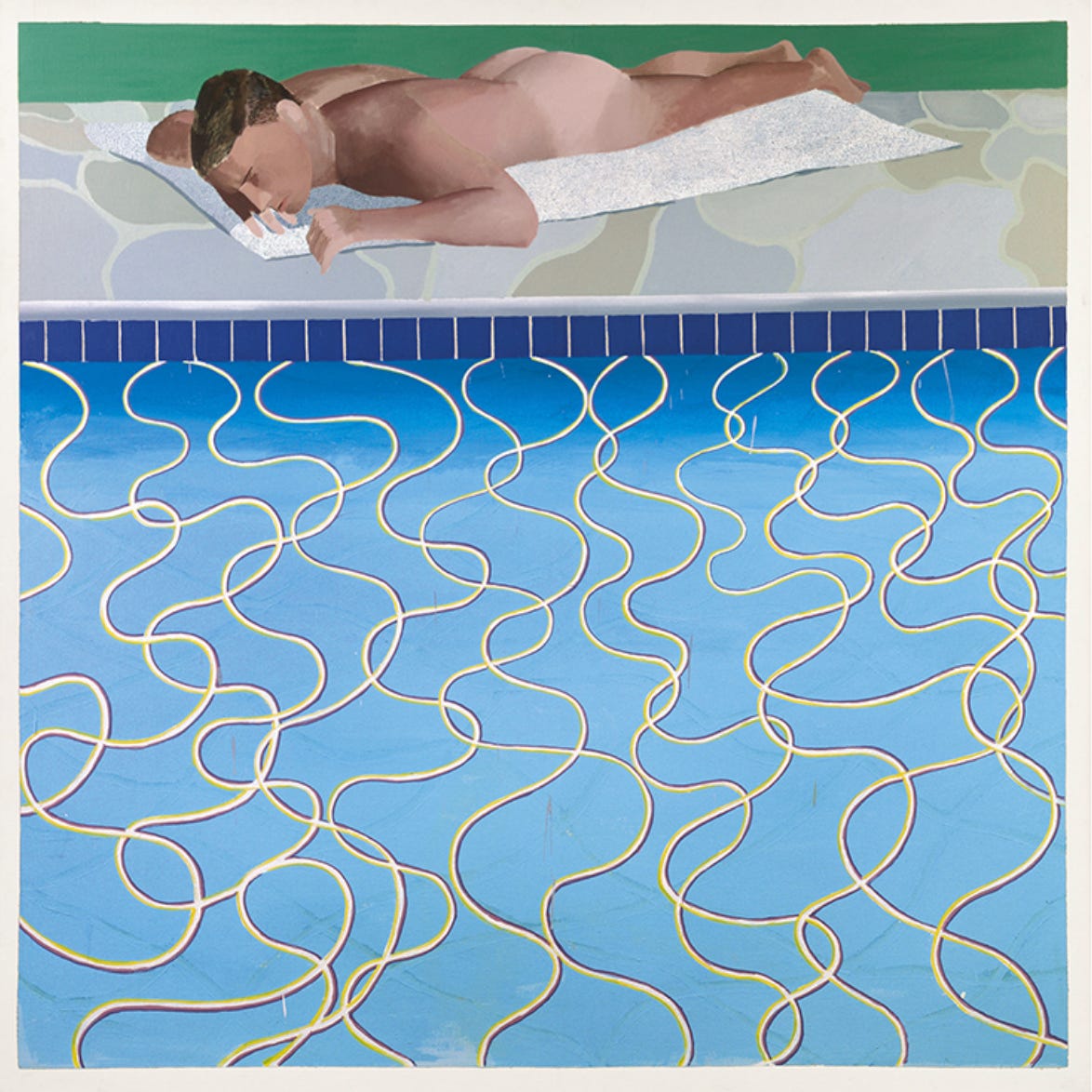
David Hockney died Friday at 88. The obituaries in the popular press have the broad strokes: a giant of 20th and 21st century art, the man who turned a Los Angeles swimming pool into one of the most recognizable images in modern painting. A Bigger Splash, the iPad drawings, the Yorkshire landscapes, the late-life refusal to apologize for much of anything, the smoking included.
Less remarked on, though it ran through his work from the start, is what he was actually looking at. For sixty years Hockney painted the naked body in the open air, and he began doing it at a moment when, for a man like him, that look was against the law.
Before the pools there were the magazines. As a student at London’s Royal College of Art in the late 1950s and early ‘60s, Hockney was already working from American physique publications, above all Bob Mizer’s Physique Pictorial and the Athletic Model Guild photographs that filled it. His 1963 painting Domestic Scene, Los Angeles, two men in a shower, came from one of those photographs and was finished before he had ever set foot in California.
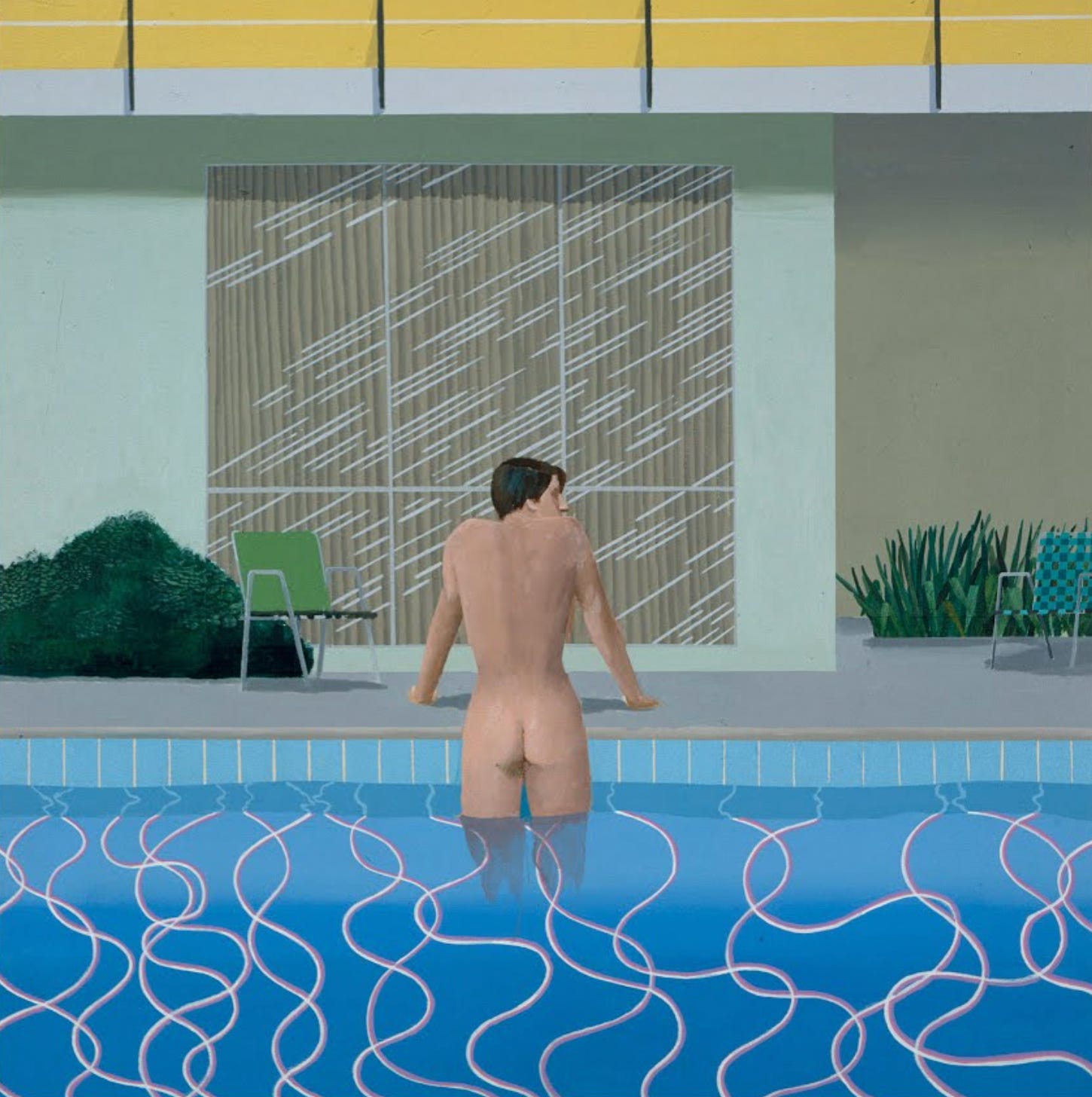
The physique magazines were sold as fitness and “artistic reference,” muscular young men in posing straps demonstrating the results of their training, while their real audience understood perfectly well what they were looking at. The classical poses, the bodybuilding pretext, the staging that stopped carefully short of full nudity made up the visual language of a desire that wasn’t permitted to speak plainly, so it spoke in physique instead. Homosexuality was still criminal in Britain, and full-frontal nudity didn’t clear the legal bar in the United States until court precedent shifted at the end of the 1960s, which is roughly when these magazines either turned explicit or disappeared. Hockney took that underground material and did something almost no one else was doing with it. He carried it up into daylight and hung it on a gallery wall, in color, at scale.
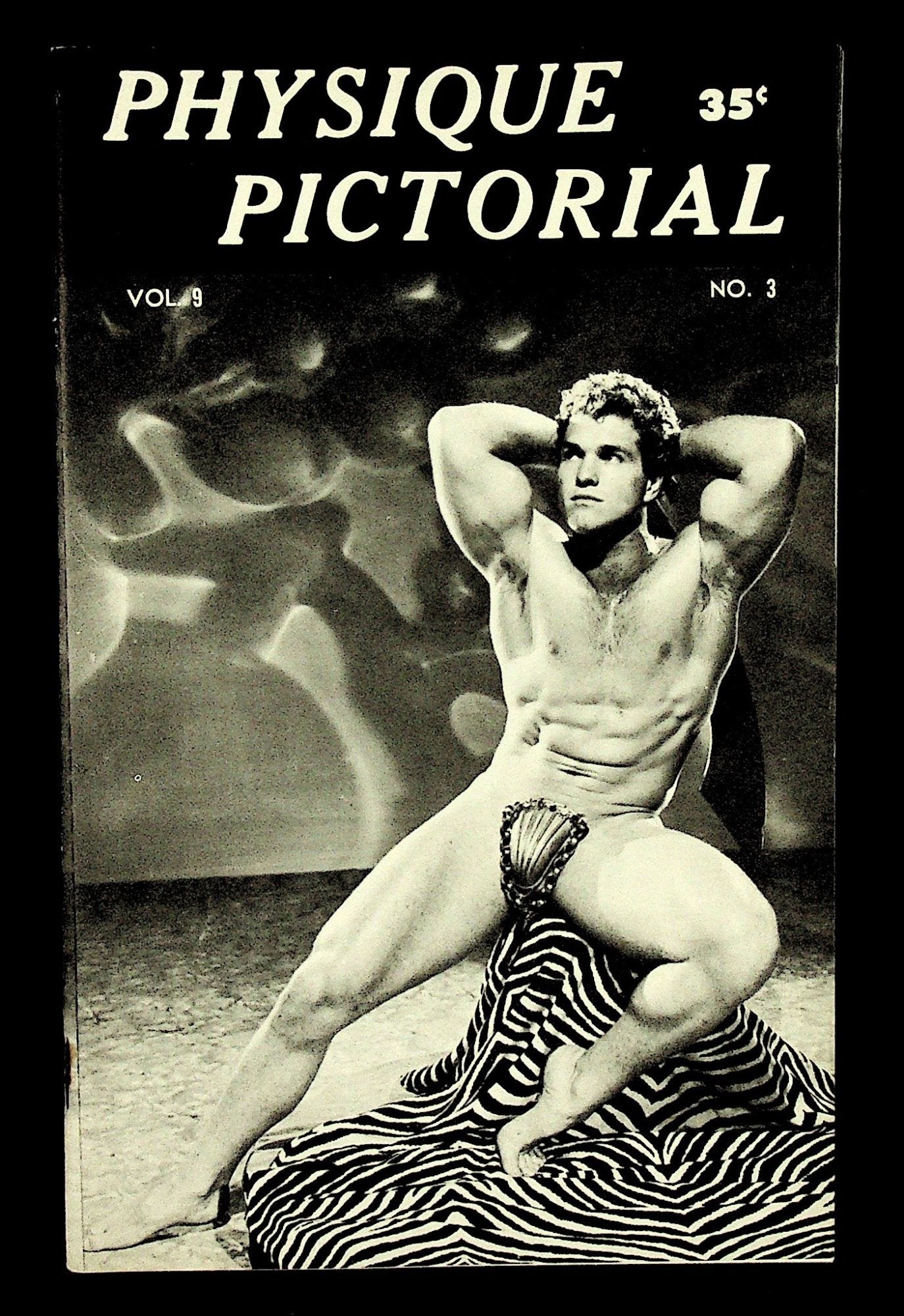
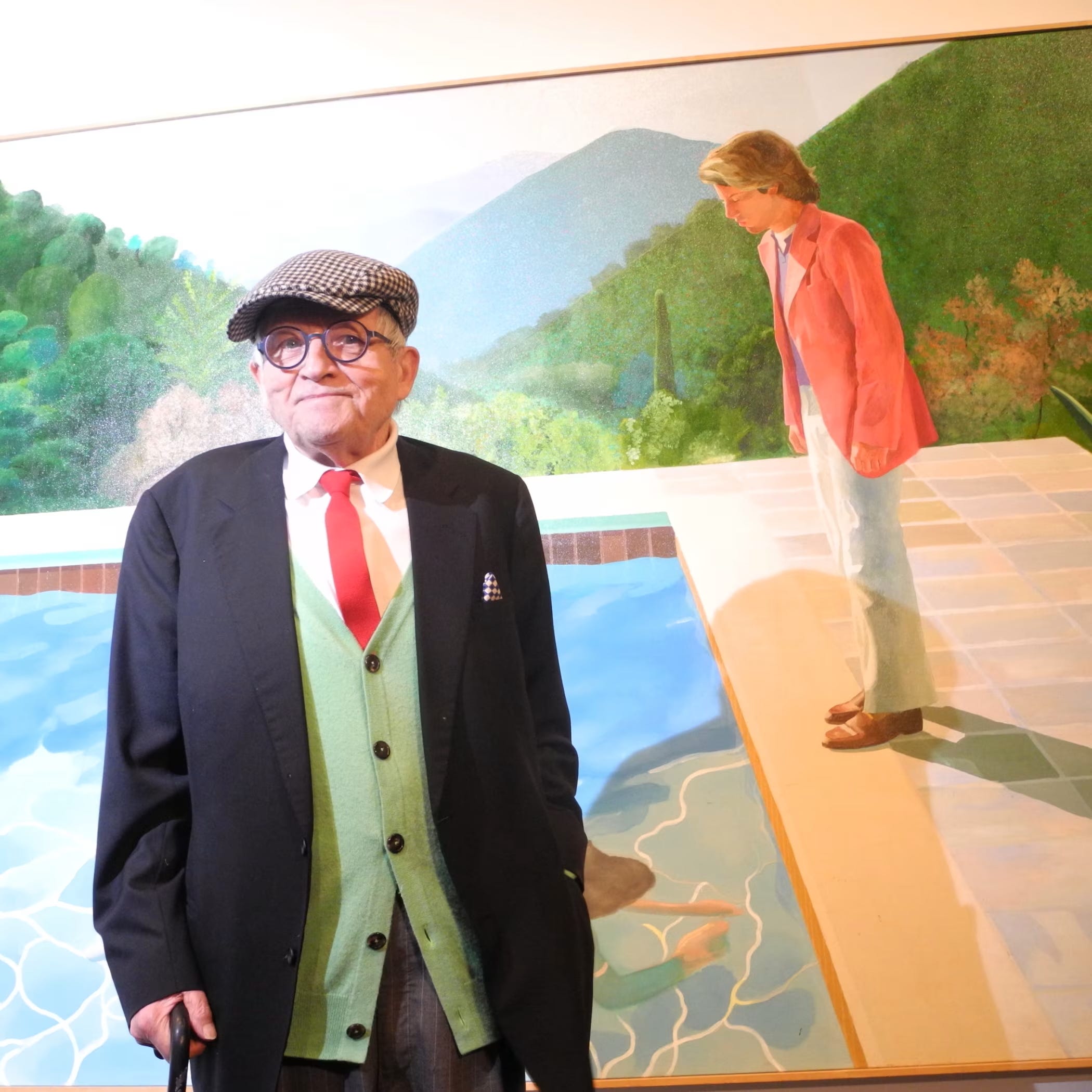
Los Angeles in 1964 changed everything. Flying in, he looked down at blue pools scattered across the city, a private luxury back home and an ordinary fact of life here, and the bodies that had been confined to a studio in the physique photographs could step out into actual sun. What he painted there wasn’t pornography and it wasn’t allegory. It was leisure. Men swimming, sunbathing, showering, climbing out of the water, often his own lovers and friends, most famously Peter Schlesinger, whom he met while teaching at UCLA in 1966. Peter Getting Out of Nick’s Pool shows a nude man from behind, rising out of clear water into the light. Critics at the time saw how easily his attention to the male nude merged with the technical problem he kept chasing, the way hard sun fractures across a moving surface. The body and the lit pool became one subject, fluid and alive and without shame. The same imagery that had to hide behind Alka-Seltzer labels and coded initials in his early London prints could now simply exist: a person, undressed, outdoors, on a good afternoon. He once described his work as a great yes to life, and the unclothed body sat at the center of that yes.
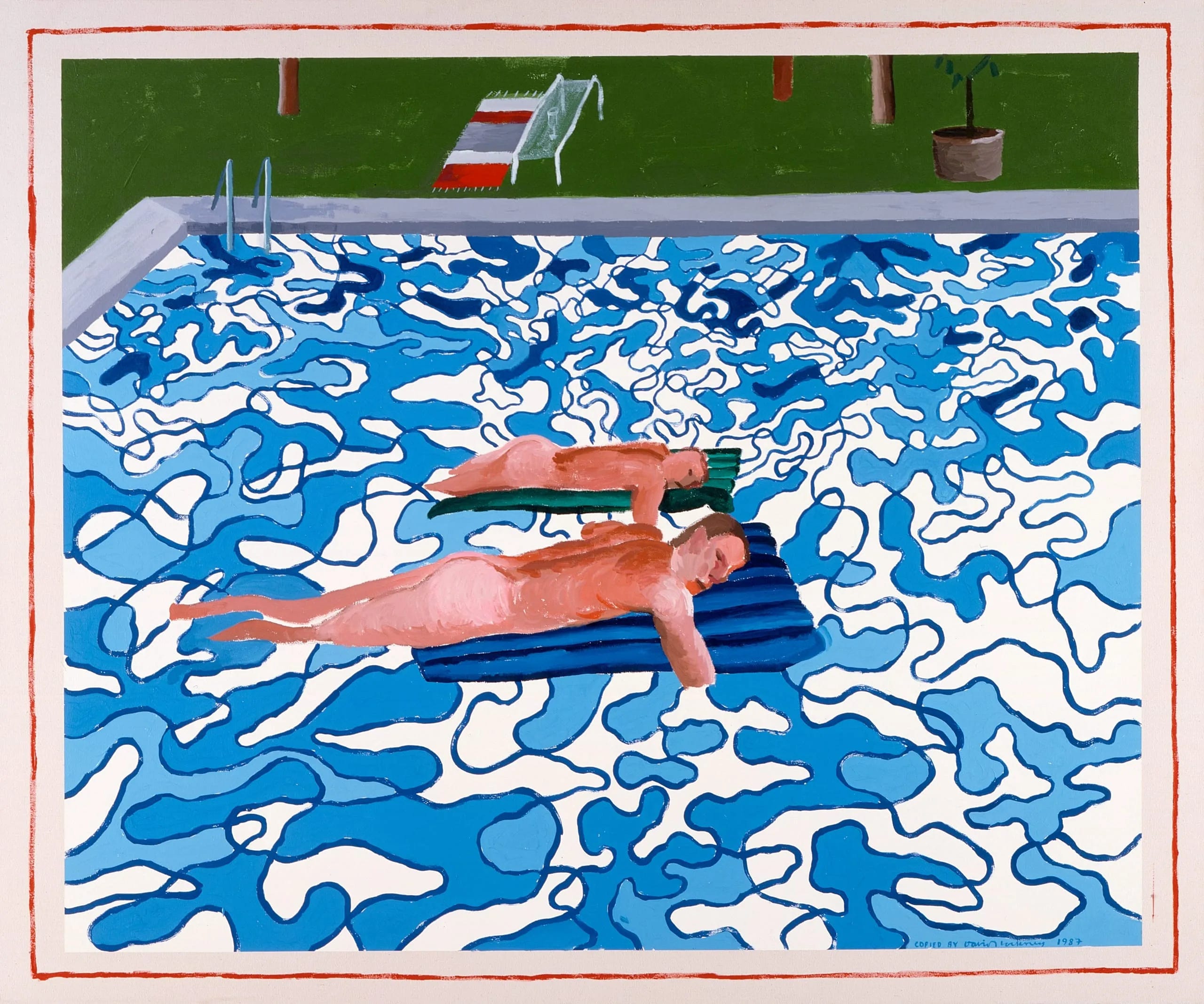
Hockney is easy to file under gay art history, which is true and too small. What he managed was a quiet normalization of the bare body at a time when public nakedness, and the desire it implied, carried real legal and social risk. He took imagery that had survived only by disguising itself as exercise and removed the disguise. No alibi, no apology, no posing strap of plausible deniability, just the human form at home in its own skin in water and sunlight. Advocates for body freedom have spent decades insisting that the unclothed body is not inherently sexual, not inherently shameful, not something to be smuggled past a censor. Hockney painted as though all of that were settled long before the argument reached open air, and he made the rest of the culture look. He outlived the laws that once made his subject dangerous, and he outlived the magazines he learned it from. The pools, and the bodies in them, outlast him too. 🪐
Thanks for the brief history and dates. I hadn't seen any of his work before.