

Arizona bill raises concerns for naturist media
A measure aimed at AI-generated porn and exploitation could create compliance risks for nonsexual nude expression

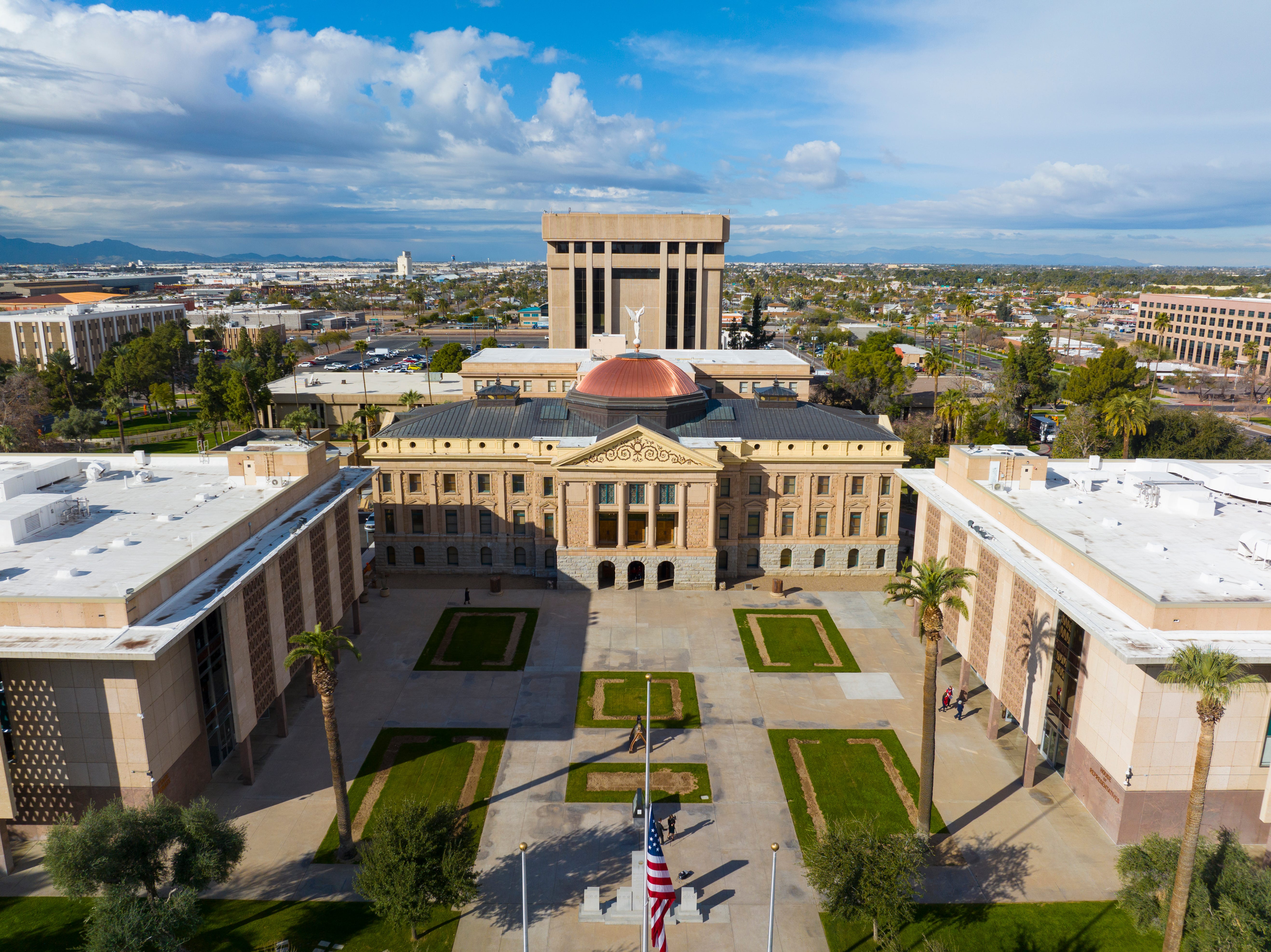
An Arizona bill designed to address revenge porn and synthetic sexual imagery is drawing concern from naturists and free speech advocates, who warn that its broad language could create unintended consequences for lawful, nonsexual nude content.
House Bill 2133 expands existing laws around nonconsensual sexual imagery while establishing new requirements for websites that publish or distribute certain kinds of visual material. The bill focuses on consent, age verification, and recordkeeping, particularly in response to the rise of AI-generated “deepfake” sexual content.
It requires commercial websites hosting covered material to verify that each person depicted consented and was at least 18 at the time the image was created. Those records must be retained for at least seven years and made available to the state attorney general upon request. Violations carry steep penalties, including civil fines of $10,000 per day and up to $250,000 in cases involving minors.
For naturist organizations and publishers, the issue is not the intent of the bill but its scope.
A narrow definition with broad uncertainty
HB2133 applies to “sexual material” as defined under Arizona law, which incorporates a “harmful to minors” standard. That definition is narrower than simple nudity, requiring that the material appeal to prurient interest, depict sexual content in a patently offensive way, and lack serious value for minors. On paper, that would appear to exclude most nonsexual social nudity.
In practice, the concern is less about what the law clearly covers than how it might be interpreted. Organizations that publish large volumes of images or maintain long-term archives could face challenges documenting consent years after the fact. The seven-year recordkeeping requirement is a particular pressure point in communal environments where participation is fluid and records are not always preserved indefinitely.
The bill also does not include a provision allowing parental consent for minors in covered material. While consistent with its focus on preventing exploitation, that omission raises questions for family-oriented contexts—though only if such images were interpreted as falling within the statute’s definition of “sexual material.”
The bill does not explicitly target naturism, nor does it clearly criminalize nonsexual nude imagery. The concern centers on compliance and interpretation. Organizations that qualify as “commercial entities” may face new administrative burdens, even if their content ultimately falls outside the law’s scope. That uncertainty could lead some publishers to remove or limit material preemptively, a familiar pattern when broadly written internet laws intersect with protected expression.
Advocates raise concerns
The American Association for Nude Recreation (AANR) has reportedly begun tracking the bill and conducting outreach with a lobbyist in Arizona. In a recent member update, the organization described HB2133 as placing “substantial restrictions” on publishing images and warned of the “significant compliance/documentation burden” associated with the legislation. As of mid-March, the bill remained in the legislative process and had not yet reached the governor’s desk.
HB2133 reflects a broader challenge: how to address real harms in the digital environment without sweeping too broadly. Efforts to regulate nonconsensual and AI-generated sexual content are increasingly urgent. At the same time, laws built to address those harms can intersect with constitutionally protected expression, including artistic, educational, and nonsexual representations of the human body. For naturists, the question is whether those lines can be drawn clearly enough to avoid unintended consequences. 🪐