

A Catholic perspective on nudity
Reassessing Christian modesty through lived experience, historical context, and the unexpected clarity found in social nudity

Editor’s note: This essay first appeared in the June 2025 issue of H&E Naturist. The author has also published it on his Substack, available here. It reflects a more traditional faith-based perspective than we admittedly tend to publish on Planet Nude, but we think it adds an important voice to the wider conversation about the body, identity, and belief.
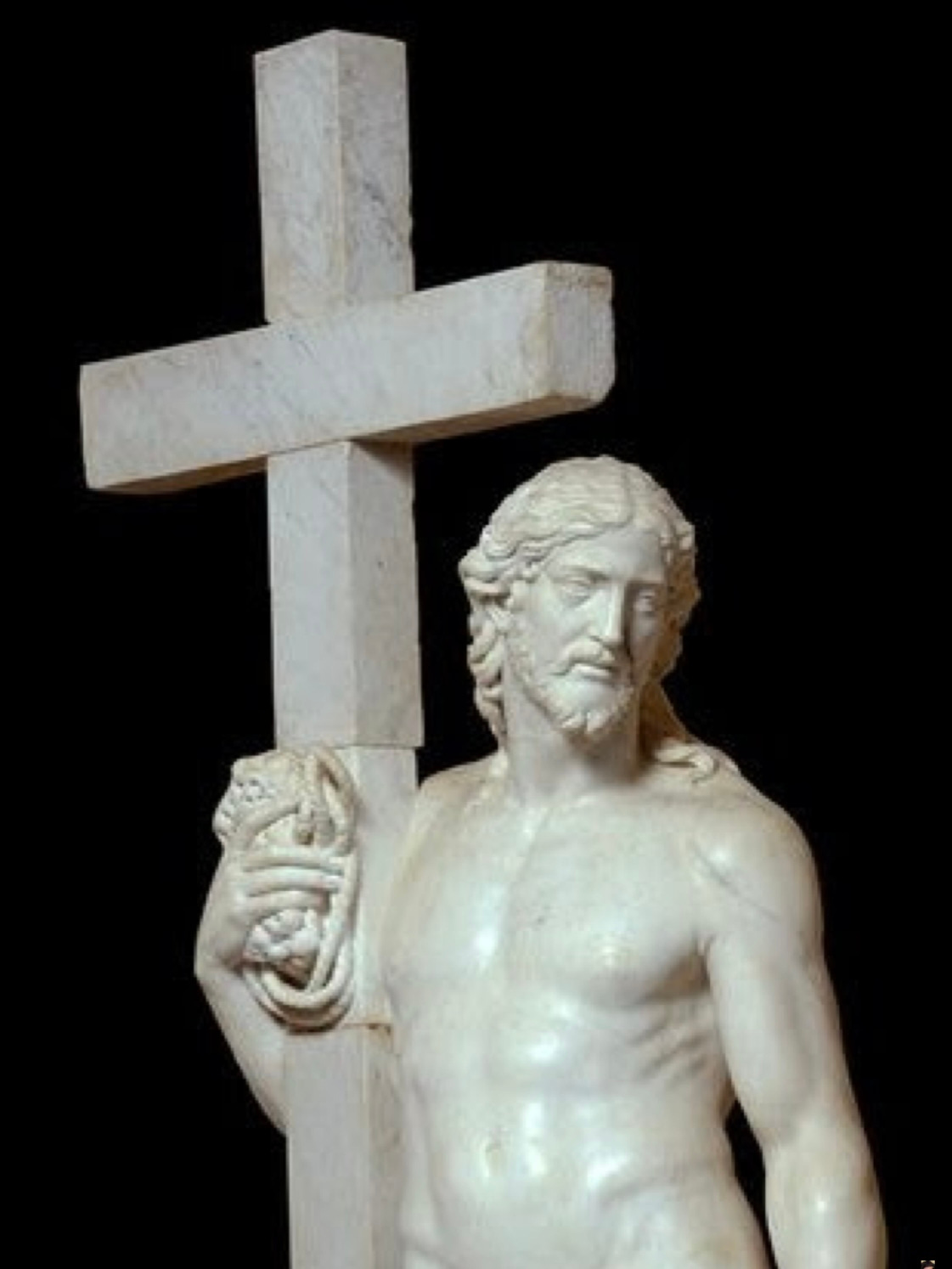
It’s a word that evokes a certain response from the average Christian: nudity.
For many modest, church-raised believers, the term carries an almost reflexive discomfort—a flush of embarrassment, a sense that the unclothed body is automatically immodest or morally suspect, or simple confusion about how people of faith could view nakedness as acceptable in any context. Within much of contemporary Christian culture, the unclothed body is approached with caution, shaped by long-standing stigma rather than curiosity or nuance.
I used to be one of those people who thought that nakedness was immodest, sinful, bad, and immoral. I was raised a Catholic, and I can say, at least from my personal experience, that many in the community are very hostile towards skin exposure. For my entire life, I had never questioned it. But recently, something life-changing happened.
Tracing a Christian lineage of nudity
Last year, curiosity led me into unfamiliar territory. I had been asking whether a Christian could in good faith participate in social nudity, and that question eventually brought me to the American Association for Nude Recreation — better known to most readers here simply as AANR.
AANR has been around for 94 years, and its early leadership included Ilsley Boone, a Baptist minister often credited with formalizing the modern American nudist movement. Realizing that one of the country’s most influential naturist organizers was a clergyman challenged many of the assumptions I had carried since childhood.
From there, my research widened. I found a section on Clothes Free International examining nudity and Christianity through a historical lens—pointing to naked baptisms, unclothed prophets, and, of course, the Eden narrative before the Fall.
I also discovered two groups, Christian Naturists of America and the Christian Naturist Association, which promote social nudity and worship among believers who see no contradiction between their faith and the unclothed body. Their work suggested a worldview I had never encountered: that non-sexual nudity and Christianity could coexist, even complement one another.
The more I read, the more I felt compelled to understand this subculture that sat entirely outside my upbringing.
A first step into social nudity
After careful consideration and lots of prayer, I did something I never imagined I would do: I started getting naked in the privacy of my own home.
But I went even further. I researched the nearest nude resort to my hometown, and I decided to embrace the experience. Yes, I visited a nude resort and got naked with a bunch of strangers.
To be completely honest, I was very nervous about this decision. I had no idea what to expect and worried that I might struggle with lustful thoughts or be unable to control my urges. I also wasn’t sure whether this choice conflicted with my faith.
However, once I arrived, everyone was friendly and welcoming. They made me feel comfortable, and after about ten minutes I completely forgot that I was naked. To my surprise, the resort even had a chapel for religious gatherings and weddings.
But the most unexpected part was realizing that I didn’t experience lust or gaze at a woman inappropriately—something that genuinely shocked me. Everyone respected personal boundaries and treated one another with dignity.
It felt like a small city, but with naked people simply being themselves and doing regular activities like swimming, hiking, tennis, volleyball, and dancing. It was a surreal experience in the best possible way.
This experience completely transformed my entire view of the naked body. Throughout my life, I have always felt embarrassed and ashamed to remove my clothes. If someone had asked me ten years ago if I would be doing this, I would have said “never.” However, engaging in recreational nudity made me more comfortable with my body, resulting in less embarrassment when walking around naked. This is a strange thing to hear coming from a faithful catholic like myself.
Where personal experience meets belief
I’m not saying this is right for everyone, but I encourage all Christians to reconsider their views on nakedness. It may be strange, and that is understandable, since nudity is very much stigmatized in Western society. Two books, ReNude Life by author Jason Stern and Who Said You Were Naked? by pastor David L. Hatton, examine how society can reshape its perception of the human body. The authors address issues that affect our understanding of nudity.
Is there anything in scripture or the catechism that suggests that simply being naked is immodest, bad, sinful, or immoral? If so, I have yet to find it. What matters is the intention behind nudity. Most of the stigma surrounding nudity originates from puritanical customs prevalent in the United States.
Even the Vatican features statues of nude people. If nudity were indeed a problem, it’s unlikely the popes would permit these displays in public. In fact, the recently canonized Pope John Paul II discussed the naked body in his book titled Love and Responsibility. His words were: “The human body can remain nude and uncovered and preserve intact its splendor and beauty. Nakedness as such is not to be equated with physical shamelessness. Immodesty is present only when nakedness plays a negative role with regard to the value of the person.” If a person can be immodest while clothed, then they can also be modest while unclothed. This is an undeniable fact.
But what if I told you there are benefits to engaging in non-sexual, social nudity? According to a PubMed journal article written by psychologist Keon West, people who engage in social nudity tend to be more body positive and experience less social physique anxiety compared to people who do not. They are also more likely to decondition the body as a sexual stimulus, meaning they are less prone to sexual arousal and lust when seeing a naked person. Another psychologist, Justin Lehmiller, affirmed the same benefits on an article from Psychology Today, such as enhanced body positivity and greater respect of others’ bodies. Additionally, the increased sun exposure provides adequate amounts of Vitamin D.
Everyone is born naked. As children, we swam naked, embracing our natural state without shame. Historically, baptisms were done naked, symbolizing purity and renewal. In many cultures, full or partial nudity is common, reflecting respect and comfort surrounding the body. I also learned that there are even Christian communities that worship in the nude, which was the most surprising to me. Authors like Jason Stern and David L. Hatton explore how Christianity and nudity can coexist. A prominent Christian writer, Justine Hudson famously advocates for nudism, stating, “it’s about shedding the layer of shame, fear and insecurity when it comes to our bodies.”
Regardless of whether you are Catholic, Protestant, or Orthodox, it is important to rewire our minds about how we perceive nakedness. If that means getting naked around others in a safe environment, then I encourage it. Let it be a New Year’s resolution or an item on your bucket list. Your life will change for the better. Mine definitely has. 🪐
Like this? Check out more of the author’s personal Substack:
 | A guest post by
|
The same attitudes are found in my Baptist church. I have been a practicing nudist for seven years and am naked 90% of the time, 24/7!!!!!
An excellent resource is “Nudity and Christianity” edited by Jim Cunningham. If not mistaken, it is primarily a compilation of articles that were found in his publication “Naturist Life International”. Jim was Catholic, possibly Orthodox; I think at one time in seminary. Sadly he passed away several years ago.